Men's Wool Clothing Guide
Men's wool clothing is the practical wardrobe itself: the suits, jackets, trousers, sweaters and coats that men actually buy in wool, garment by garment. Where the wool apparel guide maps the category and the wool fiber guide explains the material, this page works the middle ground - what each wool garment does in a real wardrobe, and the buying checks that apply across all of them.
Shop Men's Wool Clothing Now
Shop Men's Wool Clothing on Amazon Shop Men's Wool Clothing on eBayThe Amazon and eBay links on this page are affiliate links. If you make a purchase through them, Apparel Search may earn a commission.
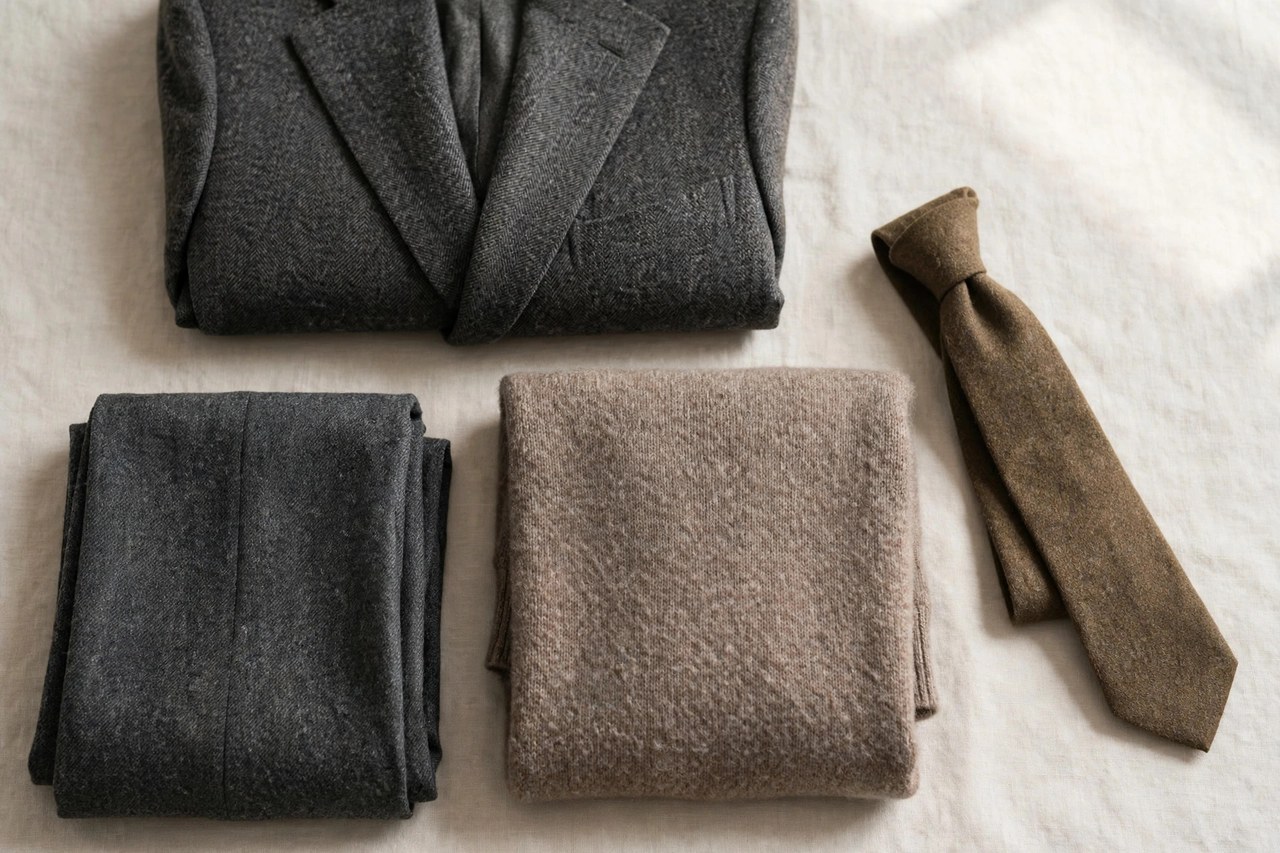
Men's wool clothing is the practical wardrobe itself: the suits, jackets, trousers, sweaters and coats that men actually buy in wool, garment by garment. Where the wool apparel guide maps the category and the wool fiber guide explains the material, this page works the middle ground - what each wool garment does in a real wardrobe, and the buying checks that apply across all of them. This guide covers the styles worth knowing, the fit points that decide comfort, the fabrics and construction that separate a good buy from a regret, and the simple care that makes the garment last.
Styles and Construction
Take the wardrobe piece by piece. Suits and blazers want smooth worsteds with canvas in the chest; trousers want cloth with a crease memory - flannel for matte warmth, high-twist worsted for summer; sweaters want gauge matched to job, fine merino for layering under jackets, chunky lambswool as an outer layer; coats want density - melton, tweed or gabardine - against weather. Across every piece the same four checks apply: fiber content and grade on the label, cloth weight honest in the hand, construction at the stress points (seams, buttons, pocket corners, hems), and finishing - patterns matched at seams, buttonholes clean, linings smooth. A garment that passes those four checks in wool is rarely a mistake.
Judge wool first as a fiber, before the garment cut gets a vote. Fineness is measured in microns: merino at roughly 18-22 microns feels smooth against skin, while coarser wools trade softness for abrasion resistance and a drier hand. Crimp - the natural wave of the fiber - is what traps air for warmth and gives wool its spring and wrinkle recovery. Staple length matters too: longer staples spin into stronger, smoother yarns that pill less. Then read the cloth: twill weaves like gabardine shed wrinkles and water, flannels brush up into matte warmth, plain-weave tropical wools breathe, and knits trade structure for stretch and comfort.
Fit and Sizing
Buy wool clothing as a system, not as singles: a navy and a charcoal base, mid-grey trousers that mediate between every jacket you own, knits in neutrals with one or two color accents, and patterns introduced one piece at a time so everything still mixes. Fit wool slightly neat and let the fiber settle - it molds gently to shoulders, waists and seats over the first wears. Budget follows wear: the pieces worn weekly (trousers, blazer, coat) deserve the quality end of your range; the occasional piece can compromise.
Wool care starts with rest and air: wool resists odor and soil, so airing a garment overnight after wear replaces most washing. Wash when needed in cool water with wool detergent - hand wash or a true wool cycle - never hot, never agitated hard, because heat plus agitation plus moisture is felting. Roll in a towel to lift water, dry flat or hang tailored pieces on broad hangers, and store clean in a breathable bag with cedar or lavender, since moths target dirty wool. Steam refreshes wrinkles better than pressing; if you press, use a cloth and moderate heat so the surface does not shine.
Wearing and Care
Wool clothing runs on one maintenance rhythm for the whole wardrobe: rest, air, brush, wash rarely and gently, steam, store clean with moth protection, mend early. Keep the rhythm and a wool wardrobe actually gets better-presented with age as pieces settle to their owner. Break it - daily wear without rest, hot washing, storage uncleaned - and the same wardrobe felts, shines and feeds moths within a couple of seasons.
Fit wool with its behavior in mind: wool gives a little with body heat and wear, then recovers with rest, so a new garment should start neat rather than sloppy. Woven wool should skim without pulling at closures; knitted wool should follow the body without compressing the stitch open, which lets wind through and shortens the garment's life. Check drape from the side - good wool falls in clean vertical folds - and remember that tailored wool can usually be let out a seam allowance, while knits can be blocked modestly but never truly resized.
Common Questions
Which wool garments give the most wear per dollar?
Trousers, a blazer and an overcoat - the pieces worn most days. A mid-grey wool trouser pairs with every jacket; the navy blazer covers more occasions than any other single garment; the coat is the first thing seen all winter. Put quality money there first.
How can I tell good wool cloth in a shop?
Hold it: good cloth has weight and spring - crush a handful and it should recover with few creases. Read the label for fiber content and any Super grade, check light through the weave for evenness, and inspect finishing at seams and buttonholes, where cheap cloth and cheap making show together.
Does wool clothing work in warm climates?
Yes, in the right weaves: high-twist tropical wool and fresco are woven openly to breathe, and wool's moisture handling beats cotton in humidity. Choose half-lined or unlined jackets, lighter weights (under 240 grams) and open weaves, and wool becomes a summer fiber too.
More in Men's Clothes Guide W
Background
Wool is a durable fiber that provides warmth even when wet. Clothing which can also be called clothes, attire, apparel, etc, is essentially a fiber and textile material worn on the body. One of the important fibers utilized in menswear is wool. Physically, clothing serves many purposes: it can serve as protection from the elements among other things. Even in pouring rain, wool will keep a sheep warm and toasty thanks to the unique nature of this wonder fiber. Wool is the textile fiber obtained from sheep and other animals. See also About Wool Clothing.
More to Explore on Apparel Search
References & Further Reading
Looking for Men's Clothing Stores?
This guide explains men's wool clothing. To browse where to buy, visit our men's clothing store directory, where you can find retailers that carry them.