Men's Wool Trench Coats Guide
A men's wool trench coat adapts the military raincoat silhouette - belted waist, storm flap, epaulettes, deep pockets - to wool gabardine and wool-blend cloths, trading the classic cotton trench's rain specialization for warmth, drape and a softer, dressier hand. It is the trench for cold, damp seasons: the same architecture, engineered for temperature as much as for weather.
Shop Men's Wool Trench Coats Now
Shop Men's Wool Trench Coats on Amazon Shop Men's Wool Trench Coats on eBayThe Amazon and eBay links on this page are affiliate links. If you make a purchase through them, Apparel Search may earn a commission.
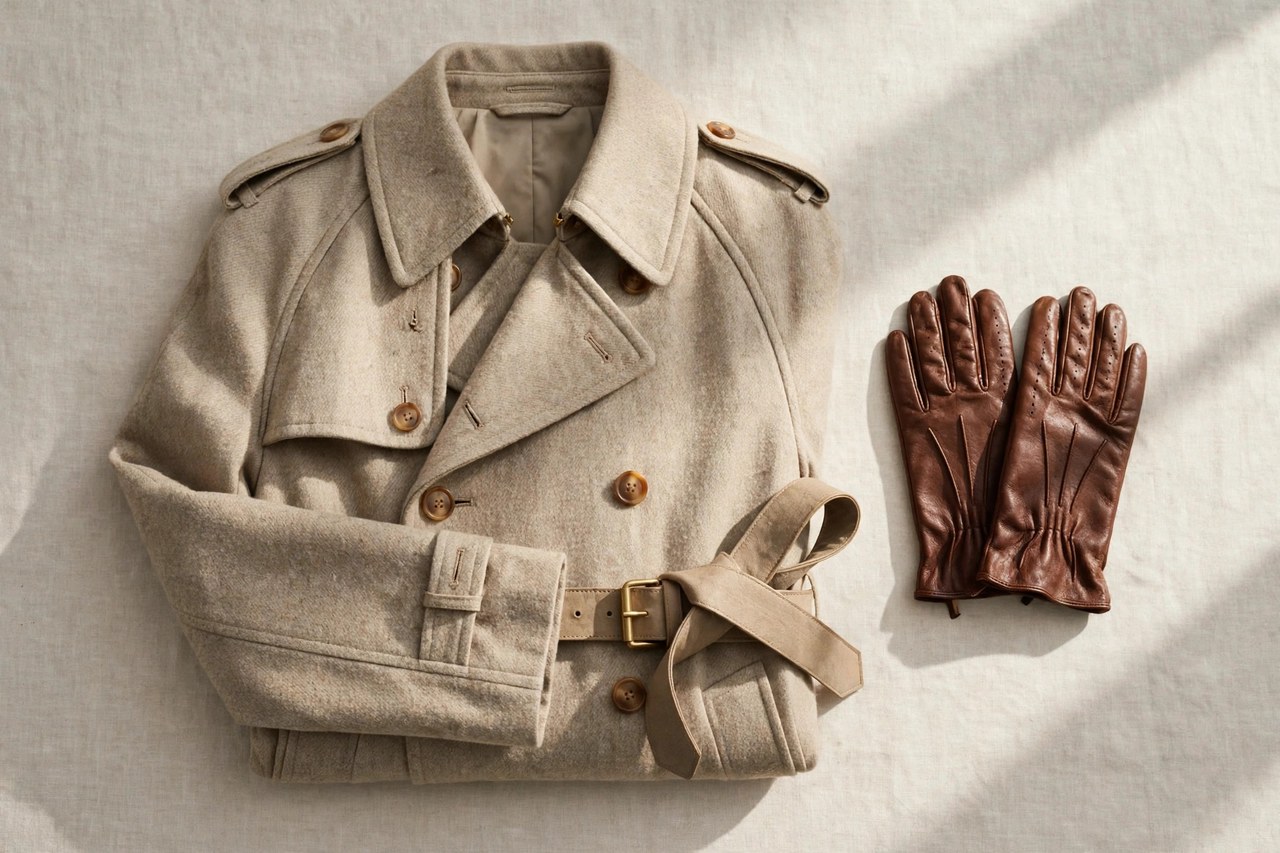
A men's wool trench coat adapts the military raincoat silhouette - belted waist, storm flap, epaulettes, deep pockets - to wool gabardine and wool-blend cloths, trading the classic cotton trench's rain specialization for warmth, drape and a softer, dressier hand. It is the trench for cold, damp seasons: the same architecture, engineered for temperature as much as for weather. This guide is built around the questions buyers actually ask: which style, which size, which fabric, and what will it look like after a year of real use - answered in order, with the trade-offs stated plainly.
Styles and Construction
The cloth defines the garment: wool gabardine, a tight steep-twill weave originally developed for weatherproofing, sheds showers naturally and can carry a water-repellent finish; wool melton and flannel versions abandon rain duty for pure warmth in the trench shape. The details to check are the classic ones: a storm flap over the chest, a buttoned throat latch, a belt with a sound buckle, deep bellowed pockets, a back yoke and vent that let you stride and sit, and a lining - traditionally checked - that may zip out in convertible models. Buttons and buckles take daily load, so check their stitching and leather quality as structural parts, not trim.
A tailored wool coat or jacket is judged in layers: the cloth, the canvas or fusing that gives the chest and lapels their shape, and the lining that lets it glide over knitwear. Melton weaves dense and wind-tight for peacoats and overcoats, flannel reads soft and matte, tweeds hide wear and suit country styling, and gabardine runs smooth for rain-shedding trench styles. Sleeves should show clean pitch without diagonal drag lines, the collar should hug the neck, buttons should be sewn with thread shanks, and a half or full canvas front will drape and recover better than a fully fused one at the same cloth weight.
Fit and Sizing
Fit a wool trench over a suit or heavy knit with the belt both buckled and open: the shoulders carry epaulettes that should end at your shoulder point, the chest closes without strain, and the length lands at or below the knee - the trench's coverage is its function, and short fashion trenches lose the point. The belt should cinch at your natural waist without the cloth bunching into folds at the back. Sleeves cover the wrist with arms extended; the strap cuffs should close snugly enough to keep wind out.
Tailored wool outerwear should be brushed after wear - a clothes brush lifts surface soil before it works into the weave - and rested a full day between outings on a broad hanger that carries the shoulders. Spot-clean promptly rather than washing; dry clean only a few times a season, since solvent and pressing fatigue cloth and canvas. Store coats clean, unbuttoned, in breathable garment bags with moth protection, never compressed in plastic. Set the creases and lapel roll with steam, not a hard press, and have loose buttons and lining tears repaired early - a coat's structure makes small repairs cheap and neglect expensive.
Wearing and Care
Wool gabardine wants brushing, airing and restraint: spot-clean, reproof the water-repellent finish when rain stops beading, and dry clean only when genuinely needed, since cleaning strips finishes. Hang the coat broad with the belt loosely buckled to hold its line, store clean in a breathable bag with cedar, and never leave it crumpled over a chair - gabardine's sharp twill shows neglect as shine at the folds.
Fit a wool coat or sports coat over the bulkiest layer it will honestly cover - a sweater for an overcoat, a shirt and light knit for a blazer - and test the working range: arms forward, arms crossed, sitting with the buttons fastened. Shoulders end at yours, the collar sits against the neck without a gap, and the fronts close without an X of pulling at the button. Coat length is coverage: a trench or overcoat should reach at least mid-thigh, a peacoat ends at the hip, and a blazer should cover the seat. Sleeve length shows a sliver of shirt cuff on tailored jackets; coat sleeves protect the wrist.
Common Questions
Is a wool trench coat actually waterproof?
No - it is weather-resistant. Tight gabardine weave plus a repellent finish sheds showers and damp cold superbly, but sustained heavy rain belongs to the cotton trench with modern proofing or a dedicated raincoat. The wool trench's true specialty is cold, windy, showery weather where cotton leaves you chilled.
Wool or cotton trench - which should I buy first?
Match it to your winter: if your rainy season is cold, the wool trench covers rain and warmth in one garment and dresses better over suits. If your rain is warm-season, the cotton trench is lighter and more purely a raincoat. Men in northern climates usually get more wear from wool.
Should the belt be buckled or tied?
Buckled, as designed - the buckle is a working part. A knotted belt is a fashion affectation that creases the cloth and loses the coat's clean line. If you wear the coat open, buckle the belt at the back or leave it hanging in its keepers.
More in Men's Clothes Guide W
Background
A trench coat or trenchcoat is a raincoat made of waterproof heavy-duty cotton gabardine drill, leather, or poplin. The trench coat was typically worn as a windbreaker or as a rain jacket, and not for protection from the cold in winter or snowy conditions (although many come with removable wool liners for additional warmth, they are usually not as warm as an overcoat). Some trench coats are made from all wool fabric. It generally has a removable insulated lining, raglan sleeves, and the classic versions come in various lengths ranging from just above the ankles (the longest) to above the knee (the shortest). It was originally an item of clothing for Army officers (developed prior to the war but adapted for use in the trenches of the First World War, hence its name) and shows this influence in its styling.
Looking for Men's Clothing Stores?
This guide explains men's wool trench coats. To browse where to buy, visit our men's clothing store directory, where you can find retailers that carry them.