Women's Catsuit Guide
Head-to-toe in a single sleek piece — the catsuit is equal parts practical base, performance wear, and bold fashion statement.
Shop Women's Catsuits Now
Shop Women's Catsuits on Amazon Shop Women's Catsuits on eBayThe Amazon and eBay links on this page are affiliate links. If you make a purchase through them, Apparel Search may earn a commission.
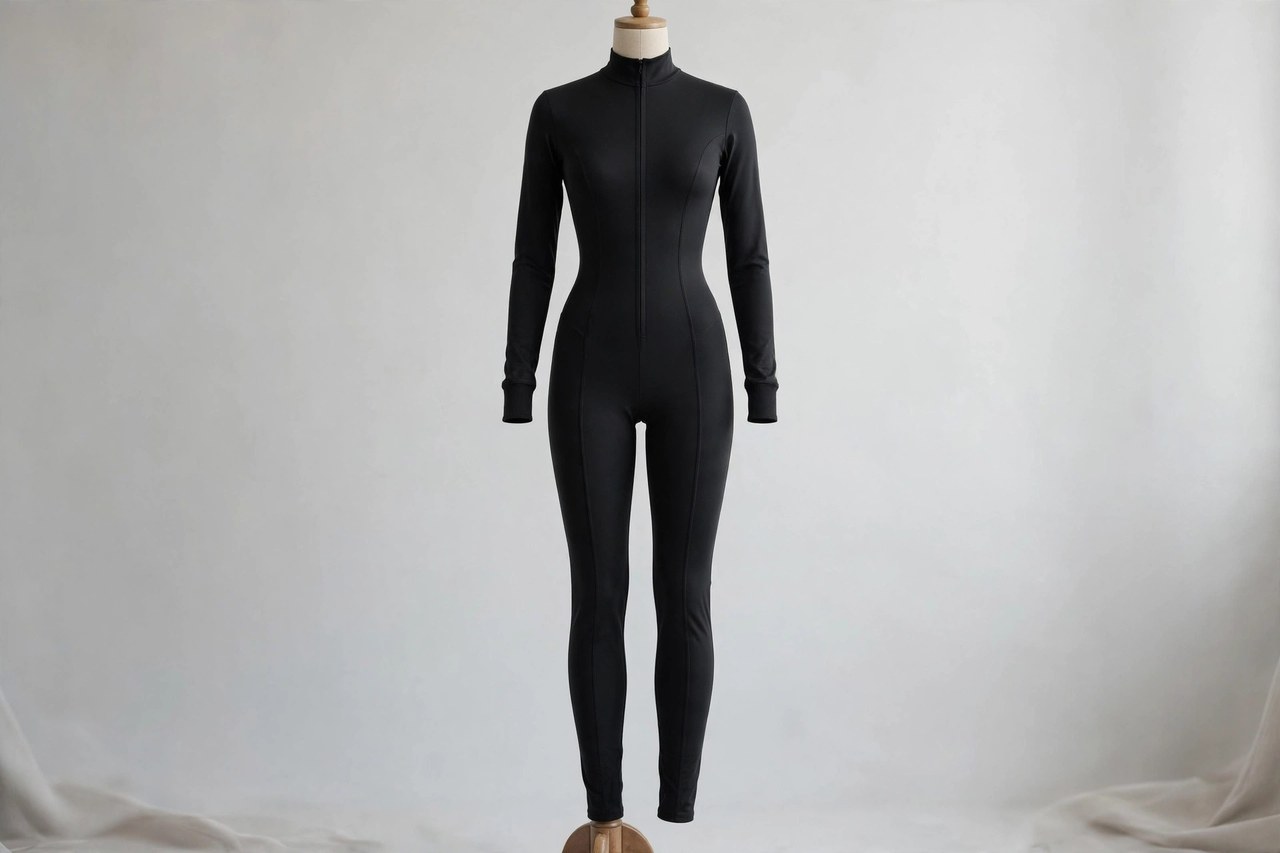
A catsuit is a one-piece garment that covers the torso and legs in a single close-fitting unit, usually with long sleeves or straps and a zipper or stretch entry. Its close relatives explain it best: a unitard in dance, a bodysuit that ends at the hip, and a jumpsuit that fits loosely — the catsuit is the fully fitted, full-length member of that family. It appears in more wardrobes than its dramatic image suggests, serving dancers and gymnasts as a practice and performance base, actors and cosplayers as the foundation of a character, and fashion wearers as a sleek layer under skirts, blazers, and sheer dresses. Because one piece must fit shoulders, torso, hips, and legs at once, catsuits are less forgiving to buy than separates.
Dance, Performance and Practice Catsuits
In studios, the catsuit’s value is practical. A unitard-style catsuit gives dancers, aerialists, and gymnasts a clean line that lets teachers read alignment, nothing loose to catch on apparatus or a partner’s hands, and full coverage through lifts, inversions, and floor work. Practice styles favor matte, opaque stretch fabric with strong recovery, a scoop or camisole neckline, and sometimes a low or open back for ventilation. Performance versions add mesh panels, sequined or foiled finishes, and color blocking designed to read at stage distance. Fit in this world is functional above all: the garment must allow a full split, a backbend, and deep lunges without the neckline pulling or the seat seams straining, which is why serious practice catsuits are cut with a gusset and four-way stretch. If you are buying for movement, test the deepest stretch you actually perform before removing any tags.
Costume and Fashion Catsuits
Outside the studio, the catsuit is a foundation for transformation. As costume wear it forms the body of superhero, villain, animal, and sci-fi characters, providing the smooth base onto which belts, armor pieces, tails, ears, and boots are added; a plain black or colored catsuit is the single most reused piece in many costume wardrobes. Zentai-style full-coverage versions extend over the hands, feet, and head for complete character coverage. In fashion, catsuits cycle in and out of trend as statement pieces — worn alone with heels and strong accessories for evening, or more accessibly as a base layer under an oversized blazer, a slip dress, or a skirt, where only parts of the sleek line show. Velvet, lace, and mesh fashion catsuits trade the dance version’s durability for texture and effect. In both worlds the entry matters: a long back zipper is the classic, front zippers read sportier, and some stretch styles simply pull on.
Fabrics: Stretch, Opacity and Finish
Nearly every catsuit is built on elastane blended with nylon or polyester, because only serious stretch can fit one garment to so many measurements at once. Four-way stretch, which extends lengthwise as well as across, is close to essential; two-way stretch catsuits often feel fine standing and bind badly in motion. Opacity deserves an honest test, since thin stretch fabric lightens as it stretches — bend and squat in bright light or check the fabric stretched over your hand against a window, especially with pale colors and white. Finishes change the garment’s personality: matte reads athletic and layers discreetly, wet-look and foiled finishes are pure costume and stage, velvet is soft, warm, and forgiving of minor fit imperfections, and mesh or lace panels trade coverage for effect. Seams should be flat or soft-finished, because in a garment this close every ridge is felt, and a lined front panel adds comfort and opacity where both matter most.
Sizing: Torso Length Is the Deciding Fit
Catsuit sizing fails more often on torso length than on any dress-size measurement. The key figure is the girth or torso loop — measured from one shoulder down through the body and back up to the same shoulder — because a catsuit too short in the torso pulls at the neckline and shoulders with every reach, while one too long wrinkles and sags at the waist and seat. When a size chart lists torso or girth, measure and trust it over your usual size. Between sizes, most wearers do better sizing up for comfort and layering, since an over-tight catsuit shows every seam of what is beneath and stresses its own seams and zipper. Check zipper length and placement for practicality: a back zipper needs enough length, or a pull cord, to dress without help. Try sitting, bending, and raising both arms overhead in a new catsuit; those three movements expose every fit problem the style can have, and a good one passes them all without a second thought.
Styling, Layering and Care
Worn as fashion, a catsuit asks for deliberate styling because it leaves no line unexamined. A wide belt restores a waist landmark, an open overshirt, blazer, or long cardigan adds the coverage and contrast most wearers prefer for daytime, and boots — ankle or over-the-knee — complete the long line better than delicate shoes. As a base layer in cold weather, a thin catsuit or unitard under dresses and tailoring adds surprising warmth without bulk. Keep what you wear beneath seamless, since every edge shows. Wash cold on a gentle cycle, inside out, and dry flat, because dryer heat kills elastane’s recovery. Store folded rather than hung.
Related Women's Guides
Photos


Looking for Women's Clothing Stores?
This guide helps you choose women's catsuits by style, fabric and fit. To browse where to buy, visit our women's clothing store directory, where you can find retailers that carry them.