Women's Cotton Yoga Clothing Guide
Natural fiber for a gentle practice — soft cotton knits, honest stretch, and clothing that stays quiet while you move.
Shop Women's Cotton Yoga Clothing Now
Shop Women's Cotton Yoga Clothing on Amazon Shop Women's Cotton Yoga Clothing on eBayThe Amazon and eBay links on this page are affiliate links. If you make a purchase through them, Apparel Search may earn a commission.
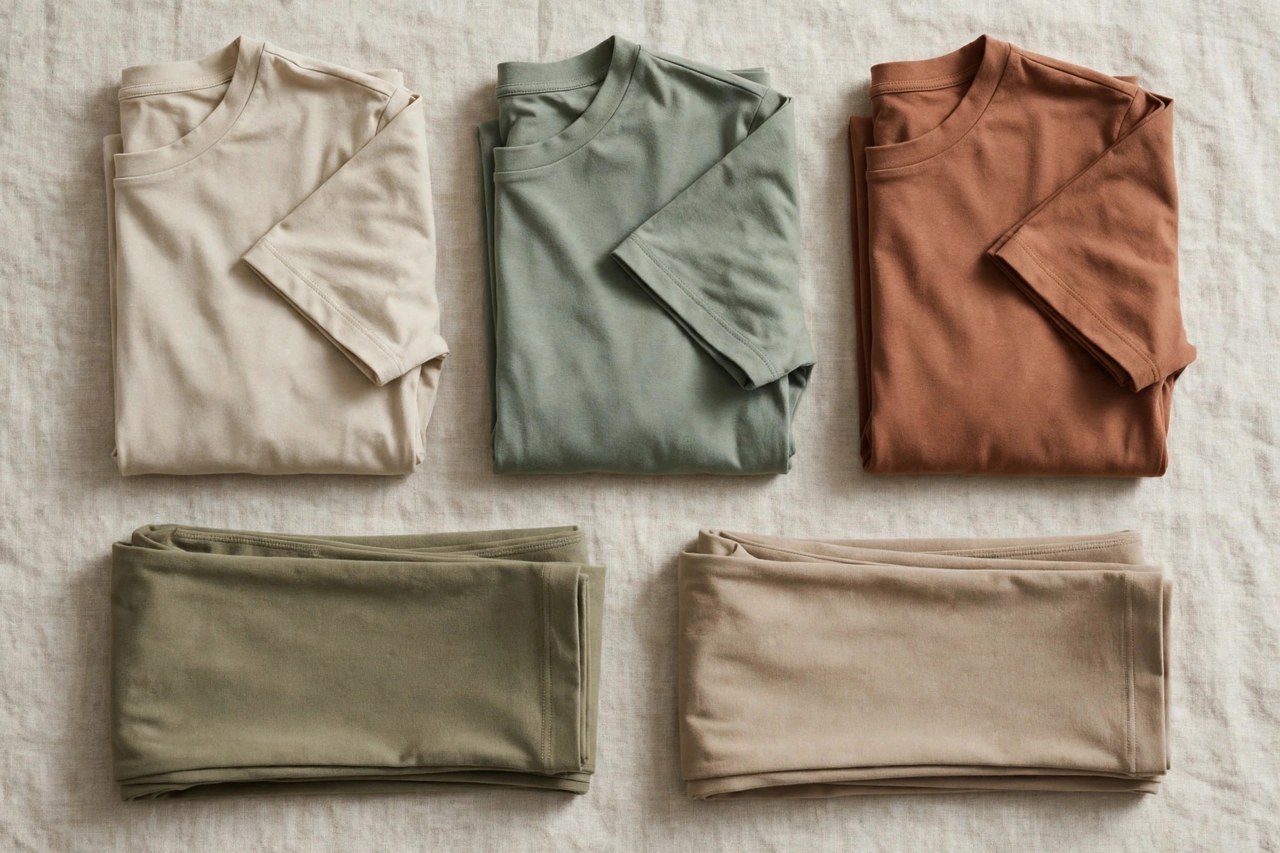
Many practitioners simply prefer the feel of a natural fiber against the skin during yoga, and cotton yoga clothing exists for them: soft jersey tops, cotton-rich leggings and pants, and quiet, unbranded basics in calm colors. Cotton suits the gentle end of the practice spectrum best — hatha, yin, restorative, and slow-flow classes where you are not generating heavy sweat and where comfort, breathability in still air, and a non-synthetic hand-feel matter more than compression or slick performance. This guide explains the cotton knits used for yoga wear, how much stretch to look for, the fit details that matter on the mat, and how to care for pieces that will be washed after nearly every practice.
Why Cotton Suits Gentle Practice
Yoga clothing has one unusual job: it must disappear. During a slow practice, awareness goes to breath and alignment, and anything scratchy, clammy, static-prone, or faintly chemical-smelling becomes a distraction. Cotton's matte, soft surface and natural moisture absorption keep the skin feeling dry and neutral during low-sweat practice, and cotton produces almost no static, so tops do not cling or crackle as you move between poses. There is also a philosophical fit: yoga's roots value natural materials, and many practitioners extend that preference to what they wear. Cotton will not wick like a technical fabric during a hot, fast vinyasa class — that is the honest limit — but for the gentle and moderate practices most people do most often, it performs its quiet role well.
The Knits: Jersey, Interlock, and Rib
Cotton yoga wear is knitted for stretch, and the knit decides the feel. Single jersey is the lightest option, used in relaxed tops and looser yoga pants; it drapes softly but can thin over time at friction points. Interlock is the premium choice for leggings and fitted pants: two jersey layers knitted together produce a smooth, opaque, stable fabric with both faces finished, so it does not curl at the edges and stays decent in deep forward folds. Ribbed cotton knits give natural mechanical stretch and are common in tanks and fitted tops. Whatever the knit, look for a cotton-rich blend with roughly five to ten percent elastane: pure cotton stretches with movement but does not spring back, so knees and seats bag out within a single long practice, while a modest elastane content keeps the garment's shape from the first pose to the last.
Fit Details That Matter on the Mat
Yoga fit is about staying in place without compression. Waistbands should be wide and flat — fold-over or wide elastic bands distribute pressure and stay comfortable when you fold forward, while drawstrings create a lump exactly where your weight rests in prone poses. Tops should be long enough or fitted enough not to slide toward the head in downward-facing poses; many cotton yoga tops use a slightly longer body or a banded hem for this reason. Gussets at the inseam let legs move through wide stances without the fabric binding, and flatlock or flat-felled seams prevent the raised ridges that press into skin during floor work on a thin mat. Check opacity in a bend under bright light before committing to light colors, and prefer mid-tones: cotton shows sweat honestly, and heathered or deeper shades are forgiving in a warm studio.
What to Wear, Pose by Pose
A practical cotton yoga outfit assembles easily. For restorative and yin practice, loose cotton pants in French terry or soft jersey and a relaxed tee or long-sleeve top maximize comfort through long, still holds, and a cotton fleece layer nearby is genuinely useful during final relaxation, when the body cools. For slow flow and hatha, cotton-rich interlock leggings and a fitted jersey top keep fabric out of the way of alignment checks while breathing comfortably. Breathable cotton ankle or crew socks with grip soles appear in some studios for cool floors. Cotton's absorbency handles the light perspiration of these practices without fuss. Save judgements about performance fabrics for power and hot yoga, where heavy sweating turns any cotton garment into a wet blanket — cotton yogis simply choose the classes where their favorite fiber belongs.
Care for Practice Clothes
Yoga cottons are washed constantly, so gentle habits pay off. Wash inside out in cool water on a gentle cycle to protect elastane and keep interlock faces smooth, and avoid fabric softener, which coats stretch fibers and dulls cotton's natural absorbency — the opposite of what you want from a practice top. Line drying preserves fit best, since repeated hot tumble drying slowly shrinks cotton knits and shortens leggings; if you must tumble, use low heat and remove pieces while barely damp. Because cotton holds moisture, never leave a damp kit sealed in a bag after class; hang it to air on the way home and it will stay fresh-smelling without antibacterial treatments. With this care, a good cotton-rich set keeps its softness and shape through several practices a week for seasons at a time.
Looking for Women's Clothing Stores?
This guide helps you choose women's cotton yoga clothing in natural-fiber knits. To browse where to buy, visit our women's clothing store directory, where you can find retailers that carry them.