Women's Dress Shoes
Pumps, heels and elegant flats for every formal rung — this is the dressy, occasion-ready guide, separate from the designer shoe pages.
Shop Women's Dress Shoes Now
Shop Women's Dress Shoes on Amazon Shop Women's Dress Shoes on eBayThe Amazon and eBay links on this page are affiliate links. If you make a purchase through them, Apparel Search may earn a commission.
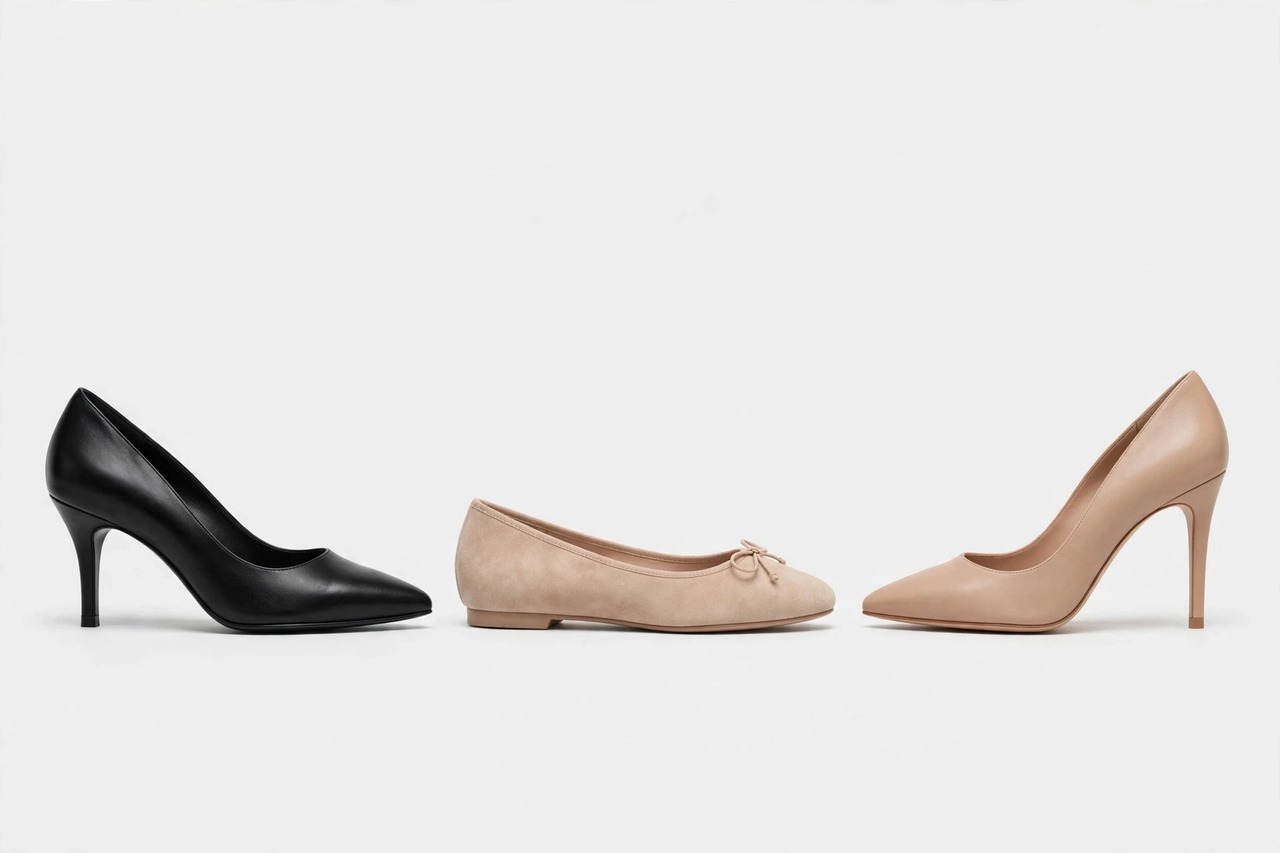
Dress shoes are the formal finish line of a woman's shoe wardrobe: pumps for the office, heels for the evening, flats that are far too elegant to be called casual. If you are sorting out the vocabulary, start here: dress means polished and occasion-appropriate on this page, not designer or luxury. The designer shoe pages elsewhere in this guide cover labels and fashion houses; this page is about the shoes themselves — their shapes, heights, materials and manners — and about choosing the right pair for the rung of the occasion ladder you are actually climbing.
A small, well-chosen collection does most of the work. One black pump, one nude shoe that lengthens your leg, one comfortable elegant flat and one evening shoe with some shine will cover most offices, weddings, dinners and ceremonies in a year. Everything else is personality, and personality is easier to add once the foundations are sound.
Pumps, Heels and Elegant Flats
The pump is the archetype: a closed toe, a closed or partially closed heel and a clean, unadorned vamp. Pointed toes are the dressiest and lengthen the leg, almond toes soften the line and forgive more foot shapes, and round toes read classic and a little conservative. Court shoes with a slightly lower, sturdier heel remain the backbone of traditional office dress. Kitten heels deserve special respect — an inch or two of lift with all-day wearability, and a retro elegance that suits dresses and cropped trousers equally.
Elegant flats prove that formal does not require height. A pointed-toe flat in patent, suede or a fine leather, a loafer with a polished finish and slim sole, or a ballet flat with a grosgrain trim can all attend a wedding or a boardroom if the rest of the outfit is dressed up and the shoe is immaculate. Evening flats with subtle embellishment — a small bow, a crystal buckle used sparingly — have become a genuine gala option, especially for tall women, dancers-at-heart and anyone whose feet have filed a formal complaint against heels.
The Occasion Ladder: Office, Wedding, Gala
Think of dress occasions as a ladder. The bottom rung is the everyday office, where a mid-heel pump or polished flat in black, navy or nude, in matte leather, is correct almost everywhere; patent and a pointed toe raise the polish for client-facing and conservative professions. One rung up are dinners, religious ceremonies and daytime formal events, where suede, a softer color palette and a modest heel or elegant flat fit the mood and the photographs.
Weddings and cocktail parties sit higher: this is the land of the heeled sandal, the satin pump and the metallic finish, matched to the invitation's dress code rather than to your most dramatic instinct. At the top rung — black tie and gala — the shoe should be unmistakably evening: satin, patent or embellished, with a refined heel or a truly dressy flat, in black or a deep jewel tone. Climbing one rung too high looks overdressed; one too low looks careless. When the invitation is ambiguous, a black mid-heel pump is the ladder's safest step.
Heel Heights, Comfort and Materials
Heel height is best judged by pitch and by hours, not by the tape measure alone. A two-inch heel with good arch placement can out-walk a three-inch heel of poor geometry, and a small platform under the forefoot quietly reduces the effective pitch of a taller shoe. For long days, block and sculpted heels distribute weight better than stilettos, cushioned insoles and a slightly padded collar prevent the end-of-day ache at the heel, and a toe box that matches your foot shape — wider at the toes, secure at the heel — prevents the slow slide forward that causes most dress-shoe misery.
Materials set both formality and lifespan. Smooth calf leather is the versatile standard, patent is the high-shine evening and wet-weather option, suede is the soft, matte luxury for dry days, and satin is strictly for celebrations. Lining matters more than shoppers expect: a leather lining breathes and molds to the foot, while a synthetic lining can feel slick and hot. Try dress shoes in the afternoon, walk on hard flooring, and remember that a half size of honest room, managed with an insole, beats a beautiful shoe that shortens your evening.
Matching to Outfits and Care
Matching is mostly about tone and finish rather than exact color twins. A nude shoe close to your own skin tone creates the longest leg line with dresses and cropped pants; black shoes anchor black, navy and jewel-tone outfits but can look heavy with pastels, where a soft metallic or tonal suede is kinder. Let one element shine: a patent or embellished shoe wants a quieter dress, and a heavily decorated dress wants the plainest pump you own. Hosiery, when worn, should be sheer and sandal-safe choices made before the event, not in the car.
Dress shoes live or die on maintenance. Rest each pair a day between wears with shoe trees in place, wipe leather after use, and brush suede in one direction with a dedicated brush. Replace heel tips at the first sign of wear — a worn tip changes your gait and can scar venue floors — and consider thin rubber sole protectors on leather soles you love. Store evening shoes in their bags, away from light that fades satin. A classic pump, resoled and reheeled, will outlast several seasons of trends.
Related Women's Guides
Photos

Looking for Women's Clothing Stores?
This guide helps you choose women's dress shoes by occasion, heel and material. To browse where to buy, visit our women's clothing store directory, where you can find retailers that carry them.