Women's Earmuffs Guide
Earmuffs keep your ears warm without crushing your hairstyle. Here is how the styles differ, which materials actually keep ears warm, and how to choose a pair that fits.
Shop Women's Earmuffs Now
Shop Women's Earmuffs on Amazon Shop Women's Earmuffs on eBayThe Amazon and eBay links on this page are affiliate links. If you make a purchase through them, Apparel Search may earn a commission.
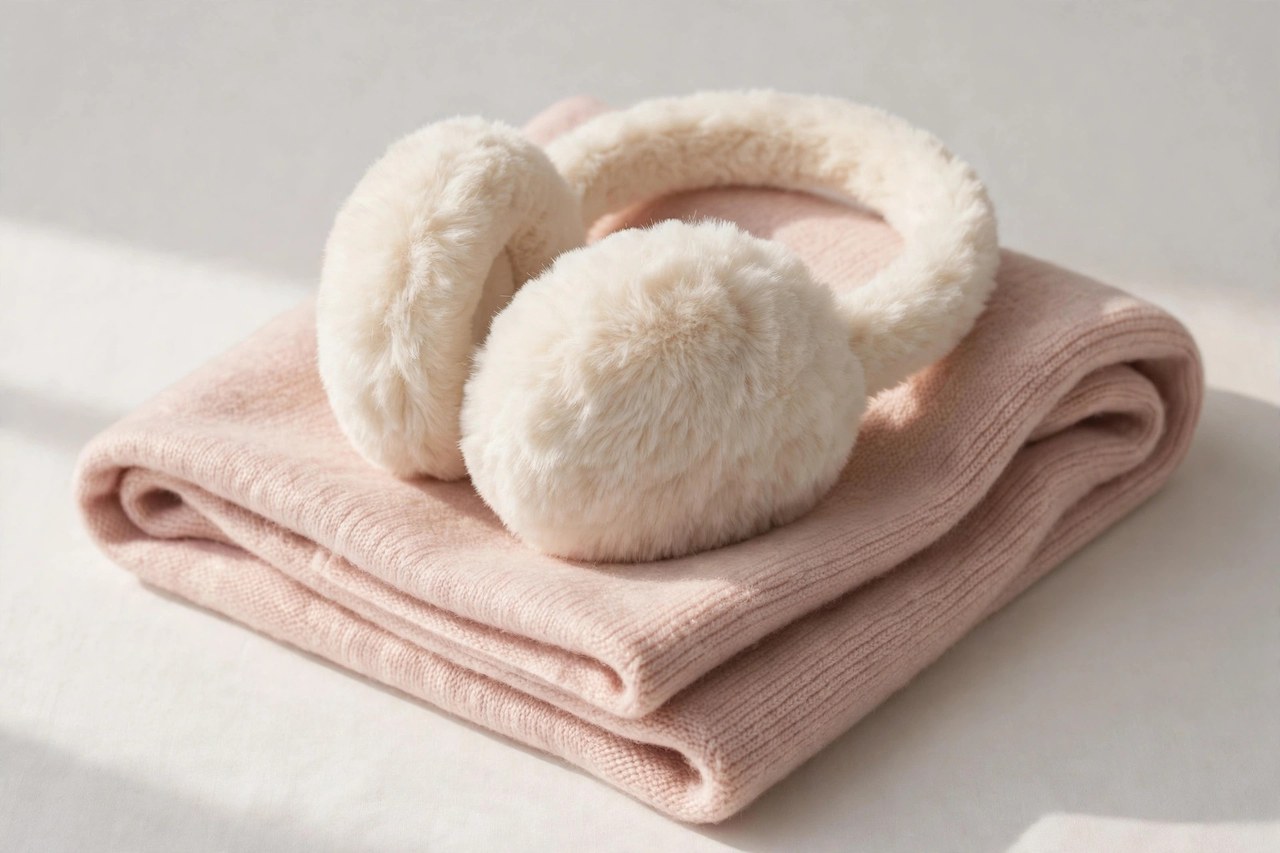
Earmuffs are the winter accessory for anyone who wants warm ears without the flattened hair and forehead squeeze of a close-fitting hat. Two padded cups sit over the ears, held in place by a band or a wrap-around frame, trapping warmth exactly where thin skin and cartilage lose heat fastest. Because ears have little insulating fat of their own, even a modest layer of fleece or faux fur makes a surprising difference on a windy day.
This guide covers fashion and warmth earmuffs — the kind you wear for the school run, the dog walk, the commute and the ski trip — and explains the styles, materials and fit details that separate a cosy pair from one that slips, pinches or leaves your ears cold anyway.
The Main Styles
The classic design is the over-head band: a slim, often adjustable band arcs over the crown and holds the cups against the ears. It is the easiest style to size and the most secure in wind. Wrap-around (behind-the-head) earmuffs run the band low, behind the head and under the hairline, so they work with ponytails, updos and hats worn at the same time; many fold flat for a coat pocket.
Bandless earmuffs are individual cups that grip each ear directly — discreet and hat-free, though they can work loose during sport. At the decorative end, knit and faux-fur fashion muffs add pom-poms, sequins, animal-ear shapes and bold colours, trading a little wind resistance for personality. Convertible designs even combine muffs with a headband or ear-warmer wrap for full coverage.
Materials and Real Warmth
Warmth comes from the cup padding and how completely it seals around the ear. Faux fur and sherpa fleece trap the most still air and feel softest against skin; knitted acrylic cups are lighter and fine for mild cold but let wind through unless they are lined. A fleece or velour lining inside the cup matters as much as the outer fabric, because it is the layer that actually touches the ear.
For serious cold, look for cups with a windproof membrane, a snug full-ear seal and padding that extends beyond the ear's edge. Shell fabrics such as softshell or quilted nylon shed snow better than open knits. If you run or ski in your muffs, moisture-wicking linings keep the cups comfortable instead of clammy once you warm up.
Fit: The Part Most People Skip
Earmuffs only work when the cups fully cover the ear, so check cup diameter against your ears — most adult cups are around 9–11 cm across. An adjustable or telescoping band lets you centre the cups; too short and they perch on top of the ear, too long and they slide down the jaw. Behind-the-head styles should sit low without pressing on the neck.
Comfort over hours comes down to clamping pressure. The band needs enough grip to stay put in wind, but a too-strong spring gives some wearers a headache within twenty minutes. If you wear glasses, thinner band arms that route behind the head clash less with spectacle arms, and bandless cups avoid the conflict altogether.
Earmuffs vs. Hats and Headbands
A hat covers more of the head and wins for all-over warmth, but it flattens hair and can be too warm indoors-on-transit days. A fleece headband or ear warmer covers ears plus forehead and stays put during sport, though it offers less insulation than a padded cup. Earmuffs sit between the two: maximum ear warmth, hairstyle intact, and easy to slip on and off as you move between street, train and office.
Care is simple: spot-clean fur and fleece with a damp cloth, let cups air-dry fully before storing, and keep folding hinges free of grit. Stored loose in a drawer rather than crushed in a pocket, a decent pair keeps its padding loft — and its warmth — for many winters. The very first earmuffs were patented in the 1870s by a fifteen-year-old, as the history section below explains.
Related Women's Guides
Chester Greenwood, the Teenager Who Invented Earmuffs
One clarification first: these are earmuffs for fashion and warmth — not hearing protection for construction sites and loud noise. Thermal earmuffs are made to cover a person's ears and keep them warm in cold environments, with pads of cloth or fur. They were invented by Chester Greenwood in 1873, when he was just 15 years old. He reportedly came up with the idea while ice skating, and had his grandmother sew tufts of fur between loops of wire to protect his ears from the cold. The design worked well enough to earn him U.S. patent #188,292 on March 13, 1877 — and Greenwood went on to become one of Maine's most celebrated inventors, while the basic shape he patented is still the shape of band earmuffs today. If you are shopping the category, browse fashion earmuffs in our products section; industry readers can find an earmuff factory in our manufacturing directory.
Photos

More to Explore on Apparel Search
Women’s Clothes Guide by Letter: A · B · C · D · F · G · H · I · J · K · L · M
Looking for Women's Clothing Stores?
This guide helps you choose women's earmuffs by style, material and warmth. To browse where to buy, visit our women's clothing store directory, where you can find retailers that carry them.