Women's Flats Guide
Flats are the shoes that do everything quietly: ballet flats, loafers, mules and more, with a thin heel or none at all. The styles, the comfort truth, and how to choose a pair that lasts.
Shop Women's Flats Now
Shop Women's Flats on Amazon Shop Women's Flats on eBayThe Amazon and eBay links on this page are affiliate links. If you make a purchase through them, Apparel Search may earn a commission.
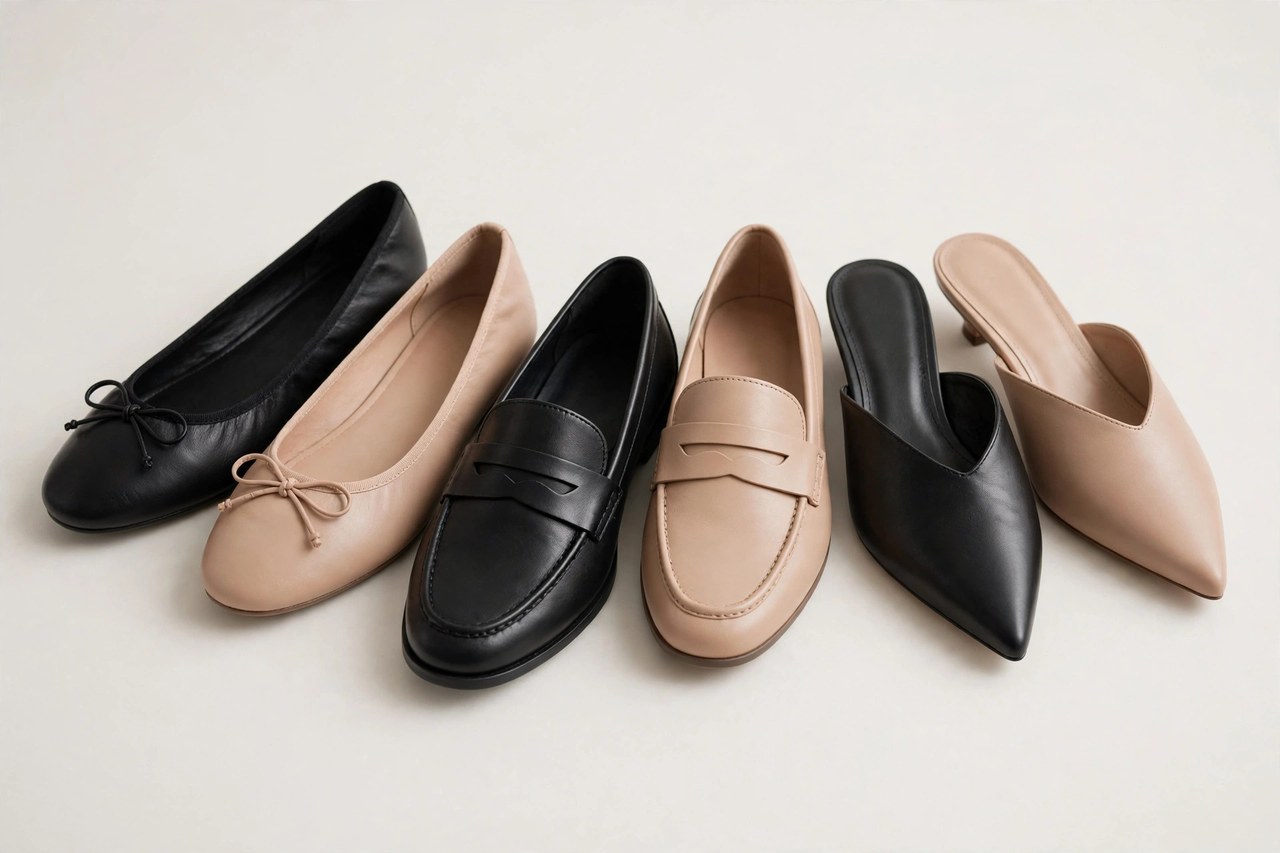
Flats are footwear with a very thin heel or the appearance of no heel at all — shoes that keep the foot essentially level with the ground. It is one of the broadest and most useful categories in women's footwear, covering everything from the ballet flat in a handbag to the loafer that anchors a work wardrobe, and it deserves a proper map.
This is the umbrella guide: the main flat styles and what each does best, the honest truth about comfort and support in flat shoes, and the quality checks that matter. Flat boots and flat sandals each get their own page, linked below.
The Main Flat Styles
The ballet flat is the icon: a soft, low-cut shoe derived from the ballet slipper, often with a small bow, that folds nearly flat and dresses up or down. Loafers are the structured cousin — slip-on, with a defined sole and heel breast, in penny, tassel and horsebit forms — and the flat that works hardest in offices. Mules are backless flats, pointed or round-toed, that read instantly polished with trousers and dresses.
Add Mary Janes (strapped, in flat form newly fashionable again), pointed-toe flats that elongate the leg like a heel without the height, d'Orsay flats cut away at the sides, espadrille flats for summer, and smoking slippers in velvet and suede. Each is the same idea — no heel, all purpose — tuned to a different outfit.
The Comfort Truth About Flats
A correction worth making: flat does not automatically mean comfortable or healthy. The thinnest ballet flats offer almost no cushioning or arch support, and wearing them all day on hard floors can ache feet, knees and backs as surely as high heels do. What makes a flat comfortable is inside: a cushioned insole, some arch contour, a flexible but not flimsy sole, and enough room for the toes.
For walking-heavy days, choose flats with sturdier soles and removable insoles you can upgrade. Save the paper-thin, foldable styles for what they are brilliant at — evenings, travel and the commute-change in your bag. Our fitness footwear guide covers the support question in depth for athletic shoes; the same principles apply in miniature here.
Choosing Quality
Leather uppers mould to the foot and last; patent and suede need more care but hold their look. Check the toe box (no pinching across the widest point), the heel grip (flats are notorious for slipping — a padded heel counter or elasticated top line helps), and the sole: a little texture or rubber beats smooth leather on wet pavements.
Construction tells the price story. Cemented (glued) soles are standard at most prices and fine; stitched soles last longer and can be repaired. Try flats on in the afternoon with the hosiery or socks you will actually wear, and walk on a hard floor, not just carpet — thin soles hide nothing there.
Styling Flats
Flats earn their place by pairing with everything: ballet flats with cropped trousers and midi dresses, loafers with tailoring and straight jeans, pointed flats anywhere a heel would go, mules with wide-leg trousers. The styling trick is the ankle: flats look best when the hem shows a little ankle or sits cleanly above the shoe, rather than puddling over it.
Keep one black pair, one neutral (nude, tan or metallic) pair and one colour or print pair in rotation and you have covered nearly every outfit a wardrobe produces. The wider footwear section — athletic, boots, casual, dress, sandals, trend — is linked from this page for the full picture.
More Flat & Footwear Guides
Two Definitions
First, the ballet connection: ballet flats derived from ballet shoes, for casual wear as well as dancing. Ballet shoes (also known as ballet slippers) are often referred to as “flats” or “flat shoes”, in contrast to the pointe shoes more advanced dancers wear; a ballet shoe, or ballet slipper, is a lightweight shoe designed specifically for ballet dancing, made from soft leather, canvas, or satin, with flexible, thin soles.
Second, the athletic cousin: racing flats are lightweight shoes used primarily for running a race — lightweight athletic shoes designed for long-distance track and field, cross country, and most often road races. They differ from normal training shoes mainly by the lack of a substantial heel — hence the name. For the training-shoe side of that story, see our fitness footwear guide.
Photos

Looking for Women's Clothing Stores?
This guide helps you choose women's flat shoes. To browse where to buy, visit our women's clothing store directory, where you can find retailers that carry them.