Women's Imprinted Activewear Guide
Activewear with something stamped on it: how custom prints get onto stretch performance fabric, which method suits which garment, and how teams and brands order it well.
Shop Women's Printed Activewear Now
Shop Women's Printed Activewear on Amazon Shop Women's Printed Activewear on eBayThe Amazon and eBay links on this page are affiliate links. If you make a purchase through them, Apparel Search may earn a commission.
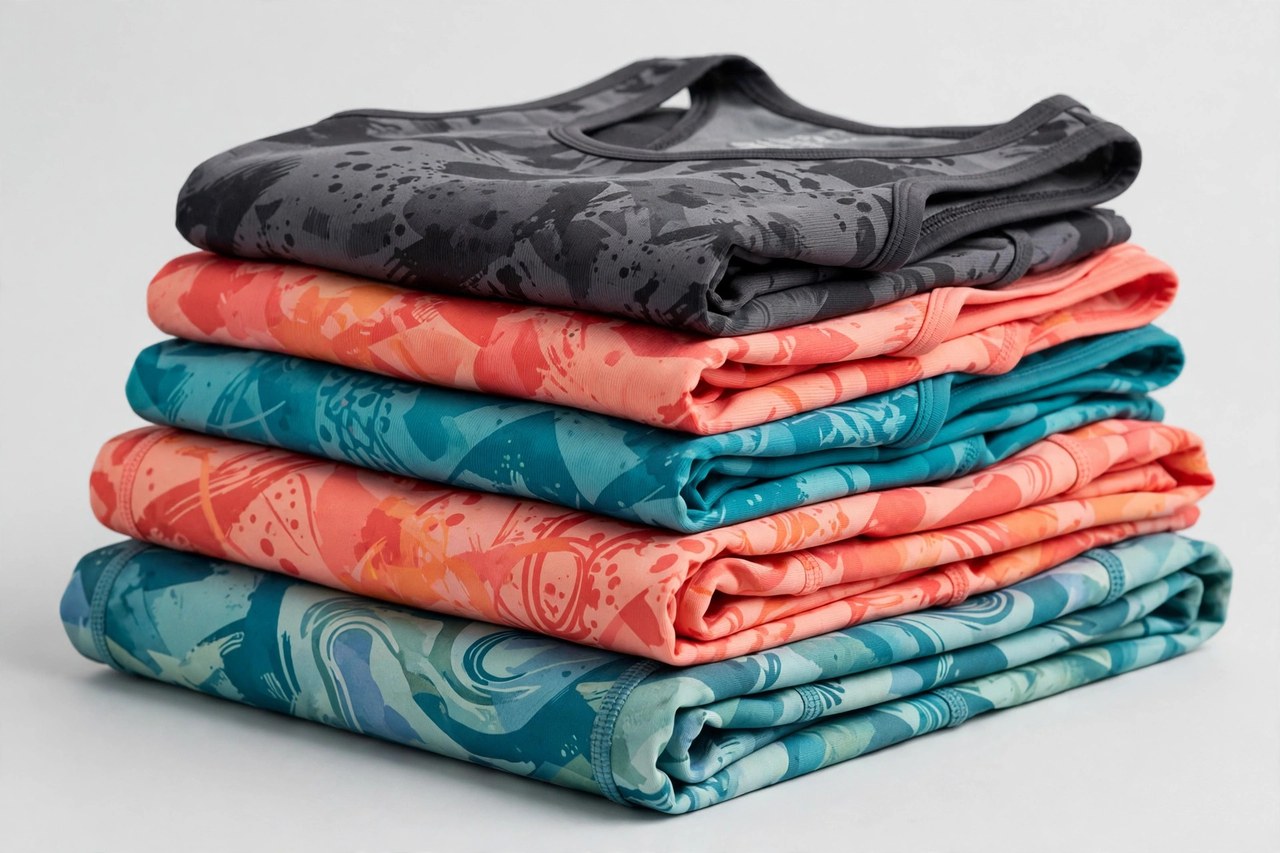
To imprint is to impress or stamp on a surface — and in fashion, imprinted clothing means printed clothing, most typically custom printed apparel. Imprinted activewear is where that idea meets sport: workout clothing carrying a team name, a race logo, a studio brand or a graphic design. It is the uniform of running clubs, gym teams, charity events and company wellness days everywhere.
The catch is the fabric. Activewear stretches, wicks and is usually synthetic — three things that punish the wrong print method. Choosing the method is most of the skill in this category, so that is where this guide spends its time.
How Prints Get onto Performance Fabric
Screen printing pushes ink through a mesh stencil, one colour at a time. On cotton-rich tees and hoodies it is economical and durable, but a thick ink film on a high-stretch legging can crack as the fabric extends — on stretch garments, ask for inks formulated with stretch additives, or choose another method. Direct-to-garment (DTG) printing works like an inkjet for cloth: superb detail, best on cotton, less happy on dark polyester.
Dye sublimation is the performance-fabric champion. The design is printed in special dyes and heat-pressed into polyester, where the dye bonds with the fibre itself: there is no raised film to crack, peel or block sweat, the print stretches with the garment, and all-over prints — leggings patterned edge to edge — become possible. Its limit is fibre: sublimation needs polyester or a high-poly blend, and it cannot print white. Heat transfer vinyl handles names and numbers one garment at a time. And a distinction worth keeping: embroidery is not imprinting — it is stitched, heavier, and usually reserved for logos on polo-style team tops.
Teams, Events and Corporate Apparel
Custom activewear is a great way to boost team spirit — matching kit turns a group of runners into a team before the start line. The same machinery serves the workplace: printed training tops and event tees are a standard branch of corporate apparel, promotional apparel campaigns use imprinted sportswear as giveaways that people actually keep, and studios commission small runs of branded kit through custom apparel printing services rather than stock factories. The industry also calls part of this field imagewear — clothing whose job is to carry an identity.
Personalised activewear appeals beyond groups, too: a name on a gym top, a mantra on a race vest, a one-off design on leggings. Short-run digital methods have made single garments practical, where screen printing still rewards ordering in dozens.
Ordering Imprinted Activewear Well
Start with the garment, not the graphic: a print cannot rescue a legging that goes sheer in a squat or a top whose seams chafe at mile six. Check the fibre content against the method — sublimation for polyester performance pieces, screen or DTG for cotton-rich casual pieces — and confirm print placement on a real-size proof, because a chest logo that sits well on a medium migrates on an XS or an XXL.
For team orders, collect sizes before you fall in love with a design, allow for the printer's minimums and lead time, and order a couple of spares in the common sizes. If the event has a date, work backwards from it with a week to spare: imprinting queues lengthen exactly when every other team has the same idea.
Care So the Print Lasts
Prints die by heat and friction. Wash imprinted activewear inside out, cool, and with like fabrics, skip the fabric softener (it coats both wicking fibres and print), and dry flat or on the line rather than in a hot tumble dryer. Never iron directly on a print. Sublimated pieces are the exception that tests the rule — with the dye inside the fibre, there is almost nothing left to ruin, which is one more reason competitive teams have moved to it.
Related Women's Guides
More to Explore on Apparel Search
Looking for Women's Clothing Stores?
This guide helps you choose women's imprinted activewear. To browse where to buy, visit our women's clothing store directory, where you can find retailers that carry them.