Women's Jumper Dress Guide
The sleeveless dress that is really a layer: worn over blouses, shirts and sweaters, the jumper — the pinafore dress in British English — is a whole outfit system in one garment.
Shop Women's Jumper Dresses Now
Shop Women's Jumper Dresses on Amazon Shop Women's Jumper Dresses on eBayThe Amazon and eBay links on this page are affiliate links. If you make a purchase through them, Apparel Search may earn a commission.
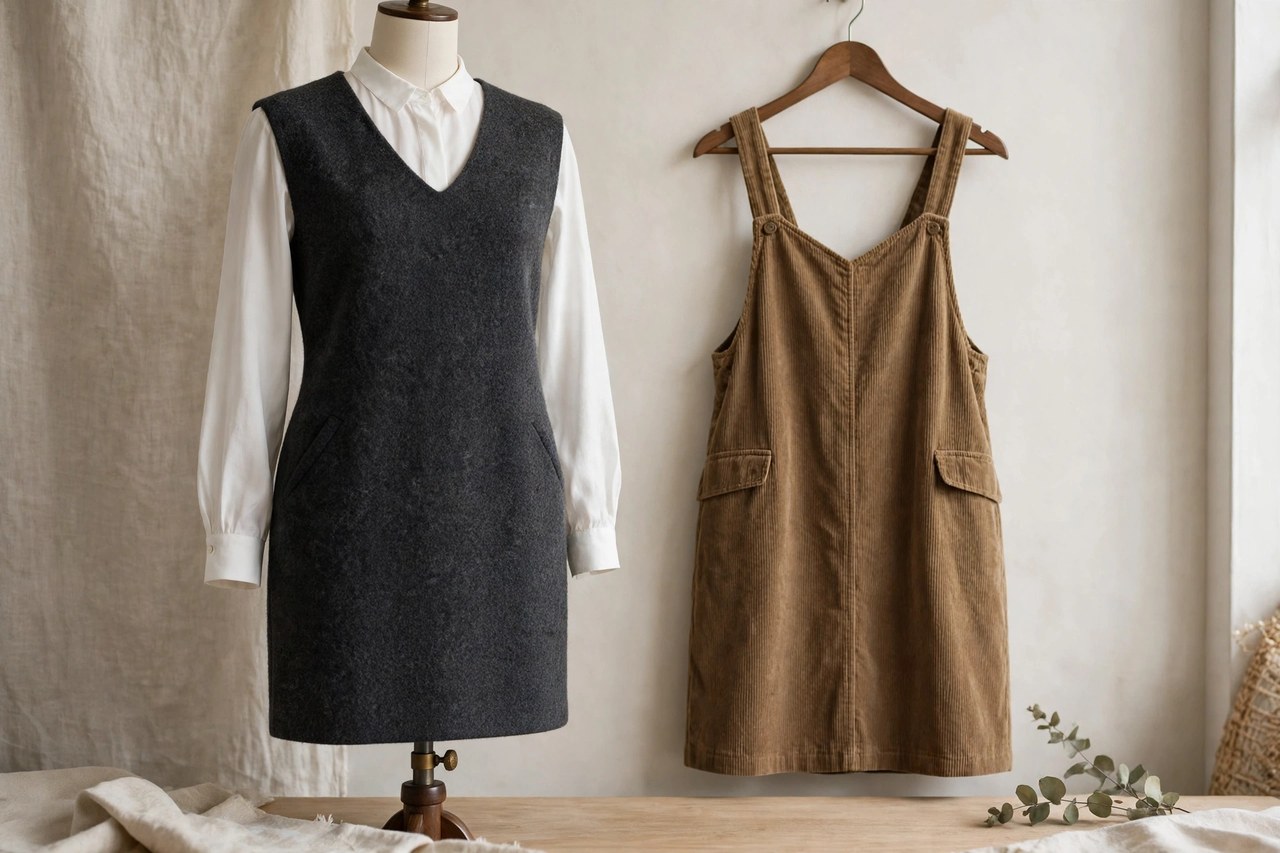
What is a jumper dress? A jumper or jumper dress is a sleeveless, collarless dress intended to be worn over a blouse, shirt, T-shirt or sweater. It is not a complete outfit — it is the frame for one, and that is its genius: one jumper over five different underlayers is five outfits. In British English a jumper dress can be referenced as a pinafore dress, or informally a pinafore; and a language trap for travelers — in British English the term jumper by itself describes what is called a sweater in American English, which is, confusingly, exactly what you wear underneath one.
Underneath the styling sits the plain anatomy of a dress: a garment consisting of a skirt with an attached bodice (or a matching bodice giving the effect of a one-piece garment), a top piece that covers the torso and hangs down over the legs. The jumper version simply leaves the arms and neckline open, delegating them to the layer below.
A Brief History of the Pinafore
The pinafore began as protection: a washable apron-front pinned (“pinafore” is literally “pinned afore”) over a good dress, for children and for work. By the late nineteenth century the protective apron had become a dress style in its own right, and the twentieth century turned it into a uniform of girlhood — school pinafores over blouses are still standard issue in much of the world — before fashion adopted it for adults.
Adult jumper dresses cycle back whenever layering is in fashion: over turtlenecks in the 1970s, over tees in the 1990s, over shirts and fine knits in the current wave. The type of collar on the layer beneath, and whether or not there is pleating in the skirt, are variables in the design — the jumper stays a constant while everything under it changes. This type of dress is typically super comfy and very roomy, which explains both the school connection and the staying power.
Fabrics and Hemlines
Jumpers are made to be the durable half of the outfit, so their fabrics run sturdy: corduroy, denim, wool and wool blends, twill, ponte and heavier linens. A jumper can come in a wide variety of fabrics and colors, but the pattern to look for is weight — the cloth should be substantial enough to hold the dress's shape over a soft layer, or the underlayer's folds will print through and the frame collapses.
The hemline is where jumpers declare their intent. The hemline is the line formed by the lower edge of a garment, measured from the floor — and it is perhaps the most variable style line in fashion, changing shape and ranging in height from hip-high to floor-length. School and classic jumpers sit at or below the knee; fashion pinafores run short, balanced by the modesty of the layer beneath; long jumpers over boots are the winter version, essentially a sleeveless coat-dress worn indoors.
Layering It Well
The underlayer does the talking, so choose it by contrast. A crisp white shirt under a dark wool jumper is the classic; a fine turtleneck sweater is the warm version; a striped T-shirt makes it casual; a blouse with a statement collar — the collar shows entirely, since the jumper has none — makes it dressed. Sleeves matter for the same reason: the jumper shows the whole arm of whatever is beneath, so puff sleeves, cuff details and good knitwear all get their moment.
Fit is forgiving by design — the style is roomy — but two checks keep it sharp: the armhole should sit close enough not to expose the side of the underlayer awkwardly, and the waist, if the pattern has one, should meet your own. Belt over both layers to define it, add tights and boots in winter, and the jumper dress covers more of the calendar than almost any other dress in this guide.
Related Women's Guides
Photos

Looking for Women's Clothing Stores?
This guide helps you choose women's jumper dresses. To browse where to buy, visit our women's clothing store directory, where you can find retailers that carry them.