Women's Petite Cocktail Dress Guide
Petite cocktail dresses keep the polish of short formal dressing in true proportion — hems that hit the knee as intended, bodices that fit a shorter torso, and embellishment scaled to a smaller frame.
Shop Women's Petite Cocktail Dress Now
Shop Women's Petite Cocktail Dress on Amazon Shop Women's Petite Cocktail Dress on eBayThe Amazon and eBay links on this page are affiliate links. If you make a purchase through them, Apparel Search may earn a commission.
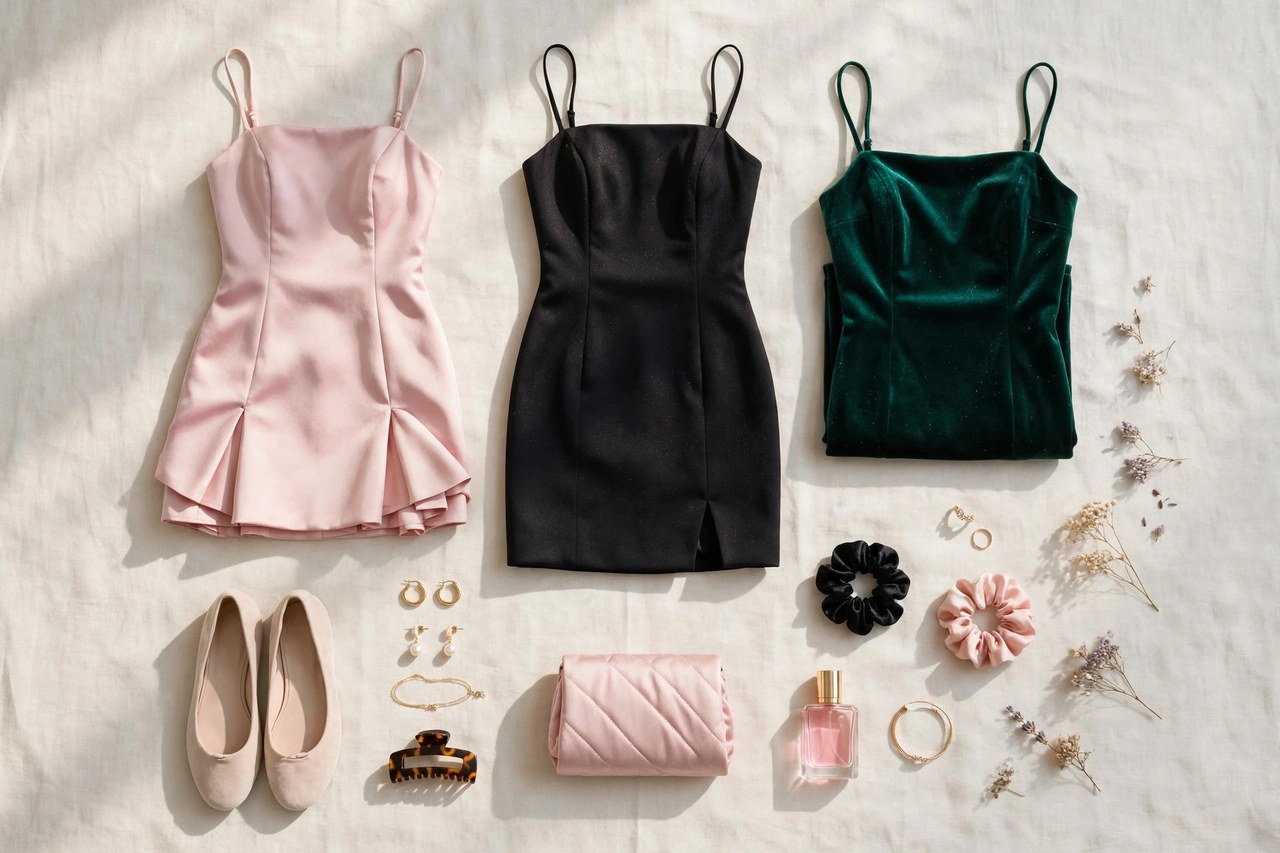
A cocktail dress is a short, smart dress for evening parties and semi-formal occasions — festive enough for champagne and photographs, short enough to move, dance and sit comfortably. In petite sizing, made for women 5'4" and under, that familiar formula is re-proportioned: the hem is raised so knee length really means at the knee, the waist seam sits on a shorter torso, straps and necklines are placed for narrower shoulders, and sequins, lace motifs and bows are scaled down so the decoration suits the dress instead of dominating it.
This guide treats the petite cocktail dress on its own terms, between the longer formality of evening gowns and the broader world of petite dresses in general. It covers the silhouettes that work hardest, the fabrics that carry cocktail polish, how neckline and sleeve placement change in petite patterns, and the practical fit checks — sitting, stairs, dancing — that a party dress has to pass for hours at a time, not just in front of a fitting-room mirror.
Silhouettes: Sheath, Fit-and-Flare, Wrap and Shift
The sheath is the cocktail standard: a clean, close column that in petite cutting follows the body without the extra hip and torso length that makes regular sheaths bunch at the waist. The fit-and-flare nips at a raised petite waist and opens into a skirt whose fullness is reduced in volume, so it twirls without overwhelming. The wrap and faux-wrap adjust across the bust and flatter shorter torsos, while the shift offers a straighter, easier fit that relies on luxurious fabric rather than shaping.
Length decides formality and leg line together. Most petite cocktail dresses are designed to end just above, at, or just below the knee — on a petite leg that is the longest-looking, most versatile zone. Mini lengths read younger and suit less formal parties; midi lengths exist in petite ranges but are cut several inches shorter than regular midis so they end mid-calf rather than drifting toward the ankle. Check the product's garment length measurement against your own knee point instead of trusting the style name, which brands use loosely.
Necklines, Straps and Sleeves in Petite Scale
Necklines sit higher and narrower in petite patterns, and that small change prevents the most common petite party problem: a regular V-neck or sweetheart cut for a longer torso plunging far lower than intended. Straps are shortened and set closer together to match narrower petite shoulders, so they stay up through an evening instead of needing constant adjustment. Cap sleeves, flutter sleeves and short sleeves are cut with a shorter sleeve length and a smaller armhole, which keeps the whole bodice in scale.
Sleeveless styles deserve a specific check: the armhole should sit close to the body without cutting in, because petite armholes are raised and a regular dress's deeper armhole often gaps and shows underpinnings. One-shoulder and halter styles can work beautifully on petite frames when the single strap or halter tie is scaled, but avoid very wide straps and oversized ruffles at the shoulder, which visually widen and shorten. If a dress needs strap shortening or a hem lift, both are simple, inexpensive alterations — budget for them rather than settling.
Fabrics and Embellishment, Scaled Down
Cocktail polish comes from fabric. Satin and silk give the classic sheen, crepe gives a matte, fluid alternative that travels and sits well, lace adds texture, and velvet owns the winter party season. In petite dresses the lace motifs, sequin size and bead density are, in better ranges, genuinely smaller: a petite lace dress uses a finer pattern repeat so a whole motif fits across a shorter bodice instead of being cropped awkwardly by seams, and smaller sequins keep the sparkle proportionate at close range in photographs.
Construction should support the fabric. Look for a bodice lining that smooths and protects skin from sequin backing, a hem weighted or finished cleanly so short skirts hang straight, and a zip that runs smoothly over the waist seam. Heavier embellishment belongs on structured silhouettes that can carry it; fluid crepe and chiffon styles should stay lighter in decoration. For petite frames, one clear focal point — a neckline, a bow at the raised waist, a beaded bodice over a plain skirt — almost always photographs better than all-over competing detail.
Fit Checks, Styling and Care
Test a cocktail dress the way the party will. Sit down and check the hem still covers comfortably and the bodice does not dig; climb a step; raise your arms as if dancing or reaching a top shelf. The waist seam should sit at your natural waist, straps should survive a shrug, and you should be able to eat a meal — a dress that only fits while standing still and holding your breath will not survive the evening. Underpinnings should be chosen with the dress: petite strap spacing changes which bra styles disappear.
Shoes set the final proportion. A heel lengthens the leg under a knee-length hem, but a refined flat or low block heel works when the hem is correctly petite and the shoe is dressy in material. Keep jewellery scaled as thoughtfully as the dress: one statement piece, not three. For care, satin, lace and embellished dresses usually need dry cleaning or very gentle hand washing as the label directs; store them in breathable garment bags, sequined styles turned carefully or laid flat, and have spots treated promptly, since champagne and sugar stains yellow invisibly over time.
Related Women's Guides
More to Explore on Apparel Search
Looking for Women's Clothing Stores?
This guide helps you choose women's petite cocktail dress. To browse where to buy, visit our women's clothing store directory, where you can find retailers that carry them.