Women's Petite Denim Guide
Petite denim covers the whole indigo family — jeans, jackets, skirts, dresses and shirts — cut with shorter inseams, rises and sleeves so the fabric's structure works with a smaller frame.
Shop Women's Petite Denim Now
Shop Women's Petite Denim on Amazon Shop Women's Petite Denim on eBayThe Amazon and eBay links on this page are affiliate links. If you make a purchase through them, Apparel Search may earn a commission.
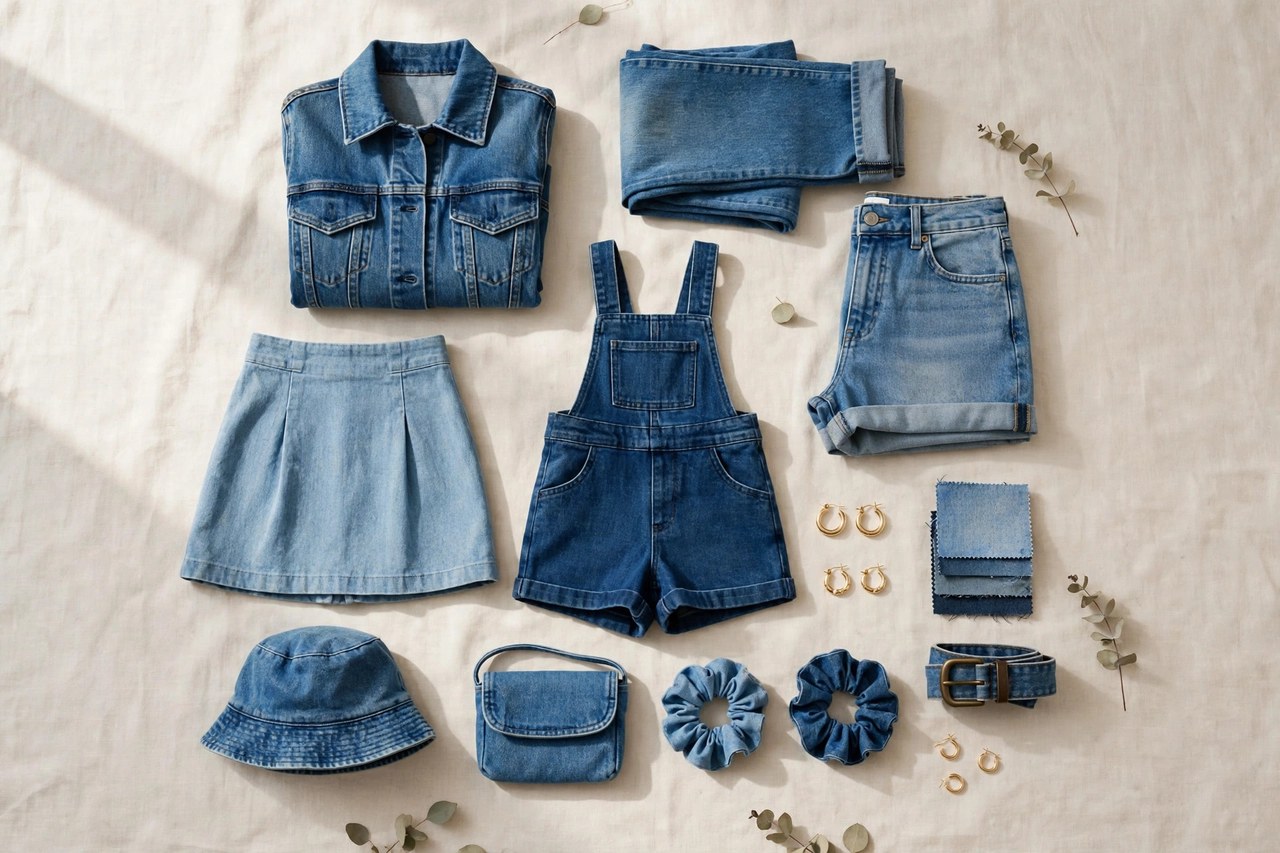
Denim is a fabric before it is a garment: a sturdy cotton twill, traditionally indigo-dyed on the warp thread and white on the weft, which is why it fades the way it does. This guide is the umbrella for petite denim in all its forms — jeans first, but also jackets, skirts, dresses, shirts and shorts — made for women 5'4" and under. Petite cutting matters enormously in denim because the fabric has so little give compared with knits: a rise half an inch too long or a knee placed two inches too low cannot be shrugged off.
The sections below explain what changes in petite denim patterns, the main garments and how their proportions shift, denim weights, washes and stretch levels, and how to judge fit in a fabric that relaxes with wear. Premium and designer jeans in petite sizes have their own guide; here the subject is the whole denim wardrobe, from the everyday jean to the jacket that finishes half your outfits from spring through autumn.
Petite Denim Proportions: Rise, Inseam and Knee Placement
Three measurements define petite denim fit. The inseam is shorter — petite jeans commonly run several inches shorter than regular equivalents, with ankle styles genuinely ending at the ankle bone. The rise is shorter too, front and back, so a mid-rise petite jean sits where a mid-rise should, instead of creeping toward the ribs the way a regular mid-rise does on a short torso. And the knee position is raised: the leg's narrowest point, and any fading, whiskering or distressing, is placed at a petite knee, not halfway down the shin.
Details follow the same scaling. Petite denim pockets are a little smaller and placed higher and closer on the seat, which lifts visually instead of dragging the eye down; belt loops are shorter; and the leg opening of bootcut and flare styles is narrowed so the break over a petite shoe looks deliberate. In jackets, the body is cropped shorter, sleeves end at the wrist, and button spacing closes up. In skirts and dresses, waist seams, yokes and hems are all repositioned for a shorter torso and leg. When a brand simply hems a regular jean and calls it petite, these are the things that go wrong.
The Denim Wardrobe: Jeans, Jackets, Skirts and Dresses
Jeans remain the core: petite skinny, straight, bootcut, flare and wide-leg cuts, each with the proportions above. Straight and bootcut are the most forgiving starting points; wide-leg petite jeans need a genuinely short inseam and a high, well-placed rise to avoid swamping. Denim jackets in petite cut end at the high hip rather than the low hip, which keeps them layering neatly over dresses. Denim skirts — pencil, A-line and mini — place their waist and hem for a shorter leg, and denim dresses and shirts scale collars, plackets and cuffs.
Build the wardrobe in washes, not just shapes. A dark indigo or black pair of petite jeans dresses up for evenings and work; a mid-blue straight leg is the everyday default; a light wash or white pair belongs to summer. One petite denim jacket in a classic mid wash layers over almost everything, including floral dresses where it balances sweetness with structure. Because denim is durable and slow to date, these are good places to buy quality once: check that patterns match at seams, hardware is solid, and the petite proportions are real rather than a hemmed afterthought.
Weights, Washes and Stretch
Denim weight is measured in ounces per yard. Lightweight denim under about 10 ounces makes shirts, dresses and summer jeans; midweight 10 to 12 ounces is the versatile standard for jeans and skirts; heavyweight above 12 ounces gives rigid, structured jeans and jackets that mould to the wearer over time. On a petite frame, very heavy rigid denim can feel like armour in a full-length jean, so many petite shoppers prefer midweight cloth with a little comfort built in, reserving rigid denim for jackets and shorter garments.
Stretch changes fit math. Jeans with one to two percent elastane hold shape while easing the waist and knee; higher-stretch jegging-style denim clings and should be bought snug, because it relaxes most. Washes are finishes, not colors alone: rinse washes stay dark and dressy, stone and enzyme washes soften and lighten, and distressed styles place abrasion by hand or laser — in petite ranges that placement is, crucially, at the correct knee and thigh. Raw and selvedge denim belong mainly to the premium category and reward the patient break-in described in the designer jeans guide.
Fit Checks, Alterations and Care
Try petite denim sitting, walking and climbing a step. The waistband should stay against the back without a gap — a sign the rise and yoke suit a petite torso — and the front rise should lie smooth, not fold into horizontal creases, which betray excess length. Knees of skinny and straight styles should flex at your knee. Remember denim, especially stretch denim, gives with wear: a pair that is comfortably snug in the shop is usually right, while a pair already loose will bag at the seat and knee within a day.
Alterations have limits worth knowing. Hemming a petite jean is cheap, but hemming a regular jean cannot fix its long rise and low knee, which is the whole argument for buying true petite cuts. Keep original-hem hemming for flares if the taper matters. For care, wash denim inside out in cool water, sparingly — spot clean and air between wears to preserve indigo — and dry flat or on the line, since tumble heat shrinks length you cannot spare and degrades elastane. Store jeans folded or hung by the waistband, jackets on hangers that support the shoulder.
Related Women's Guides
More to Explore on Apparel Search
Looking for Women's Clothing Stores?
This guide helps you choose women's petite denim. To browse where to buy, visit our women's clothing store directory, where you can find retailers that carry them.