Women's Petite Designer Jeans Guide
Designer jeans promise better denim, better washes and a better seat — in petite sizes that promise only holds when the rise, knee and inseam are genuinely cut for a shorter leg.
Shop Women's Petite Designer Jeans Now
Shop Women's Petite Designer Jeans on Amazon Shop Women's Petite Designer Jeans on eBayThe Amazon and eBay links on this page are affiliate links. If you make a purchase through them, Apparel Search may earn a commission.
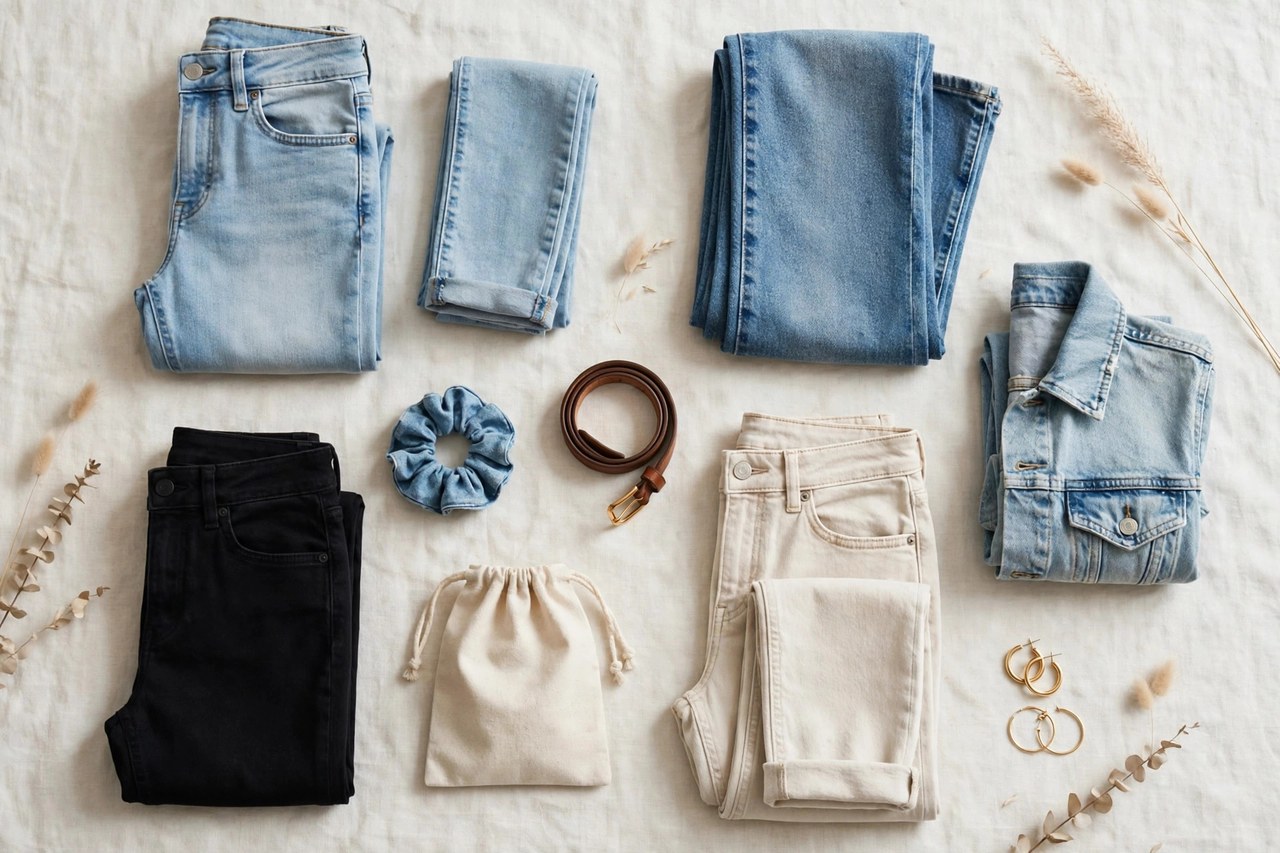
Designer jeans are the premium tier of denim: jeans sold on the quality of their cloth, the sophistication of their washes, the precision of their fit and, frankly, the name on the back pocket. In petite sizes, for women 5'4" and under, that premium has to include proportion. A designer jean cut only in regular length and then hemmed still carries a regular rise and a knee break in the wrong place, and no wash or label compensates. True petite designer jeans are patterned with shorter inseams, shorter rises and raised knees from the start.
This guide separates the real premium from the decorative kind. It explains what designer denim actually does differently — fabric mills, wash processes, pocket engineering — which petite fits the leading premium styles come in, how to judge whether a high price is buying construction or only branding, and how premium denim breaks in and should be washed. The broader denim category, including jackets and skirts, is covered in the petite denim guide; here it is jeans, at the top of the market.
What Makes Denim 'Designer': Fabric, Wash and Finish
Premium jeans start with better cloth, often from Japanese, Italian or American mills known for dense, characterful denim. Selvedge denim, woven on vintage shuttle looms with a self-finished edge, is the connoisseur marker: slower-made, narrower fabric with a distinctive edge visible in a turned-up cuff — and in petite lengths that cuff detail is cut, not hemmed away. Ring-spun yarns give the vertical fade character that makes worn designer jeans look rich rather than merely faded, and weights run heavier and more structured than budget denim.
The wash is the second craft. Designer washes are built in layers — hand sanding, whiskering placed by hand at the hip crease, enzyme and stone processes, resin setting and careful fading — to imitate years of natural wear convincingly. On petite designer jeans this artistry must be repositioned: whiskers at a petite hip height, knee fades at a petite knee, hems faded for the actual shorter length. Finishing details complete the tier: branded rivets and shanks, leather or high-quality jacquard back patches, chain-stitched hems and signature pocket stitching, all executed more cleanly than in mass-market jeans.
Petite Fits in Premium Styles
Premium lines organize fits by leg shape, and petite versions follow. The petite skinny and cigarette rely on a shorter rise and an ankle inseam that truly ends at the ankle, so the fabric does not stack in wrinkles. The petite straight is the connoisseur default, especially in selvedge, cut with the knee raised so the leg hangs clean. Bootcut and flare petite styles move the knee break up and narrow the hem opening, and their inseams are graded for the heel height the style assumes — check the stated inseam against your shoe, since an inch changes the whole effect.
Rise choice deserves care at premium prices, because you will wear the decision for years. High-rise petite designer jeans, with the rise shortened for a petite torso, give the longest leg line and suit tucked tops; mid-rise remains the most forgiving across bodies and the easiest to find in rigid, non-stretch premium denim. Back pocket placement is engineered more precisely at this tier: smaller, higher, closer-set petite pockets that lift the seat. Judge them in a mirror from behind as rigorously as from the front — pocket placement is half of what designer money buys.
Price, Authenticity and Value
A high price is justified by fabric source, wash labor and construction, not by a logo alone. Inspect accordingly: denim should feel dense with a dry, substantial hand; stitching should be even and heavy, with chain stitching at hems and yoke; hardware should be metal and firmly set; interior finishing should be clean, with pocket bags in sturdy cotton. Stretch premium denim should recover instantly when the knee is bent and released. If a jean at a designer price uses thin, limp cloth and plastic-feeling hardware, the price is branding, and petite shoppers can do better elsewhere.
Buy designer jeans through authorized retailers or reputable resale with authentication, since premium denim is heavily counterfeited and fakes copy labels while missing the cloth entirely. On value: one pair of petite designer jeans in a dark, versatile wash, worn twice a week, typically outearns three cheap pairs on cost per wear, because premium denim holds its shape at knee and seat and its wash deepens rather than greying. Watch for the petite capsules of premium labels at seasonal sales, but never size-compromise a rigid denim for a discount — rigid cloth will not forgive the error.
Break-In, Sizing and Care
Premium denim, especially rigid and selvedge styles, breaks in: a new pair should feel snug at the waist and close through the leg, moulding over the first dozen wears to your hips and knees. Buy stretch styles closer to your final fit, since they relax less dramatically but bag sooner if bought loose. Petite designer sizing usually follows waist measurement in inches rather than dress sizes, sometimes with a stated petite inseam — measure your natural waist and preferred inseam with a tape, and trust those numbers over the size you wear in high-street jeans, which differs.
Care preserves both fit and fade. Wash premium jeans infrequently, inside out, in cool water with a dark-denim detergent, and line dry in shade; frequent hot washing greys indigo and destroys the wash contrast that justified the price. Selvedge devotees often delay the first wash for months to set sharp fades at the petite knee and hip, spot cleaning in between — worthwhile if you bought the jeans as a fading project, optional if you bought them as polished dark denim, in which case regular gentle washing keeps them even and dressy. Store folded, and re-hem only with original-hem methods.
Related Women's Guides
Looking for Women's Clothing Stores?
This guide helps you choose women's petite designer jeans. To browse where to buy, visit our women's clothing store directory, where you can find retailers that carry them.