Women's Petite Designer Brands Guide
Not every designer label cuts a real petite range — this guide explains how premium brands approach petite sizing, what their investment pieces do differently, and how to judge value.
Shop Women's Petite Designer Brands Now
Shop Women's Petite Designer Brands on Amazon Shop Women's Petite Designer Brands on eBayThe Amazon and eBay links on this page are affiliate links. If you make a purchase through them, Apparel Search may earn a commission.
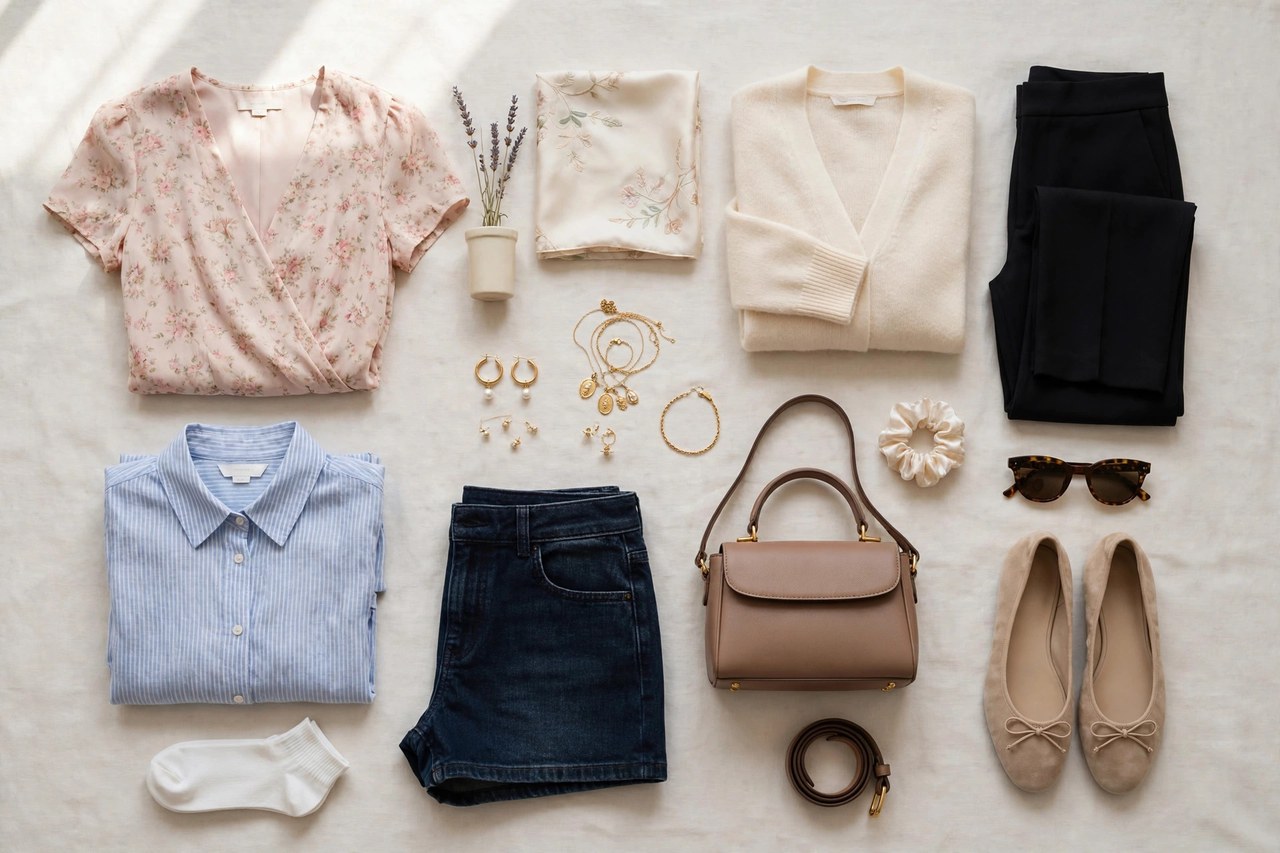
Designer brands occupy the top tier of fashion: houses and labels whose names carry a design point of view, premium fabrics and prices to match. For petite women, 5'4" and under, the designer question is sharper than for anyone else, because many famous labels still cut only regular proportions, grade a token small size, or offer petite pieces only in a narrow online capsule. A designer garment in the wrong proportions is worse than a high-street garment in the right ones — the cost of tailoring a structured designer piece can approach the cost of the piece itself.
This guide is about brands as a landscape: how designer labels differ in their petite commitment, which categories are worth designer money in petite sizes, and how to read the quality markers that justify, or fail to justify, a premium price. Individual seasonal ranges are covered in the designer collections guide; here the focus is the labels themselves, their sizing honesty, and a buying strategy that puts your money where petite shoppers actually see the difference.
How Designer Labels Handle Petite Sizing
Designer petite provision falls into three tiers. A few labels maintain full petite ranges with their own patterns — shorter rises, torsos and sleeves, narrower shoulders and scaled details across coats, tailoring, dresses and knitwear. A second group offers petite capsules: a edited selection, often the season's core styles, re-proportioned correctly but limited in color and size availability. The third group, still large, offers no true petite at all, where the smallest regular size is expected to serve — and for structured garments, it usually does not.
Learn to verify rather than assume. A true petite pattern states petite measurements: garment length, sleeve and inseam figures several inches below the regular equivalent, and often a P size designation with its own size chart. If a label's 'petite' offering shows identical garment measurements to regular, it is a marketing label, not a pattern. Designer price makes this diligence worthwhile, and the best petite designer brands reward it with the hardest thing to find at any price: a coat or blazer whose shoulder, waist and cuff all land correctly with no alterations at all.
Where Designer Money Pays in a Petite Wardrobe
Spend first where fit is least forgiving. Tailored coats and blazers are the strongest designer investment for petite women, because shoulder width, lapel scale and button stance are exactly what alteration cannot cheaply change, and premium wool and construction outlast trends by a decade. Tailored trousers and suiting follow, for the shorter rise and correctly placed knee. Occasion dresses justify designer prices when the bodice engineering — internal structure, scaled embellishment, a neckline placed for a short torso — saves a round of specialist alteration.
Spend more cautiously where fit is forgiving or trends move fast. Knitwear, simple tees, scarves and most accessories cross over from regular ranges with far fewer proportion problems, though petite sleeves and body lengths are still nicer. Trend-led pieces date before their quality pays back, whatever the label. A useful rule for petite designer shopping is to buy the skeleton of the wardrobe — coat, blazer, trousers, one great dress — at designer level in true petite cuts, and let more flexible categories come from wherever the proportions and fabric please you.
Quality Markers That Justify the Price
At designer level, quality should be visible on inspection. Fabrics are natural-fiber rich with substance and recovery; prints and plaids match at seams; linings are full, smooth and slightly longer-wearing than the shell; buttons are horn, corozo, shell or well-finished metal rather than thin plastic, with spare buttons attached. In petite pieces, check scaling quality too: a designer petite lapel should be redrawn narrower, pocket flaps and cuffs reduced, prints re-spaced — these redraws are part of what the price is buying, and their absence is a legitimate reason to walk away.
Construction markers include clean, dense stitching with no loose threads, seam allowances generous enough for a tailor to let out, canvassing or proper interfacing in tailored fronts, and hems finished by hand or with invisible machining. Hardware on bags, belts and closures should feel weighty and operate smoothly. None of this requires expertise to check: run a hand inside, look at the garment inside-out, and compare honestly with a mid-priced piece. The best designer petite brands survive that comparison easily; labels trading on name alone often do not.
Buying Strategy, Sales and Care
Designer petite stock is limited, so timing matters. Core styles in popular petite sizes sell through early in a season; sales, conversely, are where petite shoppers can find exceptional value in slower-moving colors and the ends of size runs. Buy classics on promotion without hesitation, but never buy a designer piece that needs major structural alteration just because it is discounted — a bargain blazer with the wrong shoulder is not a bargain. Keep a list of your key measurements, including sleeve and garment lengths, to shop online ranges with open eyes.
Authentication and condition matter in the resale market, where petite designer pieces circulate at large discounts: buy from reputable resellers, check measurements rather than stated size, and factor cleaning into the price. For care, follow the stricter instruction when designer fabrics blend fibers, use wide hangers for tailored shoulders, rest knitwear folded, and have treasured coats and dresses cleaned by a specialist who handles embellishment. Bought with proportion discipline, a small rotation of designer petite anchors quietly upgrades everything worn with them.
Related Women's Guides
More to Explore on Apparel Search
Looking for Women's Clothing Stores?
This guide helps you choose women's petite designer brands. To browse where to buy, visit our women's clothing store directory, where you can find retailers that carry them.