Women's Plus Size Clothing Guide
An umbrella guide to women's plus size clothing — dresses, tops, bottoms, outerwear and layers in 14W and up, all graded for curve proportions rather than scaled from smaller sizes.
Shop Women's Plus Size Clothing Collection Now
Shop Women's Plus Size Clothing Collection on Amazon Shop Women's Plus Size Clothing Collection on eBayThe Amazon and eBay links on this page are affiliate links. If you make a purchase through them, Apparel Search may earn a commission.
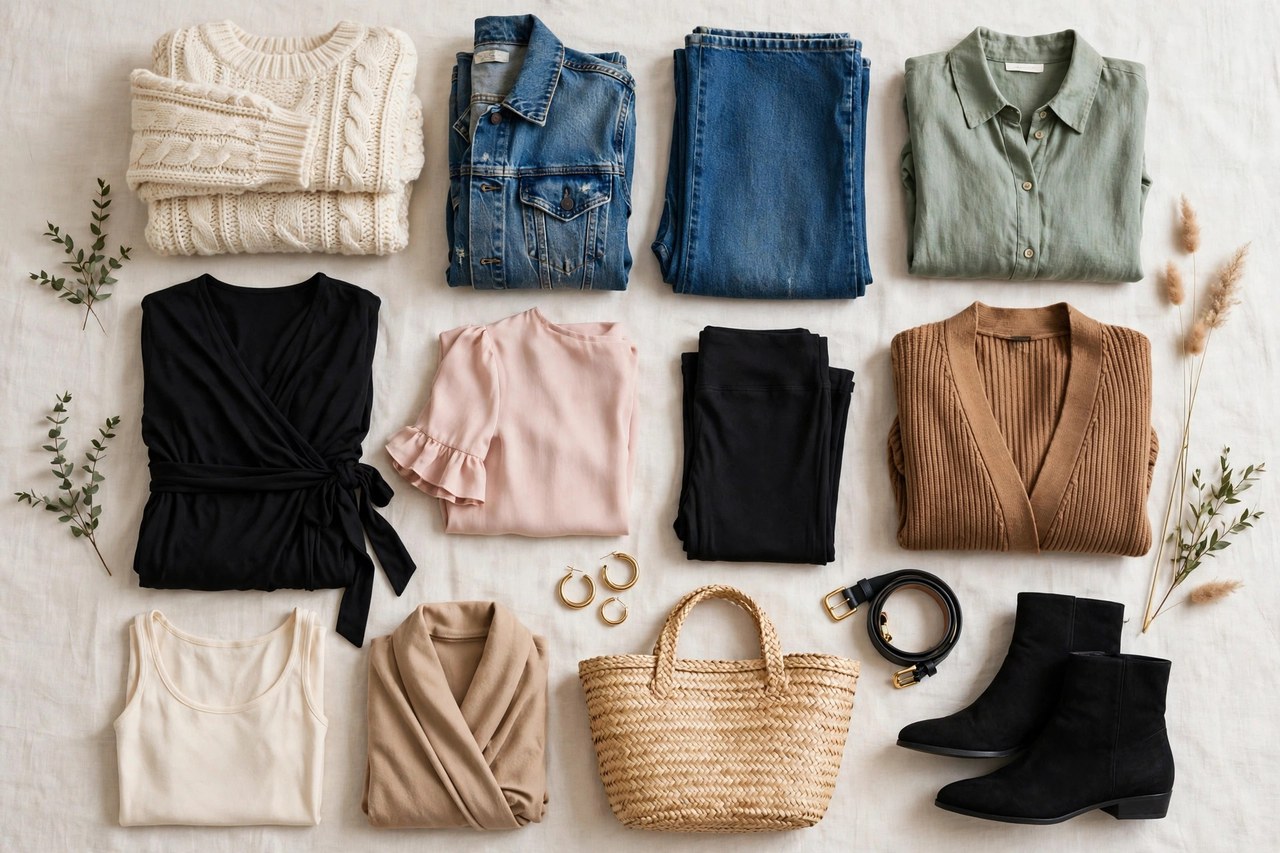
Plus size clothing is the umbrella term for women's apparel sized 14W and up, commonly running through 24W, 28W and beyond, and in lettered ranges from 1X to 5X and higher. It covers every category in a wardrobe, from bras and base layers to dresses, jeans, suits and winter coats. What makes clothing genuinely plus, rather than merely big, is proportion: the pattern is drafted for a fuller bust, a defined or softened waist, rounder hips and thighs, and fuller upper arms.
This collection guide maps the whole plus wardrobe, explains the two sizing systems you will meet, and shows how the categories work together so individual purchases add up to outfits. The specialist guides in this section then go deep on single garments. Use this page first when you are rebuilding a wardrobe, changing size, or shopping a new brand, because the fit principles here apply to every plus piece you will try on afterward.
W and X Sizing, and Reading a Plus Size Chart
The W in 14W or 20W stands for women's plus sizing cut on a plus block, with more room distributed through bust, hip and arm than a misses grade. X sizing, such as 1X or 3X, is used by many contemporary brands and can mean either a true plus block or an extended straight grade, which is why the label alone never guarantees fit. Numeric and lettered systems overlap roughly, but a 2X is not always an 18W, and charts differ by brand.
Shop by measurements, not labels. Record your bust at the fullest point, natural waist, full hip, upper arm and thigh, and your preferred inseam and rise. Compare all of them to the garment chart, and note whether the brand fits its samples on plus models, a strong sign the proportions were actually tested at size. Height matters too: plus and petite-plus and tall-plus are separate proportion families, and mixing them explains most mysterious fit failures.
The Main Plus Clothing Categories
Bottoms and dresses reward true plus cutting most. Plus jeans and trousers need a curved waistband, a rise shaped for a fuller stomach and seat, and thigh room that does not strangle the leg. Plus dresses need bust darts or princess seams placed at a plus apex, waist placement that matches a real plus torso, and skirts with enough sweep to hang cleanly over the hip. Tops and blouses need bicep room, front length and button spacing that resists gaping at the bust.
Outerwear, suits, swimwear and intimates each carry their own plus demands, covered in their own guides: coats that close over the bust without stealing the hip, jackets whose buttons meet without strain, and base layers sized by band and cup as well as body. Seasonal categories follow the same rules. A plus summer dress still needs strap width and armhole coverage that work with a proper bra, and a plus winter knit still needs enough ease to layer without stretching across the back.
Fit Points That Decide Everything
Five checkpoints predict whether a plus garment will work. First, the shoulder and neckline should sit cleanly without sliding. Second, the bust area should contain without compressing, with seams and darts pointing at the apex. Third, the waistband or waist seam should sit at one consistent height all around, not hiking at the back or dipping at the front. Fourth, the hip and thigh should allow sitting, bending and a full stride. Fifth, closures should meet in the middle of their range, not at the last strained hole or hook.
When a piece fails one checkpoint, ask whether tailoring can fix it. Hemming, taking in a waist and shortening a strap are reasonable finishes. Rebuilding a shoulder, adding bust room that the fabric does not contain, or lengthening a too-short front rise are not. Return those pieces and buy the brand whose block is closer to your body. With plus clothing, brand loyalty earned by one good fit is rational: blocks are consistent within a brand far more than across the market.
Building a Balanced Plus Wardrobe
Build by outfit math rather than by single pieces. A workable core is three bottoms that fit perfectly, five tops that pair with all three, two dresses that need no special underpinnings, and two toppers that finish both dresses and separates. Choose a dominant neutral family, then add color and print in tops and accessories where replacement is cheap. Spend the largest share on the hardest fits, usually jeans, trousers, bras and coats, where plus construction quality is most visible and most durable.
Maintain the wardrobe like equipment. Wash dark plus denim inside out and cool, dry knits flat when they are heavy, and keep elastane away from high heat so stretch pieces keep their recovery season after season. Re-measure once or twice a year, since plus garments fit best when bought for the body you have now, not a remembered size. Bought by measurement and checked at the five fit points, plus clothing stops being a compromise section and becomes simply your department, in full.
Related Women's Guides
Looking for Women's Clothing Stores?
This guide helps you choose women's plus size clothing. To browse where to buy, visit our women's clothing store directory, where you can find retailers that carry them.