Women's Quarter Strap Shoes Guide
A quarter strap shoe holds the foot with a strap at the quarter — the back section of the shoe — most often continuing into the ankle strap that keeps a heeled shoe secure.
Shop Women's Quarter Strap Shoes Now
Shop Women's Quarter Strap Shoes on Amazon Shop Women's Quarter Strap Shoes on eBayThe Amazon and eBay links on this page are affiliate links. If you make a purchase through them, Apparel Search may earn a commission.
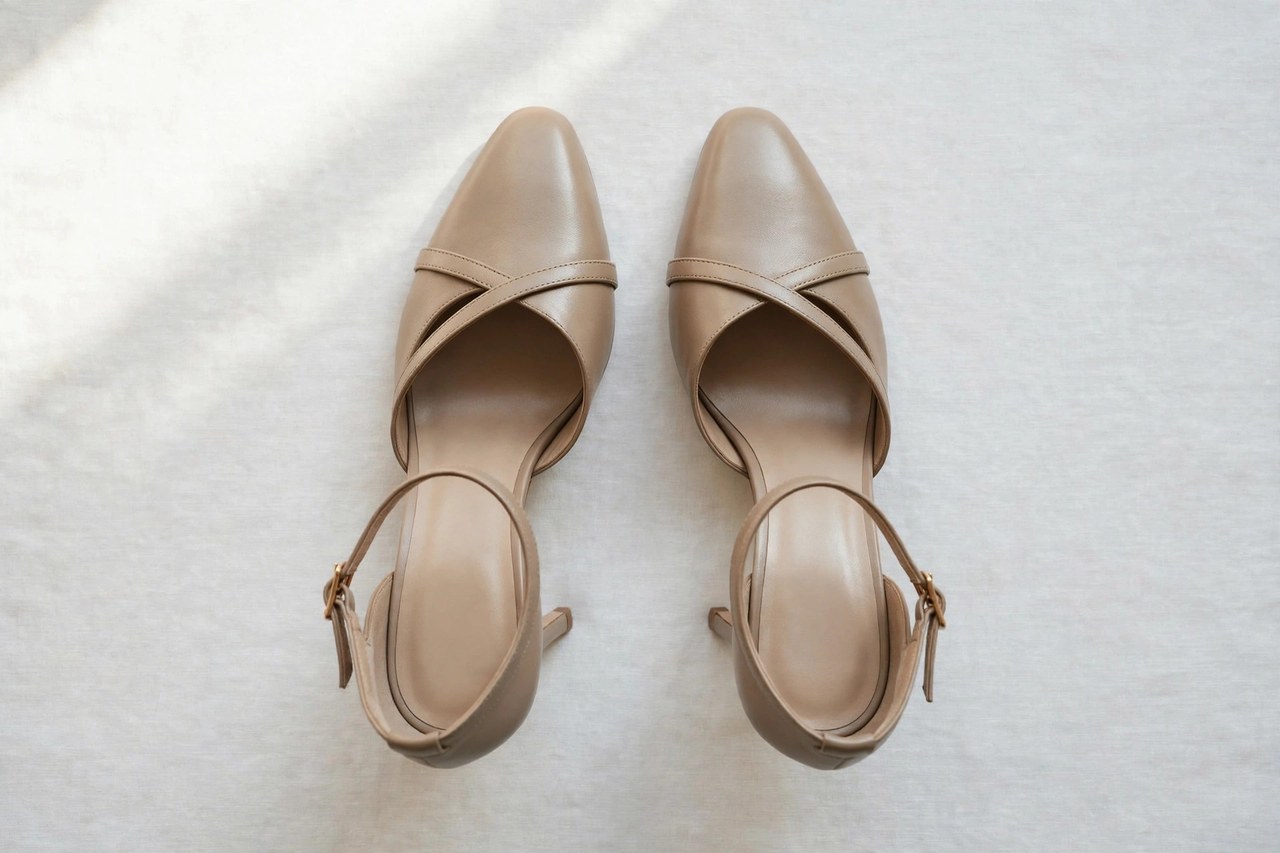
A shoe is a covering for the foot that is typically made of leather and has a sturdy sole, and generally does not reach above the ankle. Within that simple definition sits an enormous family of constructions, and straps are one of its oldest fastening ideas. A quarter strap shoe is one secured by a strap anchored at the quarter — the part of the shoe's upper that wraps the back of the foot, behind the instep and around the heel.
This guide explains the quarter strap as a working part of the shoe rather than as decoration. It covers how the strap relates to the ankle strap it so often becomes, which shoe styles use it, the difference between adjustable and fixed straps, and how to judge fit, because a strap that is wrong by half an inch decides whether a beautiful heeled shoe is wearable for an evening or only for a photograph.
What the Quarter Strap Is
Shoe uppers are described in parts: the vamp covers the toes and front of the foot, and the quarter covers the sides and back, rising toward the ankle. A strap that crosses or fastens at the quarter therefore works at the back half of the foot, exactly where a slip-on shoe is most likely to slip. The quarter strap can reference the ankle strap: on many women's styles the strap that rises from the quarter continues upward and closes around the ankle, so the two names describe one continuous piece of construction.
That placement is functional before it is ornamental. A strap anchored at the quarter pulls the shoe and the heel of the foot together, stopping the heel from lifting out of the shoe with each step — the familiar slapping looseness of an unstrapped pump on a hard floor. It also lets a more open shoe stay on the foot: sandals, open-toe styles and high heels that expose most of the foot can still be secure, because the quarter and ankle do the holding that a closed upper would otherwise do.
Styles That Use a Quarter Strap
The strap appears across the dress-shoe wardrobe. Ankle-strap pumps and heeled sandals are the classic form, the strap closing with a small buckle at the outer ankle. Mary Jane styles fasten a related strap across the instep from the quarter, giving the school-shoe silhouette its adult dress versions. T-strap and multi-strap heels multiply the idea, combining a quarter anchor with straps up the foot. Wedge and platform sandals rely on quarter and ankle straps for the stability their height demands, and dance and character shoes use the same construction because a shoe that leaves the foot mid-step is not an option on stage.
Casual versions follow the same logic at lower heights: flat strappy sandals, espadrilles with ankle ties anchored at the quarter, and low block-heel shoes for daytime. Across all of them the strap's job is identical — hold the back of the shoe to the back of the foot — while its width, material and hardware carry the style: a fine strap and a tiny buckle read formal, a wide strap and bold hardware read modern or casual.
Adjustable Straps, Fit and Choosing
Some ladies' footwear is made with an adjustable ankle strap and some is not, and that single detail is worth checking before anything else. An adjustable strap — usually a buckle with several holes, sometimes elastic or hook-and-loop — lets you tune the hold to your ankle and to the hour of the day, since feet swell slightly by evening. A fixed strap, cut to one length or closed with elastic alone, must fit correctly in the shop: snug enough that the shoe does not slide, loose enough that the strap does not cut in when you point the foot or climb stairs.
Fit the strap on both feet, standing, and walk on a hard surface rather than carpet. The shoe's heel should move with your heel, the strap should lie flat without twisting, and you should be able to slip one fingertip under it. Match strap to occasion as well: thin straps suit formal dress but concentrate pressure, so for long standing or dancing choose a slightly wider strap or a lower heel. Finally, check where the buckle sits — over the ankle bone it will rub; just behind or above it, it will not.
Materials, Care and Strap Repairs
Quarter straps are cut from the shoe's upper material or a matching one: leather for dress shoes, patent leather for formal shine, suede for softness, fabric and satin for evening styles, and synthetics on casual sandals. Because the strap is narrow and carries the shoe's holding load, its edges and holes take more stress than any other part of the upper. When choosing, flex the strap and look at the stitching at its anchor points in the quarter — that junction, where strap meets shoe, is where a well-made pair shows its quality.
Care is mostly strap care. Keep leather straps conditioned so the holes do not crack, store the shoes with the straps buckled loosely to hold their shape, and never carry a pair by its straps alone. A stretched hole or a worn anchor is one of the cheapest repairs a cobbler does, and re-anchoring a favorite pair costs far less than replacing the shoes.
Related Women's Guides
Photos

Looking for Women's Clothing Stores?
This guide helps you choose women's quarter strap shoes. To browse where to buy, visit our women's clothing store directory, where you can find retailers that carry them.