Women's Ready-to-Wear Fashion Guide
Ready-to-wear means garments sold finished, in standardized sizes, off the rack — designed for a general market rather than made to one person's measurements.
Shop Women's Ready-to-Wear Fashion Now
Shop Women's Ready-to-Wear Fashion on Amazon Shop Women's Ready-to-Wear Fashion on eBayThe Amazon and eBay links on this page are affiliate links. If you make a purchase through them, Apparel Search may earn a commission.
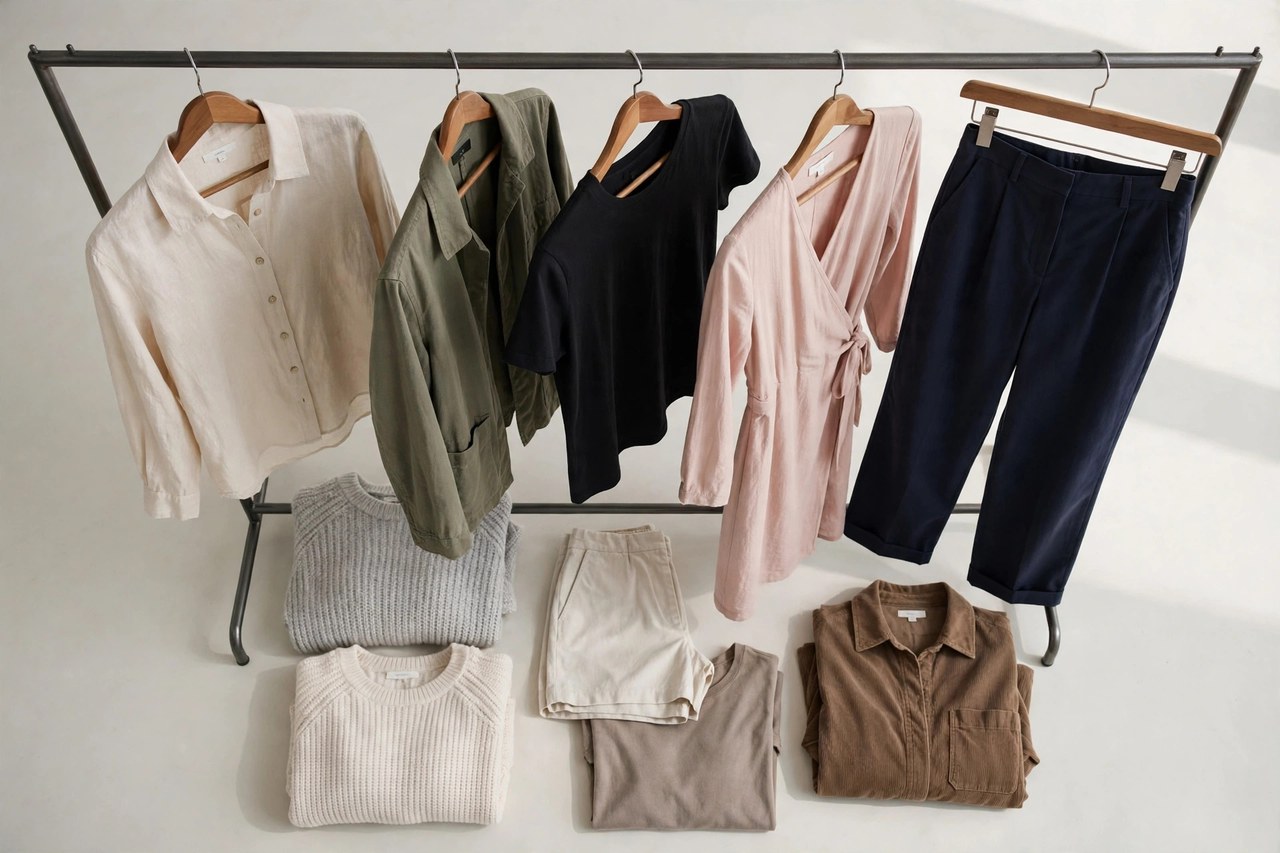
Ready-to-wear is the term for ready-made garments sold in finished condition in standardized sizes. The garments are produced to a designer's measurement specifications, and you buy the garment as it has been sized — it is not custom made to fit your specific body measurements. That distinction is the heart of the term: ready-to-wear, also called pret-a-porter or off-the-rack and often abbreviated RTW, is clothing made for the general market and sold through retail stores rather than made to order for an individual customer.
Nearly everything in a modern wardrobe is ready-to-wear, which is why understanding the category is really understanding how clothing is sold. This guide explains where ready-to-wear sits between haute couture and bespoke tailoring, why its sizing is famously inconsistent, and how to shop a system built on averages with your own very un-average body in mind — including the role a good tailor plays in finishing what the rack started.
RTW, Made-to-Measure, Bespoke and Couture
The clothing world runs on a spectrum of customization. At one end, haute couture is one-of-a-kind, hand-finished design made for a single client. Bespoke tailoring cuts a unique pattern from your measurements, traditionally for suits. Made-to-measure starts from an existing pattern and adjusts it to you. Ready-to-wear completes the spectrum: a fixed pattern, graded into a size range, produced in quantity, and bought as-is — originally by visiting a store and purchasing clothing off the rack, though today the rack is just as often a website.
Designers use the same spectrum as a business structure. Many fashion houses show a couture or runway collection for prestige and sell ready-to-wear lines — sometimes several, at different prices — that carry the designer's look to the general market. When you see pret-a-porter credited as a French term, it translates ready-to-wear exactly; the words differ, the system does not. Knowing where a garment sits on this spectrum sets fair expectations for its fit, its price and how much alteration it may still deserve.
The Sizing Problem, Stated Plainly
The category's best-known flaw remains true: there is no true industry standard for garment size measurements. A size medium shirt from one brand does not have the exact same measurements as a medium from another brand, and the same is true across dresses, trousers and every numbered size. Each maker grades its own pattern around its own fit model and its own idea of its customer, so sizes are best treated as a starting suggestion within a brand, never as a transferable fact about your body.
Shoppers cope with a few working habits. Learn your actual measurements — bust, waist, hip, inseam — and compare them to each retailer's size chart rather than trusting the label. Keep notes on which brands cut generously or slim for your shape. Expect knit ready-to-wear to forgive more than woven, and structured garments to forgive least. And remember that a size run is an average of thousands of bodies: a garment that needs a small alteration is not a failure of yours or the garment's, it is the system working exactly as designed.
How to Shop Ready-to-Wear Well
Shop the fit points that cannot be altered easily — shoulders on a jacket, rise on trousers, length of a torso — and be relaxed about the ones a tailor changes cheaply, like hems and waist suppression. Try the size above and below your usual, because grading between sizes is uneven and the better fit may not carry your usual number. Move in the garment: sit, reach, and check closures under real strain, since ready-to-wear is graded on a standing fit model, not on a person living a day.
Buy from retailers whose fit you have learned, especially online, and read garment measurements in product descriptions when they are offered — flat measurements of the actual piece are more honest than any size chart. Finally, budget a small alteration allowance for the pieces that matter most. A modestly priced ready-to-wear dress taken in at the waist will look more expensive than a costlier one worn as the average dictated; that finishing step is how experienced shoppers make an off-the-rack system feel personal.
Why Ready-to-Wear Changed Fashion
Ready-to-wear is what made fashion democratic. Before standardized, ready-made clothing, a good fit required a dressmaker or tailor and the budget for both; RTW let anyone walk into a store — or now, open a page — and leave dressed. It created the seasonal collection system, the size range, the retail store as we know it, and the idea that a designer's look could be worn by thousands of people the designer would never meet.
Its limits are the flip side of its strengths: averages instead of individuals, speed instead of hand-finishing, and sizing that varies by brand. The modern answer is not to abandon the rack but to use it skillfully — measurements in hand, a tailor on call, and a clear sense of the spectrum from couture to off-the-rack. Understood that way, ready-to-wear is not the compromise end of fashion. It is the system nearly all fashion, at every price, now runs on.
Related Women's Guides
More to Explore on Apparel Search
Looking for Women's Clothing Stores?
This guide helps you choose women's ready-to-wear fashion. To browse where to buy, visit our women's clothing store directory, where you can find retailers that carry them.