Women's Ruffle Blouses Guide
A ruffle blouse takes the tailored blouse and softens it — gathered frills at the collar, placket or cuffs that dress up work and evening outfits.
Shop Women's Ruffle Blouses Now
Shop Women's Ruffle Blouses on Amazon Shop Women's Ruffle Blouses on eBayThe Amazon and eBay links on this page are affiliate links. If you make a purchase through them, Apparel Search may earn a commission.
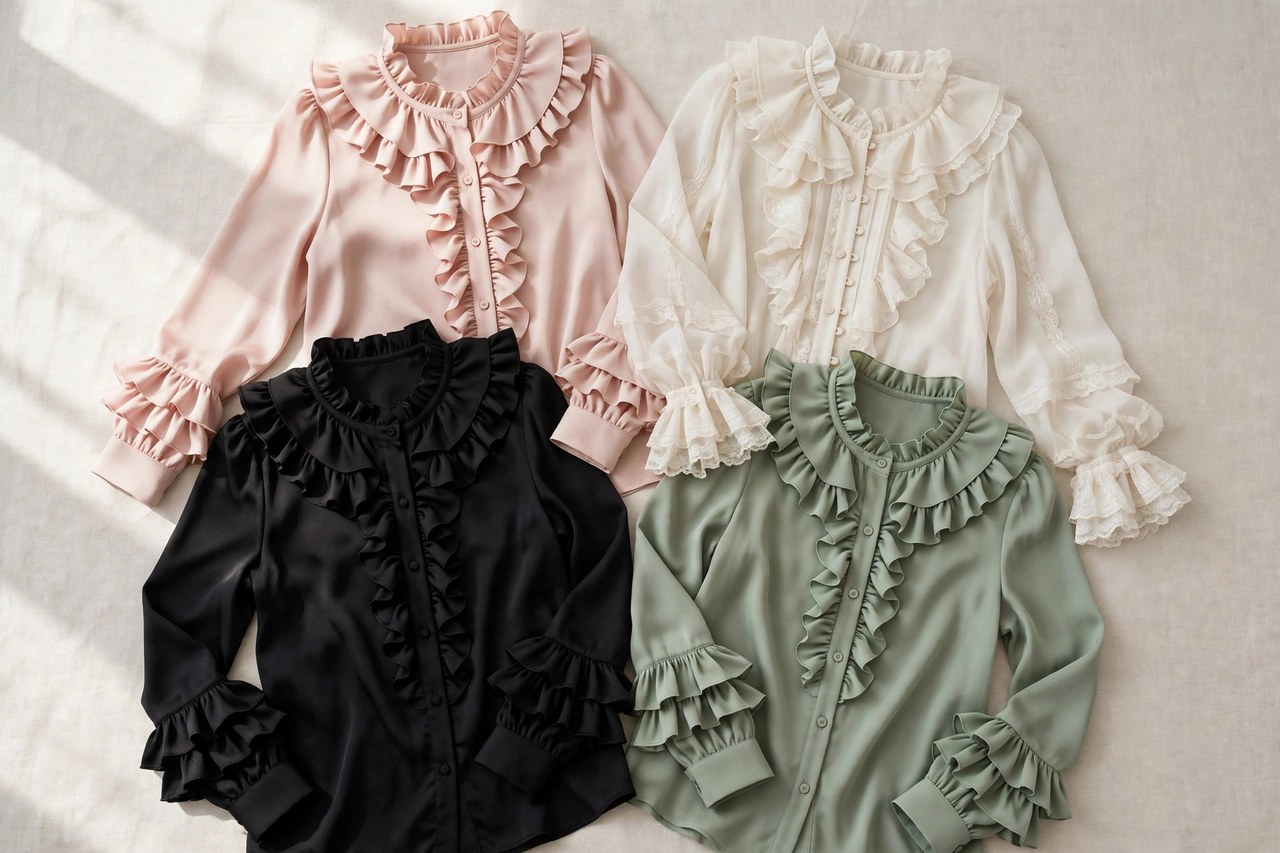
A ruffle blouse is a blouse — a tailored, usually buttoned or neatly finished top — decorated with ruffles: strips of fabric gathered or pleated along one edge so the other edge falls in soft waves. On a blouse, those ruffles are placed with intent, at the collar, down the button placket, around the cuffs or in a cascading front panel, and they lift the garment from office basic to something deliberately dressy without changing its basic, wearable shape.
This guide keeps its focus on the blouse as a dressed-up garment: where its ruffles sit and what each placement does, the fluid fabrics that make ruffles fall properly, and how to wear a ruffled blouse with tailoring, denim and skirts without tipping into costume. The companion page on ruffle tops covers the wider, more casual family — tees, camisoles and knits — while everything here assumes a blouse's structure underneath the frill.
Ruffle Placements and What They Do
A ruffle collar or neckline frames the face and fills a neckline that would otherwise need jewelry, which makes it the natural partner for a plain blazer opened over it. A placket ruffle, running down the button front in one or two rows, adds vertical movement and disguises the closure entirely — the blouse reads as texture rather than buttons. Cascade or jabot fronts concentrate layered ruffles at the center for the dressiest, most romantic effect, best kept to evening or creative workplaces.
Ruffle cuffs work at the opposite end of the garment: a flared or frilled cuff shows below a jacket sleeve, moves when you gesture, and can carry an otherwise restrained blouse. Shoulder and yoke ruffles widen the upper body visually, useful for balancing a fuller skirt or trouser, while a single small ruffle at a high neck is the minimal, modern version. Judge placement against your own proportions: ruffles add volume exactly where they sit, so place them where you would like the eye, and the fullness, to go.
Fabrics That Make Ruffles Fall Right
A ruffle is a fabric test. It must be cut, often on the bias or in a circle, and then hold a wave without either collapsing or standing up like a paper fan. Silk and silk-look fabrics, chiffon, georgette and fine crepe are the classic blouse choices because they drape into soft, repeated folds and move as the wearer moves. Cotton voile and lawn give crisper, smaller ruffles with a fresher daytime character, and satin produces a formal, light-catching ripple suited to evening blouses.
Stiff fabrics make ruffles behave like trim rather than drapery — occasionally the intent, in a sculptural designer blouse, but hard to wear casually. Very heavy fabrics pull a ruffle flat by its own weight. When shopping online, look for close views of the ruffle edge: a narrow rolled or finely hemmed edge falls better than a thick folded one, and double-layer ruffles in sheer fabric give body without weight. If a product photograph shows the ruffles already looking tired on the model, believe it, and choose another blouse.
Styling a Ruffle Blouse Without Overdoing It
The styling rule is one statement at a time. A ruffle blouse is the statement; pair it with clean, simple bottoms — straight trousers, a pencil or A-line skirt, plain denim — and let the top supply all the movement. Tuck it in to define the waist against the volume above, or wear a cropped ruffle blouse untucked over slim trousers. Under a blazer or cardigan, arrange for the collar or front ruffles to show in a controlled spill; a ruffle crushed invisibly under tailoring is wasted, and one escaping wildly is distracting.
Keep jewelry quiet where ruffles are loud: a ruffle collar replaces a necklace, and ruffle cuffs compete with bracelets, so shift adornment to earrings or a belt. For work, choose smaller, neater ruffles in matte fabrics; for evening, silk or satin with a fuller cascade carries the outfit almost alone. Prints deserve care — a printed ruffle blouse doubles its visual information, so solid ruffles in a beautiful color are the safer classic purchase, and prints are the joyful second one.
Fit and Care for Frilled Fabrics
Fit a ruffle blouse at the shoulders and bust as you would any blouse, since the structure under the decoration is ordinary tailoring. Check that buttons do not gape beneath a placket ruffle — the ruffle hides the closure, not its problems — and that collar ruffles sit comfortably against the neck rather than tickling or crowding your chin, which will annoy you out of wearing the blouse within a month. Sleeve length matters at a ruffle cuff: the frill should begin at or just past the wrist bone.
Care follows the fabric, with a ruffle-specific habit: steam, do not press. A steamer or a steamy bathroom restores ruffle waves, while a flat iron crushes the gathers that make them. Wash delicate blouses in a mesh bag on gentle or by hand, dry on a padded hanger so collar ruffles keep their arrangement, and store buttoned at the top to hold the neckline's shape. Looked after this way, a ruffle blouse keeps its softness of line for years, ready whenever an outfit needs dressing up without dressing formally.
Related Women's Guides
Photos


Looking for Women's Clothing Stores?
This guide helps you choose women's ruffle blouses. To browse where to buy, visit our women's clothing store directory, where you can find retailers that carry them.