Women's Shoulder Bags Guide
A shoulder bag is a handbag carried on one shoulder by a strap long enough to rest the bag at your side — and strap length is the detail that decides whether it works.
Shop Women's Shoulder Bags Now
Shop Women's Shoulder Bags on Amazon Shop Women's Shoulder Bags on eBayThe Amazon and eBay links on this page are affiliate links. If you make a purchase through them, Apparel Search may earn a commission.
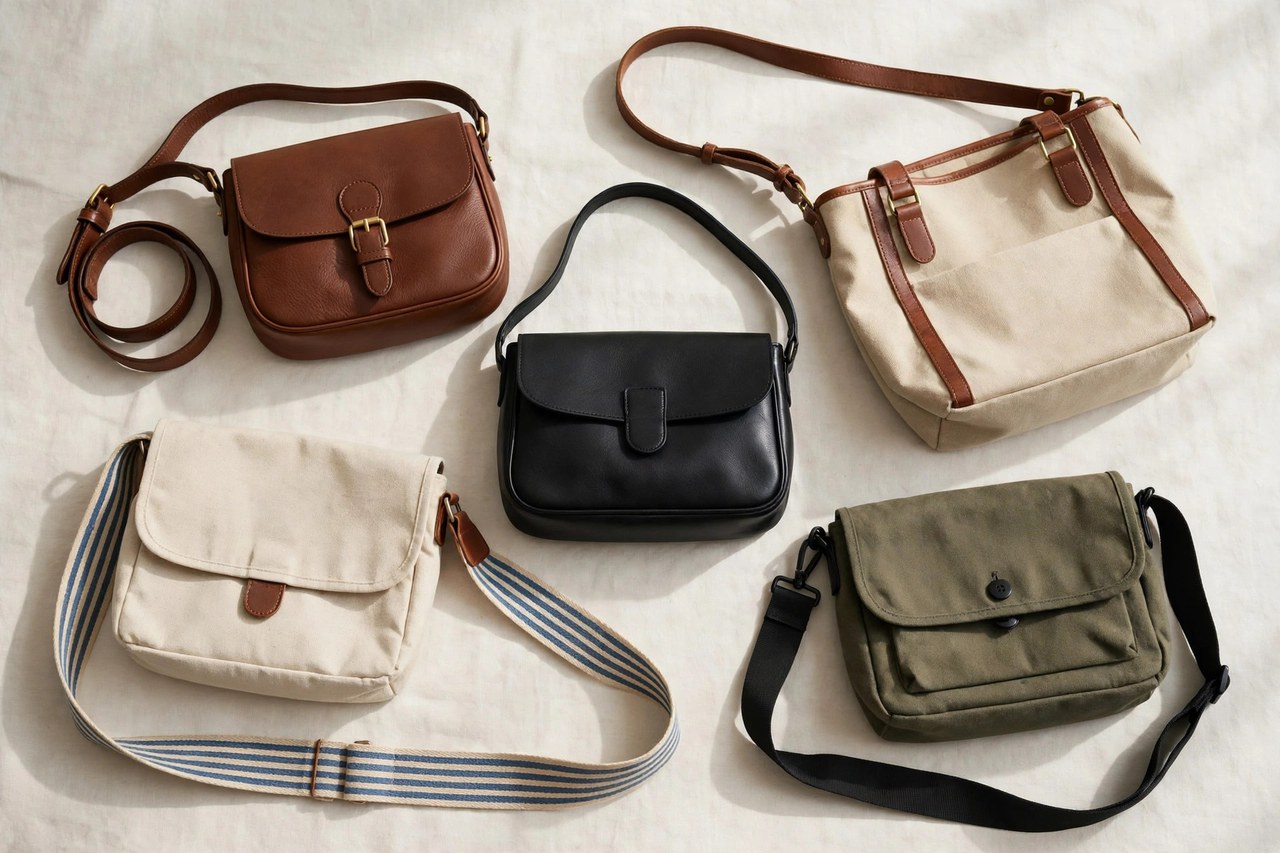
A shoulder bag is defined by how it is carried: it has a strap long enough to lay across the top of the shoulder, so the bag hangs comfortably at the wearer's side, hands free and weight carried by one of the body's strongest joints. The shoulder itself is one of the largest and most complex joints in the body, where the humerus fits into the scapula like a ball and socket — and its most fashionable job is carrying a handbag. These hard-working bags stay close by your side, carrying essential gear day in and day out.
This guide stays on the bag: the shapes that count as shoulder bags, how strap drop changes carrying and security, what sizes actually hold, and which materials and hardware survive daily use. It sits inside the wider handbag family, so the focus is the strap-and-shoulder category specifically — the everyday bag most women reach for more than any other they own.
Shapes Within the Shoulder Bag Family
The hobo is the soft, slouchy crescent with a single strap that is part of the bag's body, collapsing comfortably against the side. The shoulder tote is the structured, open or zip-top rectangle with two straps, sized for files, a laptop or a day's worth of everything. The satchel-style shoulder bag adds short handles to a longer detachable strap, giving two carry options. The bucket bag stands tall with a drawstring or open top, and the compact baguette and shoulder purse sit high and close under the arm, in the silhouette revived from the late 1990s.
What separates these from neighboring categories is the carry. A crossbody strap is longer still, crossing the torso diagonally; many shoulder bags convert with an adjustable strap. A clutch has no strap at all. When you shop, ignore the name on the tag and measure the strap: the drop length, covered next, tells you which category a bag truly belongs to and how it will sit on your body.
Strap Drop: The Key Measurement
The key to a good bag is the shoulder strap length, and a convenient way to adjust the length may come in handy. Strap drop — the distance from the top of the strap to the top of the bag — runs about 7–9 inches for a bag that tucks high under the arm, 10–12 inches for the classic at-the-hip carry, and longer for slouchy hobos that ride low. Try bags wearing your thickest coat: a drop that is perfect over a blouse can be unusable over winter layers, which is why adjustable straps earn their keep.
Strap width matters as much as length once a bag is loaded. A narrow strap concentrates weight and digs; a strap of an inch or more, ideally with a padded shoulder section, spreads the load. Check how the strap attaches — stitched tabs, rivets and swivel clasps all outlast glued joins — and whether replacement or extension straps are available. Alternate shoulders through the day with a heavy bag; even the best strap is still hanging the whole load from one side of the body, and your neck will file its opinion by evening.
Sizes, Organization and Materials
Size a shoulder bag by its contents plus one inch of honesty. A small bag holds phone, card case, keys and lip balm, and suits evenings and light days. A medium bag — the daily standard — adds a paperback, sunglasses case and small umbrella. A large tote-style bag swallows a laptop and a change of shoes but tempts overloading, the main cause of both strap failure and shoulder ache. Inside, look for at least one zip pocket for valuables, a light-colored lining so contents are findable, and a closure — zip or magnetic snap — that matches how crowded your commute is.
Materials follow the same honest ladder as shoes. Leather ages best and repairs well; pebbled finishes hide scratches better than smooth ones. Coated canvas is light, structured and rain-tolerant. Nylon shoulder bags are the travel workhorses, nearly weightless and washable. Suede and fabric bags are seasonal pleasures that stain and fade fastest. Hardware is the quality tell: metal zippers with smooth travel, firmly set feet on structured bases, and edge paint that is intact, not peeling, at the strap joins.
Care and Everyday Use
Empty and reshape a shoulder bag weekly, store it stuffed with tissue and dust-bagged so the strap does not kink against the body of the bag, and hang it by nothing — hanging a loaded or even empty bag by its strap for months stretches the exact join you depend on. Condition leather twice a year, wipe coated canvas with a damp cloth, and keep pens in a pouch, because ink inside a light lining is forever. Rotate bags as you rotate shoes; the rest extends the life of both.
Carried well, the shoulder bag is the most democratic of handbags: it scales from market to boardroom on strap length and structure alone. Choose the drop that fits your coat, the size that fits your actual day, and the material that fits your weather, and the bag earns the description — close by your side, carrying the essentials, asking nothing but an occasional cleaning.
Related Women's Guides
Photos

Looking for Women's Clothing Stores?
This guide helps you choose women's shoulder bags. To browse where to buy, visit our women's clothing store directory, where you can find retailers that carry them.