Club Wear
Clothing Definitions — definitions of garments and clothing terms from Apparel Search
Search Apparel Search
At a Glance
Definition: Club wear is a general term for provocative, revealing or fetish-influenced clothing worn to nightclubs and adult venues with a sensual atmosphere and a relaxed dress code.
Also known as: clubwear
Category: Clothing Definitions
Most clothing categories are named for how a garment is made. Club wear is named for where it is worn and why. The term covers the provocative, revealing or fetish-influenced clothing worn to sex clubs, swing clubs and other nightclubs built around a sensual atmosphere and a deliberately relaxed dress code. Dressing that way for a social setting is itself a form of exhibitionism, and many people attend in club wear simply to be seen in it, with no intention of taking part in anything beyond the dressing up. Understanding the term means understanding that context: the same garment is ordinary party dress in one room and club wear in another.
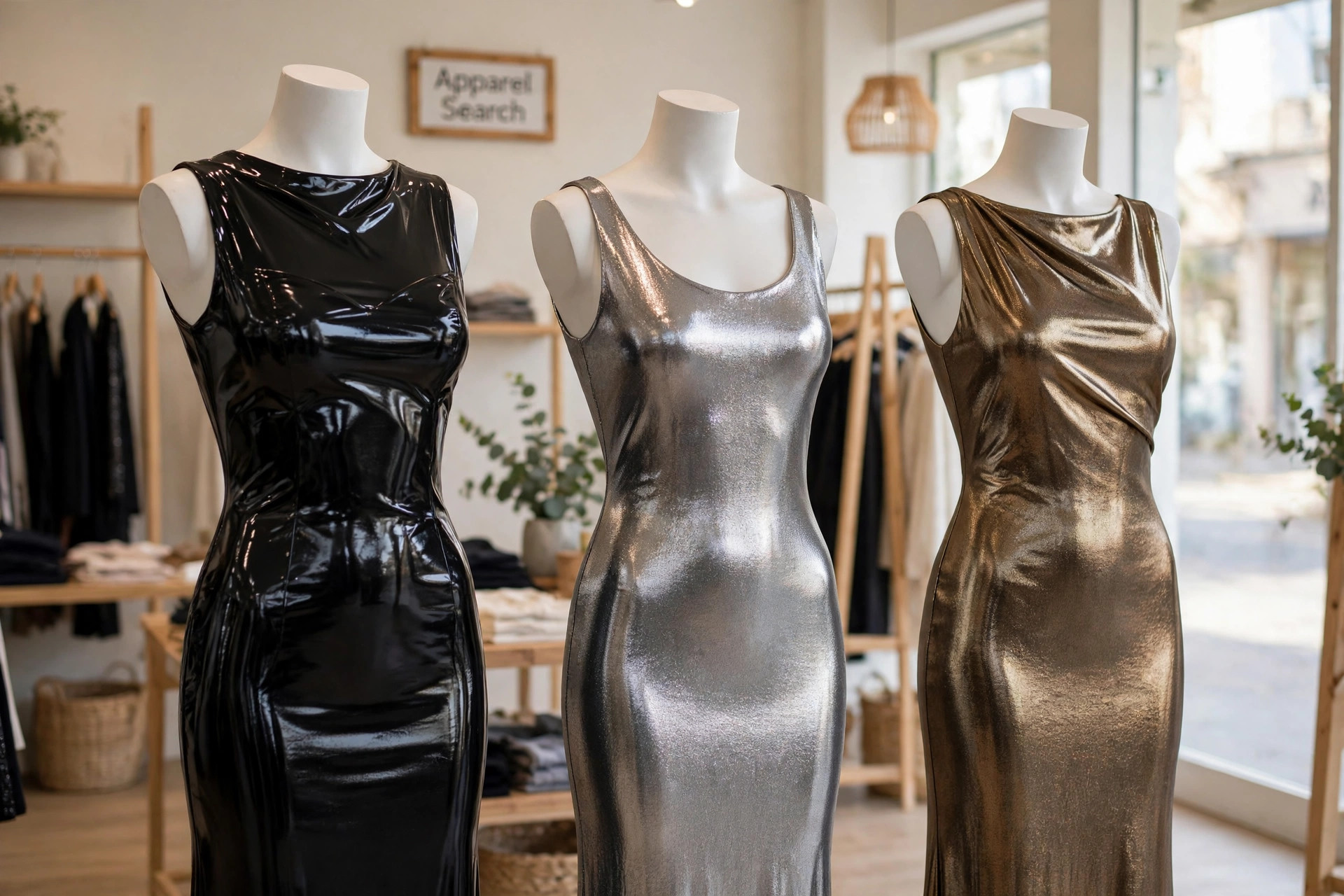
A Category Defined by Setting, Not Construction
A coat is defined by its cut and a boot by its shape, but club wear has no single construction. It is whatever is worn, deliberately, for a venue where display is the point and the usual rules of dress are relaxed. That is why the category borrows so freely from neighbouring wardrobes: lingerie styled as outerwear, fetish wear adapted for a public room, stage and dance costume, and the most revealing end of ordinary party fashion can all be club wear on the night they are worn to a club.
Because the definition rests on intent, club wear is best identified by asking what the clothing is for. Garments chosen to attract attention in a sensual social setting — to be looked at as part of the evening's entertainment — belong to the category even when, taken one by one, they resemble mainstream evening pieces. Garments that merely happen to be short or close-fitting, worn for an ordinary party, generally do not.
Fabrics, Fit and Finish
The look has a consistent material logic even though the garments vary. Stretch knits dominate because the fit is close and the wearer expects to move and dance; glossy, latex-look and metallic finishes are common because they catch and throw low, coloured club lighting in a way matte day fabrics do not; and sheer panels, mesh and cut-out construction appear far more often than in ordinary dress because revelation is the design brief. Corsetry and structured underwear-as-outerwear recur for the same reason — they are display garments by design, and the club is the one mainstream-adjacent venue where wearing them openly is the norm rather than the exception.
Practicality still applies. Club wear is worn for hours, in warm, crowded rooms, so breathability, secure fastenings and freedom of movement matter as much as impact. The better-made end of the market is essentially dancewear engineering applied to a provocative brief: four-way stretch, lined sheers and closures that survive an evening rather than a photograph.
Dress Codes and Venue Etiquette
Venues set the real boundaries, and they vary more than outsiders expect. Clubs publish their own expectations, which can run from smart party dress through themed costume nights to specific fetish dress codes, and dressing to the stated code is part of the etiquette of the scene — arriving underdressed for a themed night is as much a breach as arriving overdressed for an ordinary one. Some venues require an effort at the theme as a condition of entry; others simply require that street clothes be left at the door in favour of something chosen for the room.
That venue-dependence is exactly why the term exists. Outside those spaces, the same garments read very differently, and most wearers keep a clear line between a club wardrobe and everyday dress. Club wear names a context as much as a closet: a recognised social stage on which revealing and fetish-influenced dress is expected, welcomed and — within the venue's own rules — entirely conventional.
Retail usage is looser than the definition, and worth knowing when shopping. Many mainstream retailers label any short, close-fitting party dress or going-out top as club wear, borrowing the term's energy without the venue or the fetish influence behind it. The garments themselves often overlap — stretch fabrics, short hemlines, shine — but the trade term still points back to the original meaning: clothing designed for display in a club setting. A buyer who understands that distinction can read a product description accurately, because the same words describe a mainstream party outfit in one catalogue and a genuinely venue-specific garment in another, and the construction, coverage and price usually follow the meaning the seller intends.
Common Questions
What is club wear?
Club wear is a general term for provocative, revealing or fetish clothing worn to sex clubs, swing clubs or other nightclubs with a sensual atmosphere and a very relaxed dress code. It is dress chosen to be seen: attending in such attire is itself a form of exhibitionism, whether or not the wearer takes part in anything further.
How does club wear differ from ordinary party dress?
Ordinary evening and party dress follows the venue's formality; club wear is defined by deliberately revealing or fetish-influenced styling that would be out of place in most other social settings, worn specifically because the club's atmosphere and relaxed dress code invite it.
What garments count as club wear?
Examples include lingerie worn as or styled into outerwear and fetish wear, along with the very short, close-fitting or sheer garments made for nightclub settings. The common thread is intent: the clothing is chosen for display in a sensual social atmosphere.