Hairstyle
Clothing Definitions — definitions of garments and clothing terms from Apparel Search
Search Apparel Search
At a Glance
Definition: A hairstyle is the way hair is cut, arranged or styled on the head, shaped by fashion, culture and personal identity as much as by the hair itself.
Also known as: Haircut; hairdo (informal)
Category: Clothing Definitions
A hairstyle is the way head hair is cut, arranged or styled. It sits in a clothing guide because hair is part of dress: it is chosen with the rest of an outfit, it follows fashion just as hemlines do, and it signals culture, occupation, age and allegiance before a word is spoken. Human beings are unusual in cutting their hair rather than letting it grow, and the results range from a shaved head to braids that take hours. This page explains how hairstyles are grouped, the named styles that recur through fashion history, and the trade in human hair behind them.
Hair as Part of Dress
Clothing and hair do the same social work. Both are visible at a glance, both are chosen daily, and both carry information: a uniform haircut reads as discipline, an elaborate updo as ceremony, a deliberately unkempt style as a statement of its own. Hairstyles mark cultural, social and ethnic identity, and they change with fashion — a silhouette current in one decade looks dated in the next, which is why hairstyles are one of the quickest ways to date a photograph.
Hair also completes garments rather than competing with them. A neckline is cut to show or hide the hair at the nape, hats and head coverings are designed around the hair beneath them, and formal dress traditionally pairs certain arrangements with certain clothes — hair worn up with evening dress, for example. Stylists, like tailors, work to proportion: the volume and line of the hair are balanced against the face and the collar of the clothing worn with it.
The Main Families of Styles
Short cuts are defined by how the hair is clipped and where length is left. The buzz cut (or butch cut) is clipped short all over; the crew cut, named for the college rowing crews who wore it, leaves a little more length on top; the flattop is levelled across the crown; and the high and tight is shaved close at the sides and back with length kept only at the crown. The bowl cut leaves an even fringe all round, the comb over draws longer hair across a bald area, and the undercut pairs very short sides with a longer top that partly covers them.
Gathered and built styles work with length instead of removing it. The ponytail draws the hair back and ties it; the chonmage, the samurai topknot, shaved the crown and gathered the remaining hair into a knot; the pompadour sweeps the front hair up into a full wave; and the DA — for duck's ass, also called a ducktail — combs the sides back to meet in a ridge. Textured styles include the afro, curly hair grown out evenly all round; cornrows, braided tightly against the scalp in rows, a style of African origin; and dreadlocks, hair formed into long rope-like strands.
A third group is defined by contrast: the mohawk shaves both sides and leaves a strip standing along the centre — the longer-centred variant is also called a mohican — while the mullet keeps the top and front short and the back long, and the devilock is short at the back and sides and long in front. Each is a decision about where length is kept and where it is taken away, which is the basic grammar of every haircut.
Hairstyles in Fashion History
A few styles became emblems of their moment. The bob — a short, even cut for women — spread in the 1920s and was read at the time as a sign of the liberated woman, precisely because it discarded the long hair convention required. The Beatle cut of the early 1960s, long all round and neatly cut, looked startling to American audiences and sold wigs in its own right during Beatlemania. The pompadour carries an older name: it recalls Madame de Pompadour, the fashion leader of pre-Revolutionary France, and the same swept-up front was later worn by Elvis Presley.
Other styles belong to callings and communities rather than to fashion cycles. The tonsure shaves the crown and is associated with monastic life; the side-locks — peyos worn long by Orthodox Jewish men while the rest of the hair is cut — are a religious practice; and the khokhol is the Slavic name for a long tuft left on an otherwise shaven head. In Japan, the wareshinobu is the formal hairstyle of the geisha, a large dressed bun with ornaments, and the ofuku, also called momoware or split peach for its divided bun, marks an apprentice geisha in her final years. These styles persist because they mean something to the people who wear them, not because fashion revived them.
Wigs and the Trade in Hair
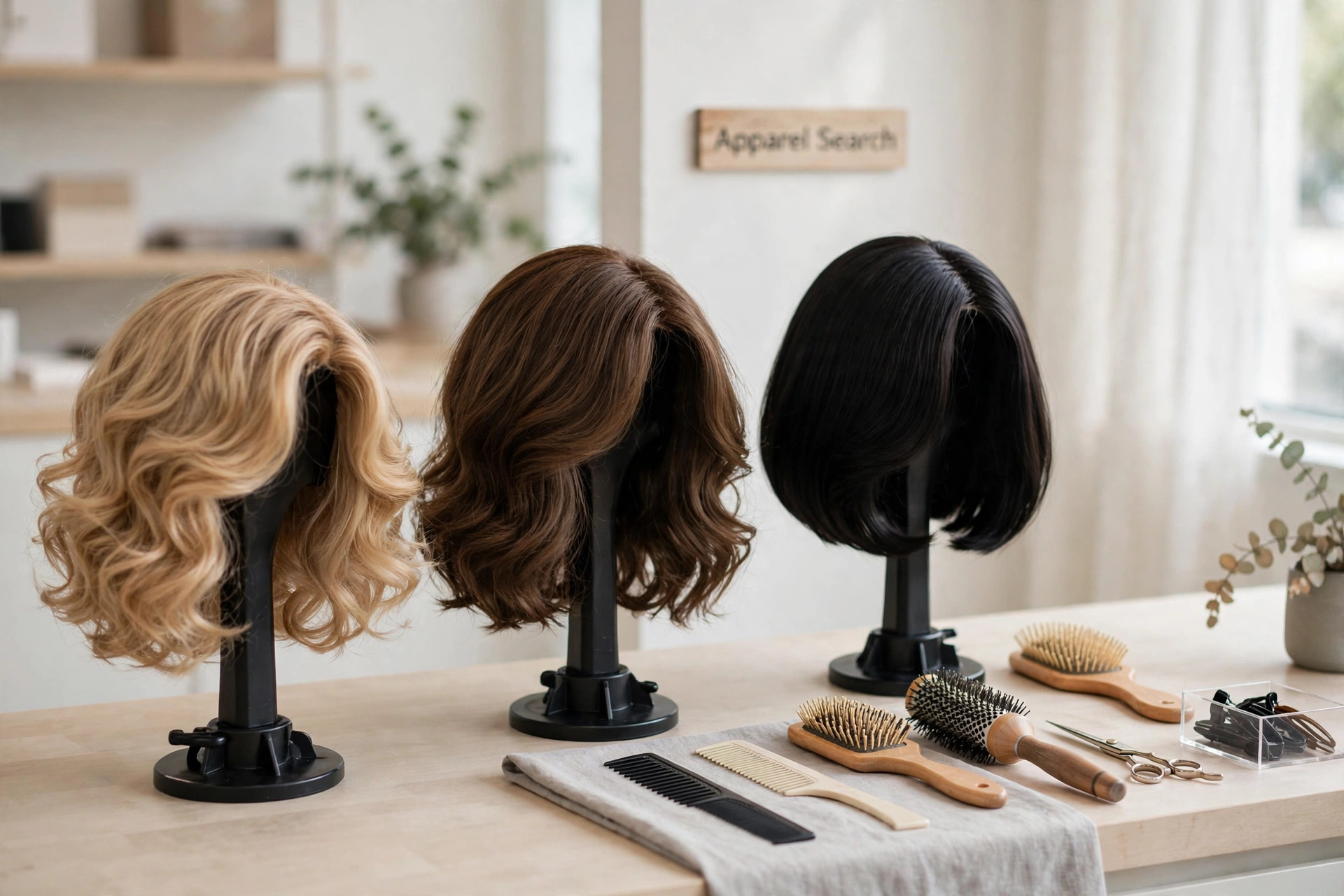
Styling has an industry behind it. There is a thriving world market in cut human hair of sufficient length for wig manufacture, and in poorer regions selling one's hair can be a significant source of income. Wigs and hairpieces let a wearer adopt a hairstyle without cutting or growing their own hair, and today serve fashion, performance and medical need alike.
Choosing a hairstyle is a practical decision as well as an aesthetic one. Hair type — straight, wavy, curly or coily — decides which styles are achievable and how much daily work each asks for; a style that fights the hair's natural behaviour needs heat, product and time every morning. Face shape, hairline and the clothing the style must sit with all count. The durable rule is the tailor's rule applied to hair: fit the style to the material you actually have.
Not to Be Confused With
A haircut is the act of cutting the hair, and the length and shape that cutting leaves; a hairstyle is the finished arrangement, which may involve no cutting at all — long hair braided, pinned up or tied back in a ponytail is styled, not cut. In everyday speech the two words overlap, but a stylist cuts first and styles second, and only the styling half can be changed again the same day.
Common Questions
What is a hairstyle?
A hairstyle is the way head hair is cut, arranged or styled. It is part of dress: it follows fashion, completes an outfit, and signals cultural, social and ethnic identity as well as personal taste.
What is the difference between a haircut and a hairstyle?
A haircut is the cutting itself and the length and shape it leaves. A hairstyle is the finished arrangement, which may involve no cutting at all, as with braids, a ponytail or pinned-up hair. The words overlap in everyday speech, but cutting and styling are two separate operations.
What was the bob, and why did it matter?
The bob is a short, even cut for women that became popular in the 1920s. Because convention expected women to wear their hair long, cutting it short was widely read as a sign of independence, which is why the bob became an emblem of its decade.