Material
Fabric Definitions — fabric and textile definitions from Apparel Search
Search Apparel Search
At a Glance
Definition: Material is cloth or fabric — in apparel usage, the general name for the stuff a garment or textile product is made from, before fiber or construction is specified.
Category: Fabric Definitions
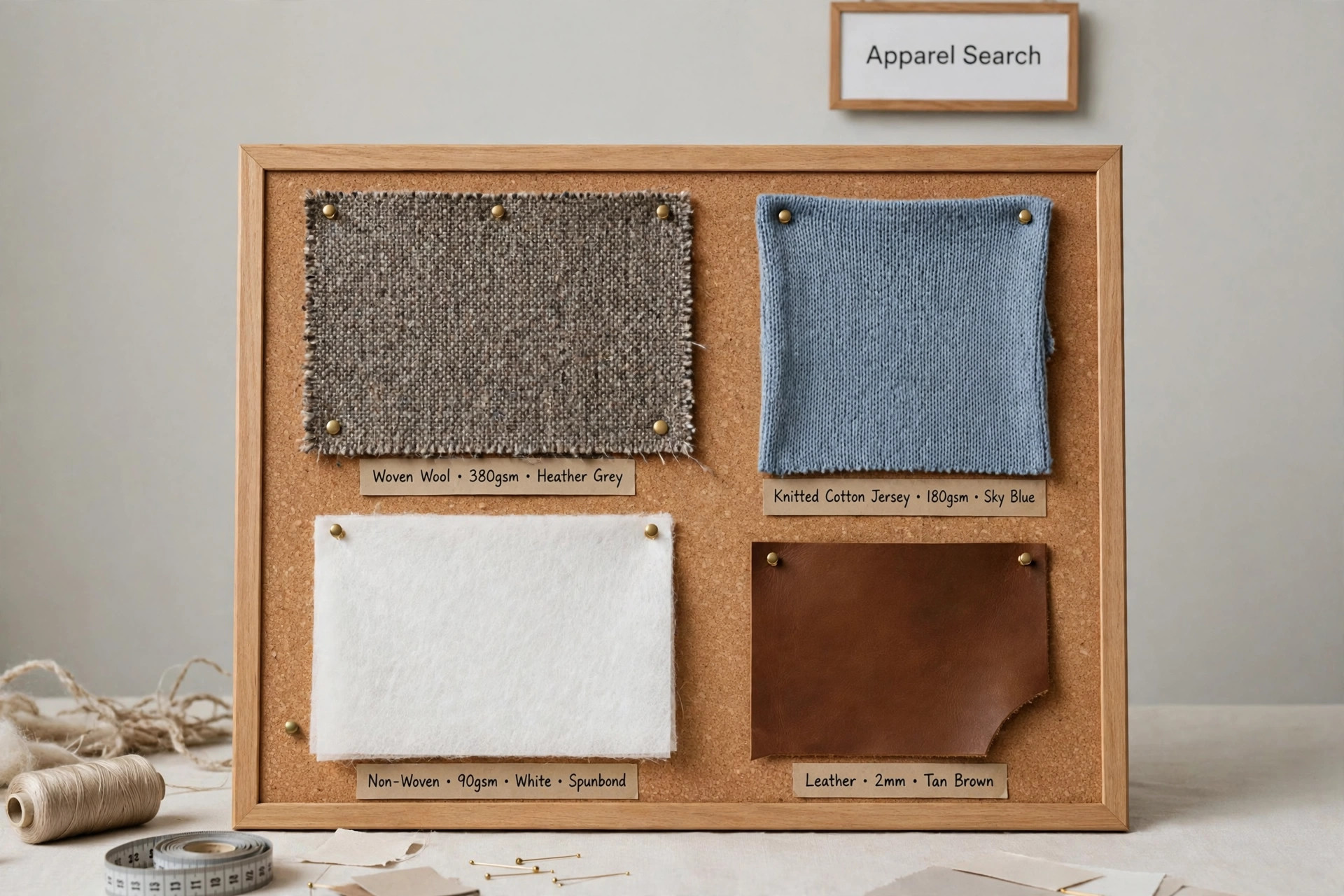
In apparel usage, material is cloth or fabric: the stuff a garment or textile product is made from, named before any distinction of fiber or construction is drawn. The material of a jacket might be a woven wool fabric, a knitted cotton cloth, a non-woven, leather or a coated textile — and saying which of those it is, is the next step in describing it.
The Umbrella Word of the Textile Trade
Material is the most general noun in the apparel vocabulary, and its generality is its function. Every more specific term — fabric, cloth, textile, leather, webbing, trim — names a kind of material, and trade documents use the word wherever the kind has not yet been decided or does not matter: raw material purchasing, material costs, material handling, material safety. A designer's materials board may pin woven, knitted, non-woven and leather swatches side by side, all of them legitimately materials, because the decision the board records is what each part of the garment will be made from.
The short definition — material is cloth or fabric — states the apparel centre of the word: in a clothing context, an unnamed material is understood to be a textile sheet good, not metal, plastic sheet or wood. Context supplies the narrowing. A shoe material list may include leather and rubber; a dress material is a fabric; and a material composition line is a fiber list. Readers who need the specific member of the family should follow the glossary onward to fabric and cloth, the two pages that define the material in its woven, knitted and finished forms.
Why a Specification Never Stops at Material
Because the word is general, it is also the word used where precision has to be added by specification rather than assumed. Two garments both described as made of natural material may differ in every practical property; it is the fiber percentages, the construction — woven, knit or non-woven — and the finish that turn material from a label into information. That is why professional product descriptions never stop at the word: they state fiber content by percentage, name the fabric type where one is established (a twill, a jersey, a canvas), and give care instructions that follow from both. Material is the question; fiber, fabric and finish are the answers.
Materials Beyond Cloth in a Garment
A finished garment is an assembly of materials of several kinds, and the broader sense of the word covers all of them. The main fabric is the material in the narrow sense of the definition; but linings, interfacings, threads, elastic, buttons, zips, padding and labels are also materials in the bill of materials that manufacturers use to cost and source a garment — the document is literally called a bill of materials. That industrial usage explains why material appears in so many trade compounds where cloth alone would not fit.
For the glossary reader, the practical takeaway is a reading rule: when material stands alone in an apparel text, it means the fabric; when it appears with a qualifier — raw, synthetic, recycled, lining, shell — the qualifier carries the specific meaning, and the word itself contributes only the sense of the physical stuff the product is made from. From that base, the specialised pages of this section take over: every fabric definition here is the definition of one material, described by its fiber, its structure and its finish.
Not to Be Confused With
Material is the broader word, fabric the narrower one. In everyday apparel use the two overlap, but material covers leather, coated textiles and non-wovens as well as woven and knitted fabrics, while fabric names the textile sheet goods themselves. A specification that says only “material” still has to state fiber content and construction before it describes anything; a specification that names a fabric has already identified the sheet good it means.
Common Questions
What does material mean in clothing?
The cloth or fabric a garment is made from. A care label or product description that gives a material composition — percentages of fibers — is identifying the material in fiber terms, while descriptions of weave, knit or finish identify the same material in construction terms. Both are answers to the question of what the garment material is.
Is there a difference between material, fabric and cloth?
In strict trade usage the words cluster closely: fabric and cloth both name sheet textile material, and this glossary has a full page for each. Material is the broader, more general word — it can include leather, coated textiles and non-wovens alongside woven and knitted fabrics — which is why it serves as the umbrella term in phrases such as raw materials and material composition.
Why do specifications list material percentages?
Because the fiber content of a material decides its care, performance and legal labelling. A garment material listed as a fiber blend tells the reader how it will wash, breathe, stretch and wear; fiber-content labelling of textile materials is required in most markets, stated in generic fiber names by percentage weight.