Presentation Board 2
The second of the presentation board examples from the Apparel Search Design Studio: a board designed as a presentation to Warner Brothers for a licensed-character clothing program.
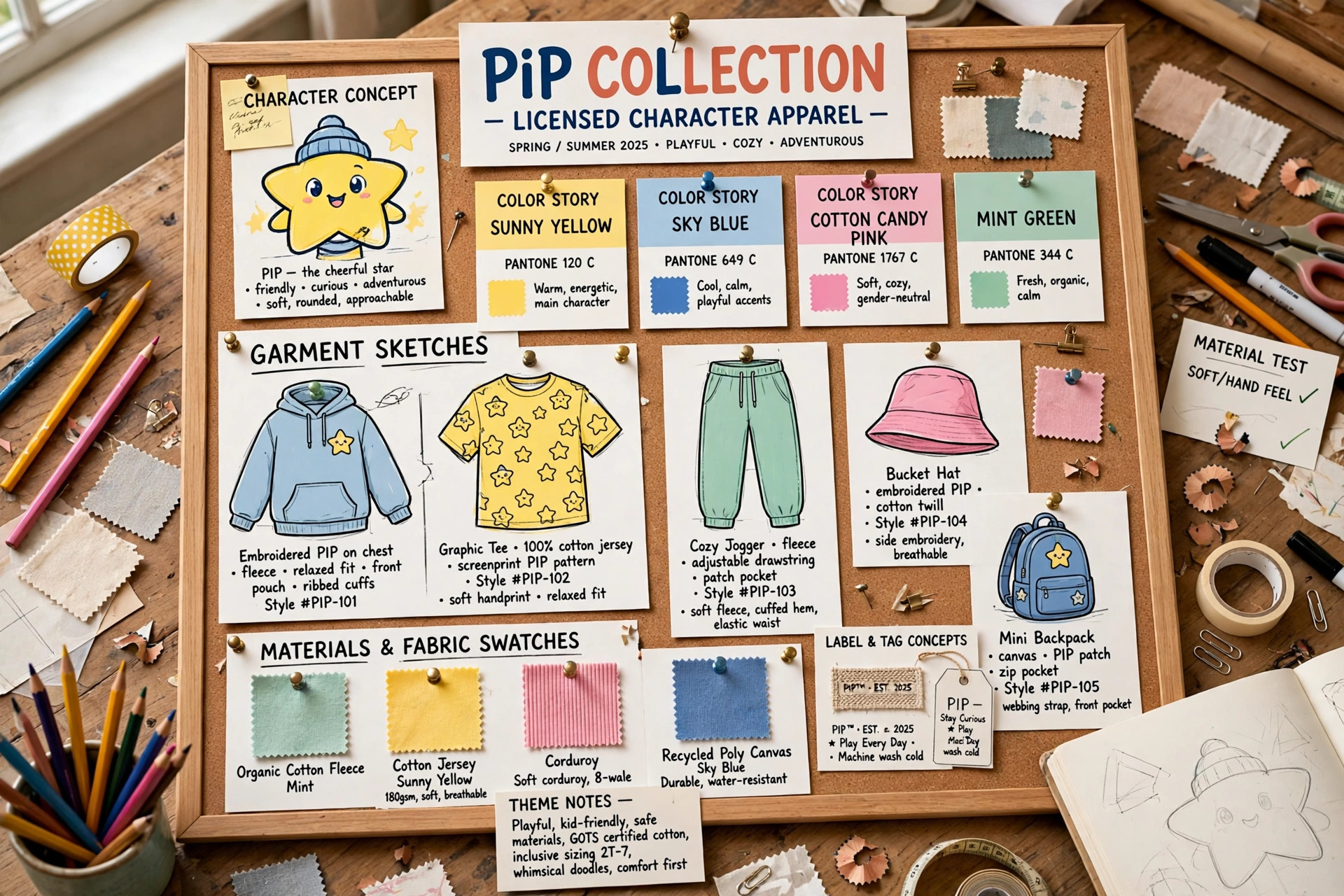
About This Board
This presentation was designed for Warner Brothers. Character licensing is one of the most demanding kinds of presentation work in apparel: the garments have to be designed around characters and artwork that already belong to a licensor, in the licensor’s style, for an audience the licensor knows well. The board’s job is to show that a clothing line built on those characters hangs together as a line — garments, colors, graphic placements and sizes working as one program — before a single licensed sample is produced or a single royalty-bearing garment is sold.
Boards like this one are reviewed by the licensor as much as by any retailer. A character program has to satisfy brand guardians who check that artwork is used correctly, that garments suit the property and that nothing on the board drifts off-model. That is why a licensing presentation is arranged differently from a house-brand board: the characters lead, the garments support them, and every graphic placement is shown clearly enough to be approved or corrected. The studio’s five example boards include menswear, streetwear and sportswear programs alongside this licensed one, so the different presentation styles can be compared directly.
Rights and Trademarks
We do “not” own or license the rights to Warner Brothers designs, copyrights, or trademarks. The art was created solely as a presentation to Warner Brothers. We are in no way affiliated with, nor claim to represent, the company that owns the characters or trademarks on this page. The statement is carried on the page because it is true of the work itself: creating presentation art for a licensor gives the studio no rights in the licensor’s property, and showing the board afterward does not change that.
For companies new to licensing, this is the practical shape of the business. The studio draws, the licensor owns, and the presentation is the document the two sides meet over. A board that respects that structure — characters used as the licensor allows, garments designed to carry them, artwork shown at a size where it can genuinely be approved — is what a licensing meeting needs. The presentation boards hub collects the other examples, and the studio’s Men’s Fashion Design Studio page shows how the same presentation skills apply to men’s and boys’ licensed and house-brand ranges alike.
Presenting Licensed Programs
A licensed program is usually presented more than once: first to win the work, then as the line develops, then again when final garments are approved. The board format survives all three rounds because it can be re-arranged as designs change, with rejected garments lifted off and new ones pinned in their place. Color and fabric direction stay visible throughout, which keeps a long approval process honest — a character program can drift over months of revisions, and the board is the record of what the line was always supposed to look like.
Character artwork also fixes the color story in a way house brands never experience: the characters arrive with established colors that cannot be rebalanced to suit a season’s palette, so the garments, backgrounds and supporting graphics have to be designed around them. A board for a character program is therefore partly an exercise in negotiation — the licensor’s non-negotiable artwork on one side, the clothing line’s need for a wearable, sellable range on the other. When the board makes that negotiation look effortless, with characters leading and garments genuinely designed rather than merely decorated, the presentation has done the hardest part of its job.
Photos

Common Questions
Who was Presentation Board 2 designed for?
It was designed for Warner Brothers, as a presentation of a licensed-character clothing program. The studio does not own or license the rights to Warner Brothers designs, copyrights or trademarks, and is not affiliated with the company that owns them.
What is different about presenting a licensed character line?
The characters lead and the garments support them. Every graphic placement has to be shown clearly enough for the licensor to approve, artwork must stay on-model, and the board has to prove the garments work as one line before any licensed samples are made.
Does showing this board mean the studio represents Warner Brothers?
No. The art was created solely as a presentation to Warner Brothers. The studio claims no representation of, and no affiliation with, the company that owns the characters and trademarks shown.
More to Explore
The other example boards and the studio hub:
Looking for Design Services?
See the presentation boards hub for all five examples, or the studio’s fashion services for boards, labels, prints and silhouettes.