Presentation Board 4
The fourth of the presentation board examples from the Apparel Search Design Studio, shown through its board artwork and linked from the Design Studio main page.
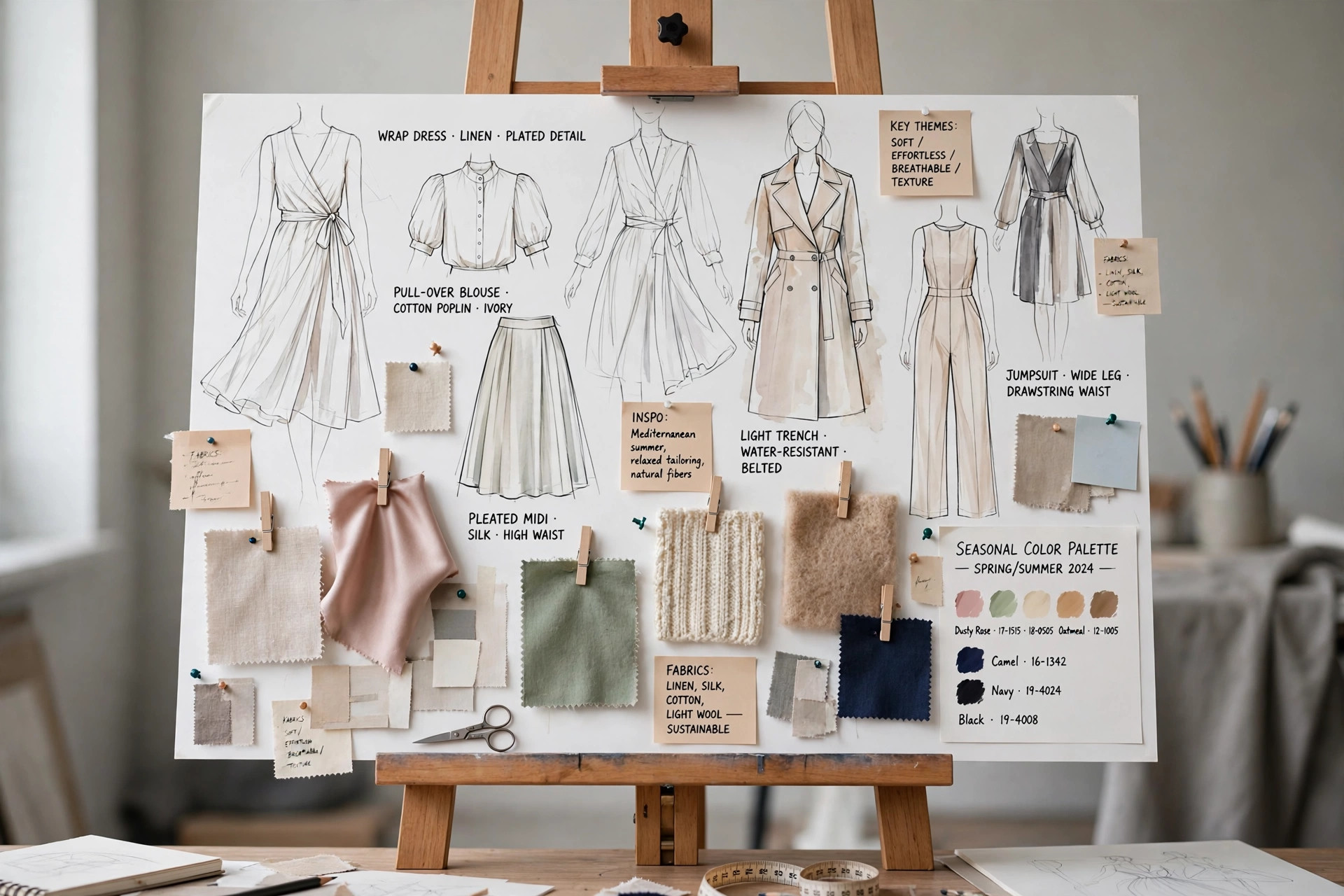
About This Board
Presentation Board 4 is presented the way the studio presents the work itself: the board artwork carries the page. The full board image in the Photos section below is shown at its working size, 1005 by 732 pixels, because a presentation board is a detailed working document — garment sketches, fabric direction, color and graphics arranged for a meeting — and shrinking it to a thumbnail would remove exactly the detail a visitor comes to judge. Boards 4 and 5 complete the five-board example set that begins with the menswear, licensed-character and streetwear programs on the first three board pages.
The five examples together are the point of the set. A single board can look like a studio’s whole style; five boards, built for different markets and different kinds of client, show whether a studio can change its hand to suit the line in front of it. Compare this board with Presentation Board 1 and Presentation Board 3 and the differences are the lesson: sketch style, board density, color handling and graphic weight all shift with the market being presented, while the underlying discipline — garments, fabrics and story readable in one view — stays the same.
How to Judge a Presentation Board
A board earns its place in a meeting three ways. First, completeness: the garments, fabrics, colors and branding of the line are all present, so nothing important has to be imagined. Second, order: the eye is led through the line in the sequence the presenter intends, from the lead garments to the supporting pieces. Third, honesty: the sketches show the garments as they will really be made, at proportions a manufacturer can work from, not flattered into shapes production cannot repeat. A board that fails the third test may win the meeting and lose the season, which is why experienced buyers read sketches skeptically.
Visitors using these five examples to choose a studio — or to brief their own designers — can apply the same three tests to each board in turn. The studio behind them is the Apparel Search Design Studio, whose presentation tags and label design service covers the boards’ closest relatives: the hangtags, labels and presentation tags that appear on the garments the boards present. From the Design Studio main page every service in the section is one click away.
Boards in the Studio's Workflow
In the studio’s workflow a board is rarely the first or last thing made for a line. It comes after logos, labels, prints and silhouettes exist, and it is the document those pieces are proved in together; it goes before samples, and it is the document samples are checked against when they arrive. That middle position is what makes board craft worth a section of its own: the board is where a line’s separate design decisions either become a collection or are exposed as a pile of unrelated garments, early enough to fix them cheaply.
That middle position also explains why boards are archived rather than discarded when a season ends. A board is the one document that records what a line was intended to be before selling, sampling and cost negotiations changed it, and companies returning to a successful season — or disputing how a garment came to differ from its presentation — go back to the board. The five boards kept in this section serve that archival purpose for the studio’s own work: whatever became of the programs they presented, the boards remain the exact record of what was proposed, in the form in which it was proposed.
Photos

The board artwork at its working size: the garment sketches, fabric direction and graphics the presentation was built from.
Common Questions
What is Presentation Board 4?
It is the fourth of the studio's five example presentation boards, presented through its full-size board artwork. Together the five boards show the studio presenting for different markets: menswear, licensed characters, streetwear and the programs on Boards 4 and 5.
Why is the board shown at full size?
A presentation board is a detailed working document. At thumbnail size the garment sketches, graphic placements and fabric direction cannot be read, and reading them is the reason to visit an example page.
How should I judge whether a board is good?
Check completeness (garments, fabrics, color and branding all present), order (the eye led through the line as the presenter intends) and honesty (sketches at proportions production can actually repeat).
More to Explore
The other example boards and the Design Studio main page:
Looking for Design Services?
Start from the Design Studio main page for the full service list, including label and hangtag design and print designs.