Presentation Board 3
The third of the presentation board examples from the Apparel Search Design Studio: a board designed as a presentation to Fubu for an urban streetwear program, shown here with its full-size artwork one click away.
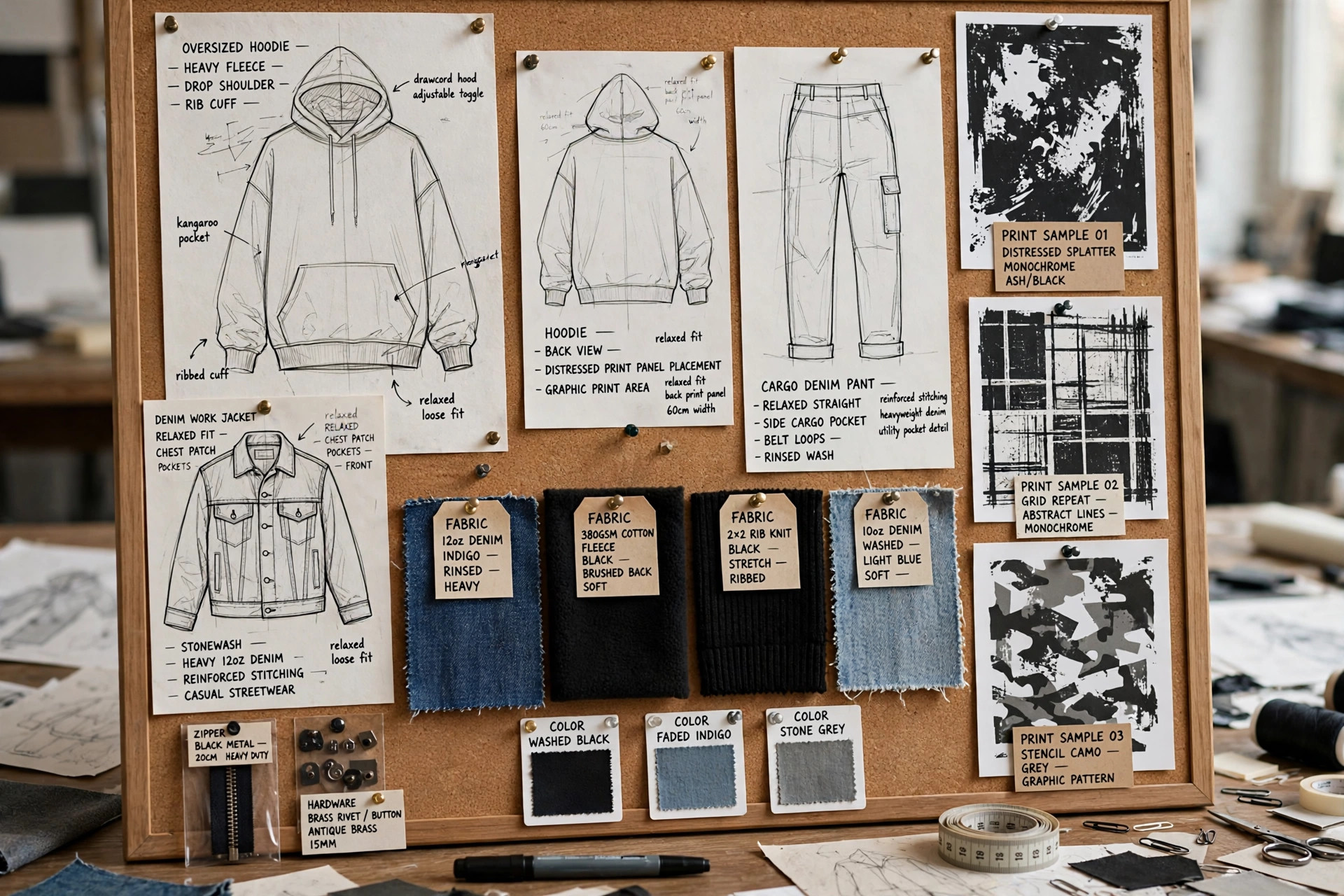
About This Board
This presentation was designed for Fubu. Streetwear presents differently from the tailored and licensed programs elsewhere in this section: the graphics carry more of the line, the garment shapes are looser and bolder, and the board has to feel like the street culture the clothes come from while still being organized enough for a buyer to order from. Click the board image to properly view it — the full-size artwork is where the graphic placements, lettering and garment details can actually be read, and a streetwear board lives or dies on exactly those details.
The enlarged view matters for the same reason it matters on the first board in this set: a presentation is a working document, not a poster. Buyers check how a print sits on a chest, how a logo repeats across a range and whether the color story holds from the first garment to the last. Showing the board small with a clear route to the full-size file respects that use. The board artwork in the Photos section below is the full-size file itself, carried at its working size rather than as a decorative thumbnail.
Rights and Trademarks
We do “not” own or license the rights to Fubu designs, copyrights, or trademarks. The art was created solely as a presentation to Fubu. We are in no way affiliated with, nor claim to represent, the company that owns the characters or trademarks on this page. As with the other licensed examples in this section, the disclaimer is part of the record of the work: the studio created the presentation, the brand and its marks remain its owner’s property, and the board is shown as an example of presentation craft, not as a claim on the brand it was made for.
Streetwear makes the point sharply, because in streetwear the graphic and the logo are often the product. A studio presenting for a streetwear label is handling the most valuable part of that label’s property on every board. The working habits that follow — artwork shown only in the presentation it was made for, rights stated plainly beside it, no reuse implied — are the habits a brand should expect from any studio it trusts with its marks. The presentation boards hub sets this board beside the other four examples, and the studio’s Men’s Fashion Design Studio page covers the menswear design work behind boards of this kind.
Reading a Streetwear Board
To read a board like this one, start with the graphics: in streetwear they set the line’s identity, and the garments are arranged to give them room. Then check the garment range itself — the hooded pieces, denim and tees a streetwear line is built from — and finally the color story, which has to be strong enough to hold bold graphics together across a full range. A board that passes those three checks in that order is ready to present; one that fails the first will not be rescued by the other two.
There is also a practical reason this board is shown at working size: streetwear graphics are frequently print-ready art, not sketches of graphics. The lettering, the repeat, the exact weight of a line — these are production decisions already made, and they can only be evaluated at the size they will be printed. A studio that shows its streetwear boards small is asking to be trusted; a studio that shows them full-size is asking to be checked. For licensed and branded work, where the client’s property is on the board, being checkable is the more professional offer, and it is the standard the other boards in this set are held to as well.
Photos

The full-size board artwork. Open the full-size board image to read the graphic placements and garment details at working size.
Common Questions
Who was Presentation Board 3 designed for?
It was designed for Fubu, as a presentation of an urban streetwear program. The studio does not own or license the rights to Fubu designs, copyrights or trademarks, and is not affiliated with the company that owns them.
How do I see the board properly?
Click the board image to view it at full size. The full-size artwork is also the image in the Photos section of this page, so the graphic placements, lettering and garment details can be read at working size.
What should I look for in a streetwear presentation board?
Start with the graphics, since they carry a streetwear line's identity, then the garment range the graphics sit on, then whether the color story is strong enough to hold bold artwork together across the whole range.
More to Explore
The other example boards and the studio hub:
Looking for Design Services?
See the presentation boards hub for all five examples, or the print designs page for the graphic artwork side of the studio’s work.