Presentation Board 5
The fifth of the presentation board examples from the Apparel Search Design Studio, shown through its board artwork and linked from the Design Studio main page.
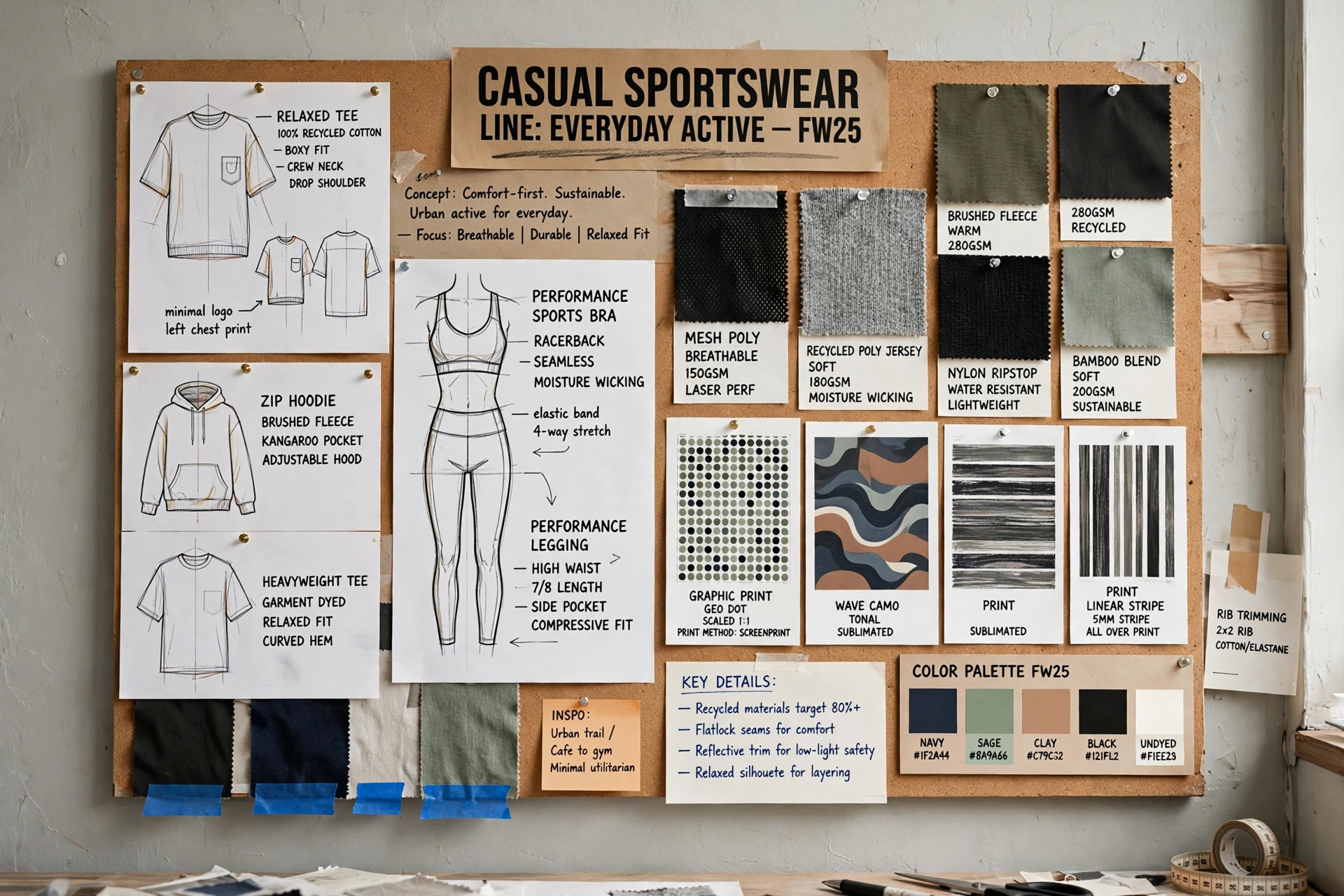
About This Board
Presentation Board 5 completes the studio’s five-board example set, and it is presented through the board artwork itself, shown at its working size of 785 by 677 pixels in the Photos section below. With Presentation Board 4, it forms the second half of the set: the first three boards present a rugged menswear program, a licensed-character program and an urban streetwear program, each with its client named and its rights stated, while Boards 4 and 5 let the artwork speak in the same full-size format for two further programs.
A five-board set is a deliberate choice. Presentation work is hired on evidence, and evidence in this trade is the boards themselves. One board proves a studio can present one kind of line; five boards, spanning different markets, garment types and graphic styles, prove the skill transfers — that the studio is presenting the client’s line rather than repeating its own habits five times. Visitors shortlisting a studio for board work should ask any candidate for the same spread, and should worry if every example looks like the same line wearing different logos.
What the Set Shows About Board Craft
Across the five boards, the constant elements are structural: garments sketched clearly enough to manufacture from, fabric and color direction pinned where the eye can check them against the garments, and graphics placed at the size and position they will occupy on the finished clothing. The variable elements are expressive: sketch manner, board density, typography and color temperature all follow the market. Holding the structure constant while the expression changes is the whole craft, and it is why boards are built by designers who specialize in clothing rather than by general graphic studios working from garment photographs.
The route back from this page runs through the Design Studio main page, the hub for the studio’s services: logos, labels and hangtags, silhouettes, prints and patterns alongside the boards. The presentation boards hub is the other way back, gathering all five examples with the studio’s own account of what boards are for — sales meetings, trade shows and special events — and how the board services connect to the tag, label and print work that fills them.
Using These Examples
Companies preparing their own presentations can use this set as a checklist before any meeting: is every garment in the line on the board, is the fabric story visible rather than described, do the graphics read at the size they will be printed, and could a buyer who missed the meeting understand the line from the board alone? The last question is the strictest and the most useful, because boards routinely travel without their presenter — forwarded to partners, photographed for internal reviews, and pinned up in offices where the line is discussed by people who never met its designer. Checking a board against all four questions takes minutes and prevents the commonest presentation failures.
One more use of the set is internal: a studio’s example boards teach its own newer designers what a finished presentation looks like. Sketch finish, swatch discipline, the amount of white space a board needs and the point at which one more garment makes a board worse rather than better are all easier to learn from completed boards than from instructions. Keeping the five examples together, at full size, with the studio’s account of what boards are for on the hub page, makes the set a small training library as well as a portfolio — for the studio’s team, and for any design student working through them the same way.
Photos

The board artwork at its working size: garment sketches, fabric direction, color and graphics arranged for presentation.
Common Questions
What is Presentation Board 5?
It is the fifth and final example in the studio's five-board presentation set, presented through its full-size board artwork. The set spans menswear, licensed-character, streetwear and two further programs.
Why does the studio show five example boards?
One board proves a studio can present one kind of line. Five boards for different markets prove the skill transfers: the structure stays constant while the sketch style, density and color handling change to suit each line.
What is the strictest test of a presentation board?
Whether a buyer who missed the meeting could understand the line from the board alone. Boards travel without their presenters, so garments, fabrics, colors and graphics all have to be readable without anyone explaining them.
More to Explore
The other example boards and the Design Studio main page:
Looking for Design Services?
Start from the Design Studio main page for the full service list, or return to the presentation boards hub to compare all five examples.