DTF vs DTG Printing: Direct to Film vs Direct to Garment Compared
DTF vs DTG compared: how direct to film and direct to garment printing work, fabric range, hand feel, durability and cost logic, and when each method wins for garment printing.
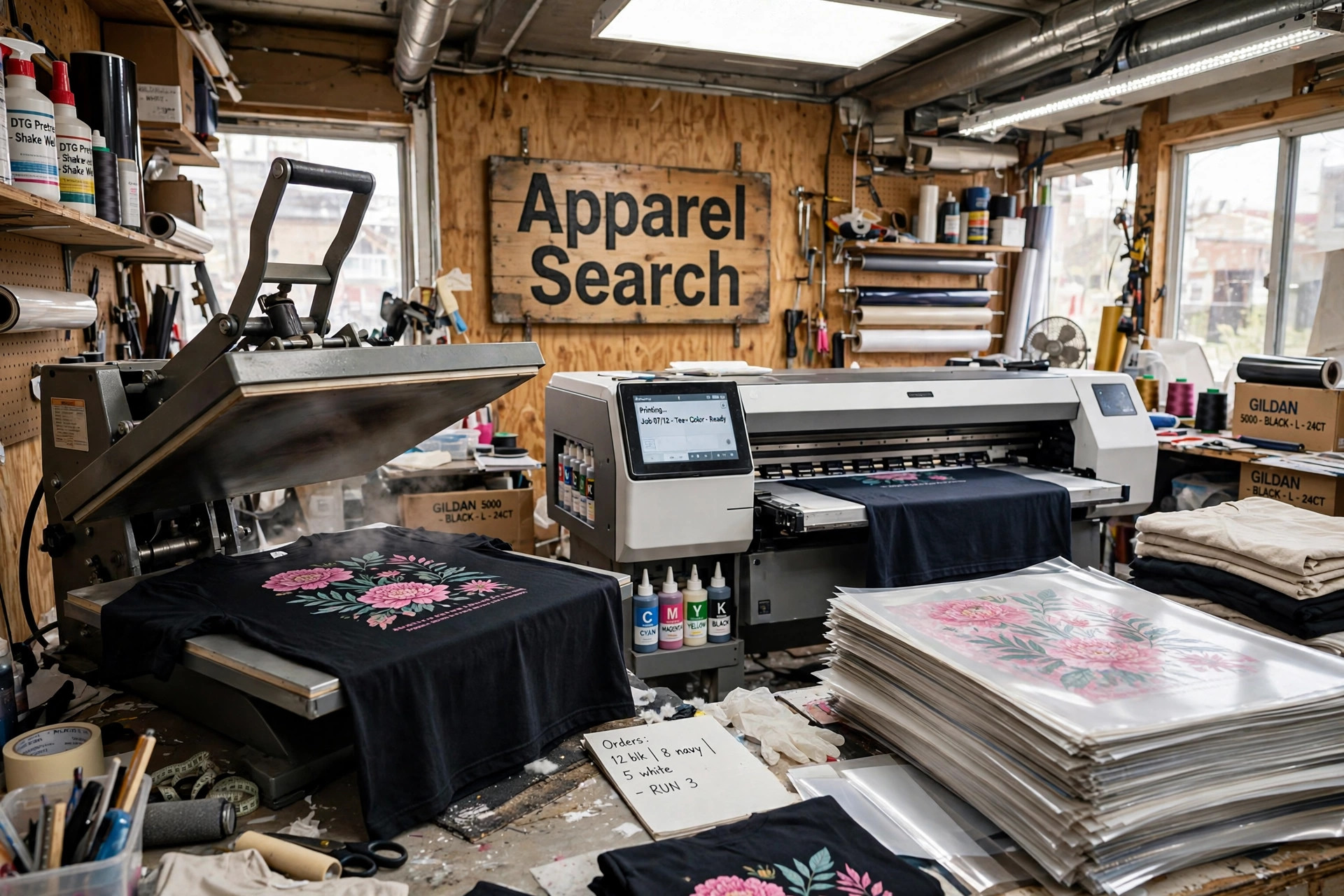
DTF (direct to film) prints a design onto film, then heat-presses it onto a garment. DTG (direct to garment) prints ink straight onto the garment in a specialised printer. Both produce full-colour prints with no screens — but they differ in fabric range, feel, durability and cost structure.
How Each Process Works
The direct to film printing guide covers DTF step by step: print to PET film, dust with hot-melt adhesive powder, cure, then press onto almost any fabric — cotton, polyester, blends, even leather and caps. Direct to garment printing works like an inkjet for clothes: the garment is pretreated, loaded flat into the printer, printed with water-based CMYK inks and heat-cured. The structural difference drives everything else: DTF separates printing from the garment, so transfers can be printed in advance and pressed on demand; DTG prints each garment as it is ordered.
Fabric, Feel and Durability Compared
| Question | DTF (direct to film) | DTG (direct to garment) |
|---|---|---|
| Fabric range | Almost anything pressable: cotton, polyester, blends, dark and light colours | Best on cotton and high-cotton blends; light colours easiest, darks need pretreatment |
| Hand feel | A thin, smooth film layer sitting on the surface — flexible, slightly rubbery on large areas | Ink absorbed into the fibres — the softest feel of any print method |
| Colour and detail | Vivid, opaque colour on any garment colour; fine detail holds well | Excellent gradients and photographic detail on light cotton; muted on darks |
| Durability | Very strong wash resistance; can crack if stretched hard over years | Good on cotton with correct curing; fades sooner than film under heavy washing |
| Cost logic | Priced by film area; gang sheets make small designs very cheap per piece | Priced per garment print; ink and pretreatment cost rise with print size |
When Each Method Wins
Choose DTF for mixed fabric orders, polyester sportswear, caps and workwear, designs with bright colour on dark garments, and any workflow where printing transfers ahead of orders saves time. Choose DTG for premium cotton garments where soft hand feel is the selling point, photographic artwork on light colours, and one-off prints with no film inventory. Both sit inside the wider landscape set out in the print on demand guide and the screen printing guide; the head-to-head with screens is covered in print on demand vs screen printing. For most small brands the honest answer is both: DTG for the soft-feel cotton line, DTF for everything else.
A Note on Setup and Workflow
Neither method needs screens, which is why both dominate small-batch and print-on-demand work. Their setup costs differ in kind: DTG asks for pretreatment and per-garment printer time, DTF asks for film, powder and press time but lets the printing happen before the order exists. Shops running both usually route by garment first — cotton to DTG, everything else to DTF — and by deadline second.
Common Questions
Is DTF or DTG more durable?
DTF generally wins on wash durability and fabric range: the adhesive film layer resists repeated washing on cotton, polyester and blends. DTG prints, absorbed into cotton fibres, feel softer but fade sooner under heavy washing. Correct curing matters more than the method for either.
Can DTG print on polyester?
Only with difficulty. DTG inks are formulated for natural fibres and sit poorly on polyester, giving washed-out colour and weak wash resistance. Polyester garments are a standard DTF job, which is why sportswear orders usually go to film.
Which is cheaper for small orders?
For a handful of garments, both are economical and neither needs screens or setup. DTF edges ahead when one gang sheet can carry many small designs at once; DTG edges ahead for a single large photographic print on a light cotton shirt, where no film is consumed.