Should White Be Worn Before Memorial Day?
A fashion poll on the famous American white-clothing rule
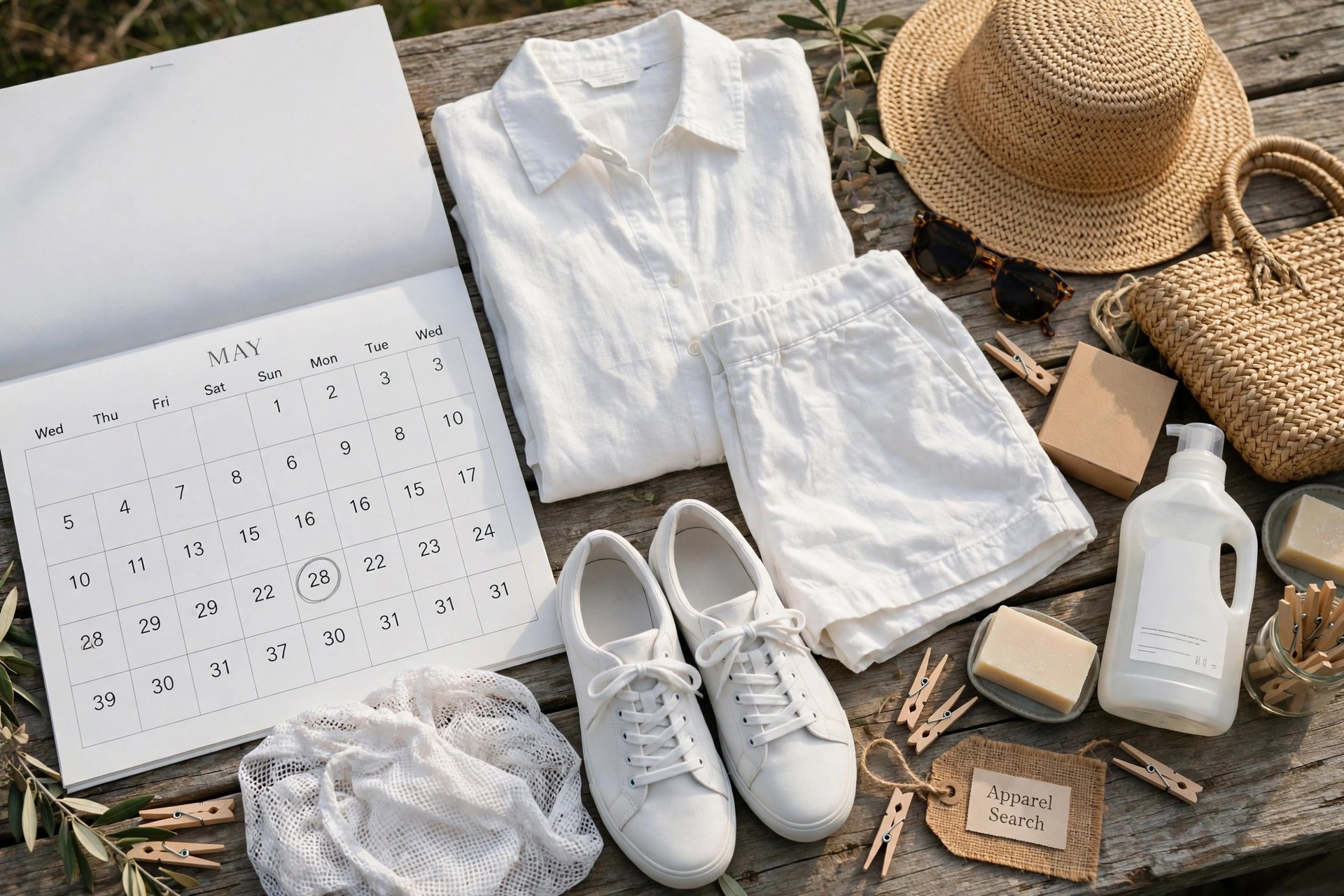
For readers in the United States, this poll invokes one of fashion's most famous rules: white clothes and shoes belong between Memorial Day and Labor Day, and not before. The rule hardened in the early twentieth century, when white was the uniform of summer leisure — light, cool and impractical in city dirt — and wearing it in season signaled that the wearer kept the summer calendar. Like most etiquette rules it survived long after its practical roots thinned: white winter fabrics, southern climates and year-round white sneakers have all argued against it, while traditionalists still read early white shoes as a season jumped. The poll asks where opinion now stands on a rule that everyone recognizes and fewer people obey.
Should White be Worn Before Memorial Day?
Fashion Polls : Research clothing and
style by using a fashion poll.
Fashion Polls Fashion Companies Fashion Industry Polls Fashion Industry Research Fashion Education Fashion Schools Fashion Apparel Clothing
For those of you living outside the United States, you may not fully understand this poll. This is really intended for the United States fashion market. If you understand the meaning, you are welcome to participate in the poll.
If you are not sure the meaning of Memorial Day, you can read the Memorial Day definition.
Thank you for visiting the, "Should white be worn before Memorial Day?" poll. Try another fashion poll.
You can discuss this issue and any other issue relevant to fashion at the Fashion Industry Network Discussion area.
Learn more about white fashion for women from our fashion by color guide..
A fashion poll is essentially a survey of the
public or a sampling of public opinion to acquire information about a
particular issue relevant to fashion or the fashion industry.
Polls can be taken either online or offline.
Read about the
shocking new web poll technology here on Apparel Search.
Where the Rule Came From
The white season began as practicality before it became etiquette. In an era of unpaved streets, coal heat and no air conditioning, white clothing was summer clothing — it reflected heat and showed leisure, since only someone away from work and city grime could keep it clean. Resort towns ran on a calendar that opened around Memorial Day and closed at Labor Day, and wardrobes followed the resorts. Etiquette writers then codified the habit into a rule, and rules of dress have a long afterlife: they become signals of whether a person knows the code, quite apart from whether the code still serves its original purpose. That signaling function is what kept the white rule alive into the era of climate control and washable fabrics.
How the Rule Is Treated Now
Modern practice has dismantled the rule piece by piece. Winter white — in wool, cashmere and denim — is a standard fashion story; warm regions ignore a calendar built for northeastern summers; and the white sneaker became year-round footwear for most of the population. What survives is narrower than the rule was: many dressers still avoid summery white linen and white summer shoes in the cold months, not from obedience but because the clothes themselves are built for heat. The poll therefore measures two different things at once — respect for a shared code, and the simple judgment that some whites are seasonal garments and some are not — and its answers have been drifting steadily toward wearing white whenever the fabric suits the weather.
Common Questions
What was the traditional rule about wearing white?
In the United States, white clothing and shoes were traditionally worn between Memorial Day and Labor Day — the summer season — and avoided outside it.
Where did the rule come from?
From summer practicality in the era before air conditioning: white was cool, light resort wear that showed leisure, and etiquette writers later codified the seasonal habit into a rule of dress.
Is the rule still followed?
Only in weakened form — winter white in heavy fabrics is standard fashion and white sneakers are worn year-round; what survives is mostly avoiding summer-weight white garments, like linen, in cold weather.