Phillips-Van Heusen Careers
Phillips-Van Heusen remembered — the dress shirt company whose purchases turned it into a global brand group
Phillips-Van Heusen was, for most of the twentieth century, an American shirt company. Its roots reach back to 1881, when the Phillips family began mending and selling shirts to coal miners around Pottsville, Pennsylvania. The Van Heusen half of the name arrived through John Manning Van Heusen, whose patented process for weaving a collar on a curve produced the soft, self-folding collar that made Van Heusen shirts famous. In 1957 the combined business formally took the Phillips-Van Heusen name, and for decades it stood for dress shirts, sportswear and neckwear sold in nearly every American department store. Generations of American men bought their office shirts from its counters, and the name carried a guarantee of consistent sizing and honest cloth.
Late in its life under that name, the company changed character entirely. A run of purchases — dress furnishings labels first, then two designer brands of global scale — turned a domestic shirt wholesaler into an international brand owner, and in June 2011 shareholders approved shortening the corporate name to PVH Corp. Nothing about the factories, offices or staff vanished in that vote; the employer simply continued under new initials. This page records what the old name meant as a place to work and points today's applicants to the successor company that now does the hiring.
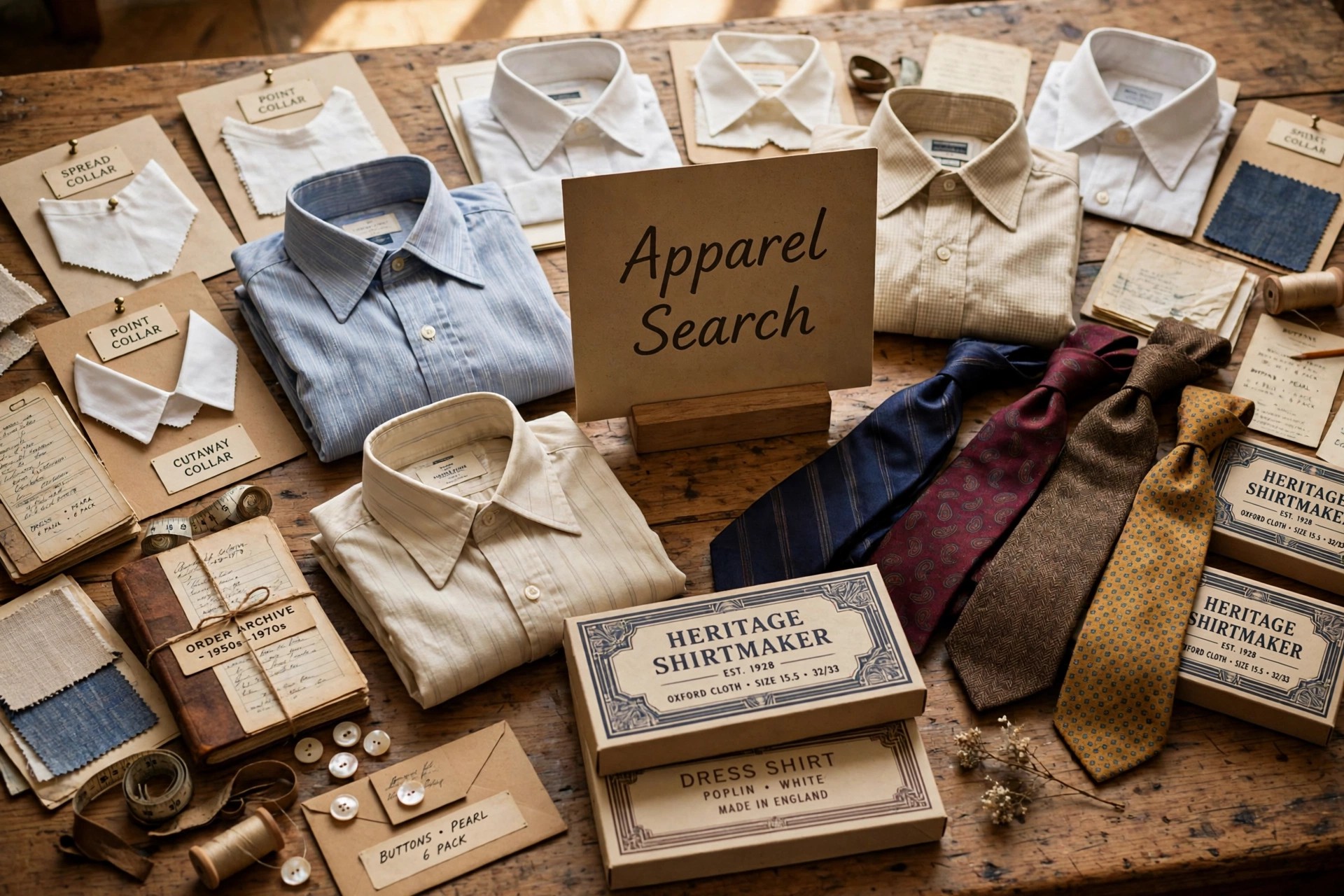
Shirtmaking Roots and the Van Heusen Collar
The business began as Phillips family shirtmaking in Pennsylvania coal country and grew through merger: in 1907 it combined with a New York shirt house to form Phillips-Jones, selling shirts under several labels. The decisive product was the Van Heusen collar. Earlier collars were stiff, separate and uncomfortable; the curved-weave collar could be made in one piece, folded naturally and survived laundering, and it gave the Phillips-Jones company a branded ingredient shoppers asked for by name — an early lesson in how a component can carry a whole garment's reputation.
After the Van Heusen interests were absorbed and the Phillips-Van Heusen name adopted in 1957, the company built its position on branded men's furnishings: Van Heusen dress and sport shirts, then a widening stable that came to include Arrow shirts and, later, Izod sportswear. Careers in that era were rooted in shirt craft — collar and cuff construction, shirting fabrics, size scales, and the fitting consistency that lets a customer buy the same neck size for thirty years. That trust was the brand equity on which everything else in the company's later history was built.
The Purchases That Rebuilt the Company
From the 1980s onward, growth came by acquisition more than by founding new labels. G.H. Bass footwear arrived in 1987, Izod in 1995 and Arrow in 2000, broadening the company from shirts into sportswear and shoes while keeping the same department store customers and wholesale machinery. The 2007 purchase of Superba made it a neckwear power, holding tie licences for a long list of outside brands — a business built on small goods, sharp licensing paperwork and close reading of other companies' dress codes. It also handed the furnishings business a second income stream that did not depend on selling a single extra shirt of its own.
Two deals dwarfed the rest. Calvin Klein was acquired in 2003, bringing a designer label, a jeans and underwear licensing empire and genuine international reach into a company that had sold mostly American menswear. Tommy Hilfiger followed in March 2010, bought for about $3 billion, and doubled the group's scale overnight. By then the shirtmaker's name described only a shrinking share of what the business actually owned, which is precisely why the shorter PVH Corp. name was put to shareholders the following year.
The Careers the Old Name Stood For
Heritage-era employment had a recognisable shape. Shirt designers and technical staff obsessed over collars, plackets, cuffs and cloth; pattern and fit specialists guarded the size standards of brands whose customers reordered by neck and sleeve measurements; and merchandisers planned dress furnishings around Father's Day, wedding season and the autumn return to office wear. Neckwear added its own craft roles — silk selection, pattern weaving, and the licence management described above — centred on a category most fashion employers barely touch.
Around that craft core sat a large wholesale organisation: account executives serving department store chains, showroom staff, planners allocating shirts and ties across hundreds of doors, and outlet store teams selling Van Heusen, Izod and Arrow product directly. Many long-serving American apparel executives passed through those furnishings businesses, because shirts and ties taught costing, replenishment and size-scale discipline that transferred everywhere. Those skills did not disappear with the name — they dispersed into the successor group's remaining furnishings work and the wider industry. Retail careers followed the same path, as the heritage outlet fleet was wound down once the group's centre of gravity had moved decisively to its two designer brands.
Where Those Jobs Live Now
There is no Phillips-Van Heusen employer to apply to. Hiring for the successor business is handled by PVH Corp. through the official channels referenced on this page, under the Calvin Klein and Tommy Hilfiger brands. One thread does survive directly: after selling the Van Heusen, Izod, Arrow and Geoffrey Beene trademarks onward in 2021, PVH kept operating dress shirt and neckwear lines under licence — so the old furnishings craft still employs people inside the modern group, even though the name on the door has changed twice over. Anyone whose skills lie in shirts, ties or furnishings licensing should look there first, and read modern postings with the old company's map in mind.
Common Questions
Why did Phillips-Van Heusen change its name?
Because the name stopped describing the company. After buying Calvin Klein in 2003 and Tommy Hilfiger in 2010, most of the business was global designer brands rather than Van Heusen shirts, and shareholders approved the shorter PVH Corp. name in June 2011.
Can I still apply to Phillips-Van Heusen?
Not under that name. The company continues as PVH Corp., and all hiring runs through PVH's official careers channels, mainly for its Calvin Klein and Tommy Hilfiger brands and its remaining dress shirt and neckwear operations.
What happened to the Van Heusen brand itself?
The trademark changed hands in 2021, when it was sold onward as part of the Heritage Brands package — Geoffrey Beene, Arrow and Izod went in the same transaction — to Authentic Brands Group. PVH nonetheless continues to run the North American dress shirt and neckwear business for those labels under licence from their new owner.