Apparel Search » Fashion Jobs » Career Guides » How to Become a Fashion Merchandiser
Where Product Meets the Customer
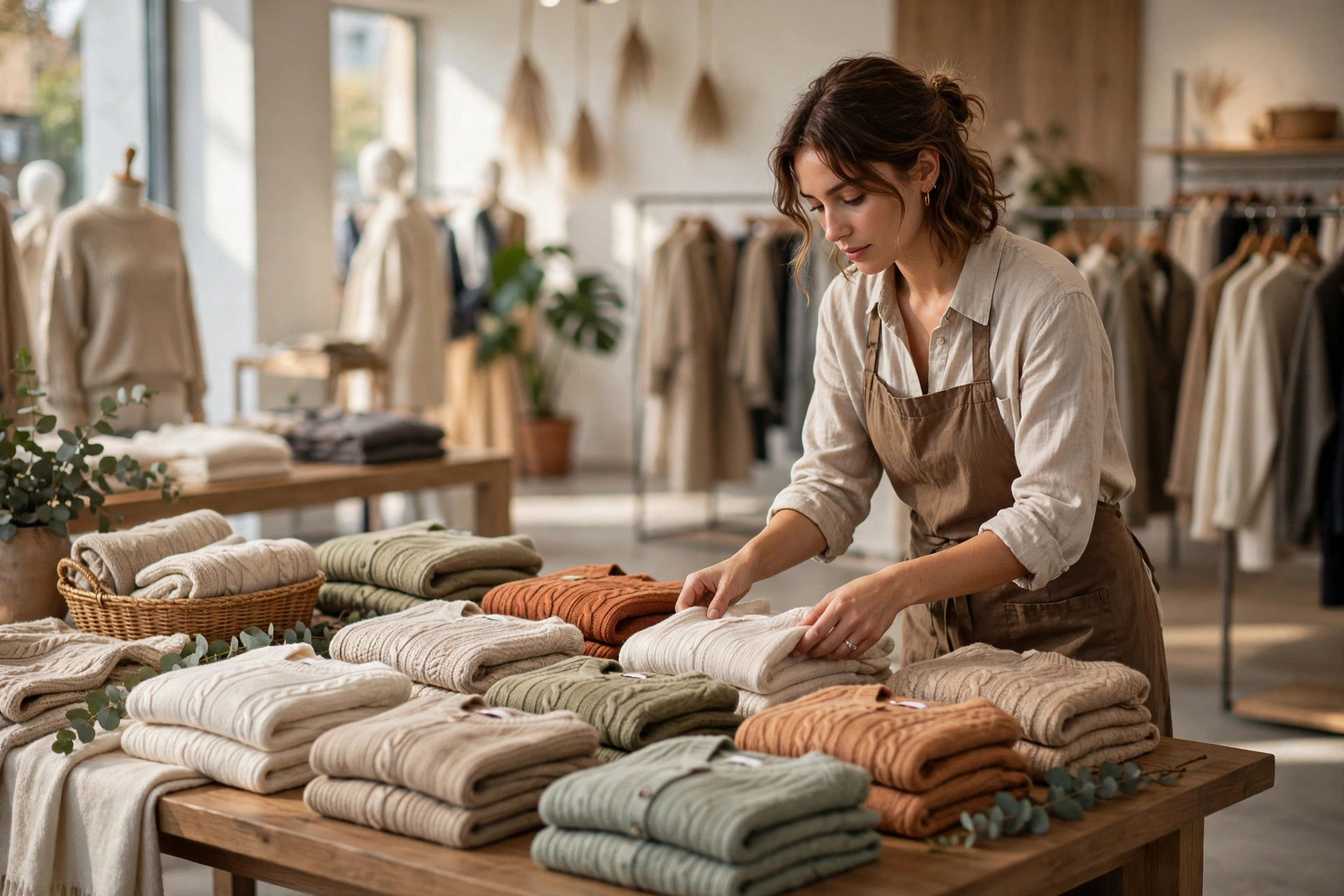
Fashion merchandisers make sure the right product reaches the right place, at the right price, in the right quantity, at the right time, and they are accountable for how it performs once it gets there. The work sits exactly between the creative side of fashion and the commercial side, which is why merchandising attracts people who love product but also love a result they can measure.
This guide explains what fashion merchandisers do, clears up the confusing family of merchandising job titles, and walks through the career path, the skills and education that help, and how merchandising jobs are filled. For the formal duties, start with the apparel merchandiser job description and the fashion merchandiser job description.
What Does a Fashion Merchandiser Do?
The merchandiser's season starts with analysis: how did each category, style, and price point perform last year, and what does that say about this year's customer? From there, merchandisers build line plans with designers and buyers that set how many styles a collection or department will carry, at what prices, in what balance of basics and fashion. As samples arrive they review fit, fabric, and cost against the plan, adjust quantities, and help decide what gets cut and what gets backed.
Once product is in stores or online, the merchandiser's attention turns to performance. They track sales and sell-through, recommend reorders, transfers, and markdowns, and plan how product is featured: which items lead a window, a table, or a web page. In e-commerce, site merchandisers do the same work digitally, sorting category pages, setting up promotions, and watching conversion. Throughout, merchandisers work cross-functionally, translating between design's creative intent, the buyer's budget, planning's numbers, and marketing's calendar.
Merchandiser, Merchandising, Visual Merchandiser: Sorting Out the Words
No corner of fashion employment confuses job seekers more than this one, because the same words mean slightly different things at different companies. Here is the map:
Merchandising is the discipline itself: the full activity of planning, selecting input for, presenting, and managing product so that it sells profitably. When a job posting says "merchandising team," it means the group responsible for that work.
A merchandiser is the person. In a retail headquarters, a merchandiser typically works beside buyers on assortment planning, pricing, and performance analysis. In a wholesale brand or manufacturer, the merchandiser is often the bridge between design, production, and the retail accounts: building the line, costing it, presenting it, and following it through delivery. Read the apparel merchandiser and fashion merchandiser descriptions side by side and you will see both flavors.
A visual merchandiser is a presentation specialist: windows, mannequins, fixtures, signage, and the look and flow of the selling floor (or its online equivalent). It is a more hands-on, design-led role, and it is a legitimate career of its own, described in our visual merchandising job description. Some visual merchandisers grow into broader merchandising roles, but the jobs are hired separately and ask for different portfolios.
The Career Path
Merchandising careers usually begin in support roles and widen from there:
- Assistant merchandiser. Sample tracking, data entry and reporting, competitive shopping, and meeting preparation. The assistant merchandiser job description covers the entry-level reality.
- Associate merchandiser. Owns a small category or a piece of a larger one, with real input into the line plan.
- Merchandiser. Responsible for a category's plan and performance, working directly with design and buying counterparts.
- Senior merchandiser. Bigger categories, more strategic range planning, mentoring of assistants and associates.
- Merchandise manager / director of merchandising. Sets strategy across categories and leads the team; at brands, this role often carries responsibility for the commercial success of entire collections.
Because merchandisers work with every other department, the role is also a recognized springboard: experienced merchandisers move into buying, planning, product management, and e-commerce leadership. If the purchasing side appeals to you more, compare this path with our guide on how to become a fashion buyer.
Skills Merchandisers Need
Retail math and data analysis. Sell-through, margin, turn, and weeks of supply are the merchandiser's dashboard. Employers expect fluency with spreadsheets and, increasingly, with reporting dashboards and planning software.
Product and customer sense. Analysis says what happened; the merchandiser still has to judge what a specific customer will want next season, at what price, in what depth. Store visits and competitive shopping are working tools, not perks.
Communication across teams. Merchandisers spend their days aligning designers, buyers, planners, marketers, and suppliers. The ability to present a plan clearly, and to negotiate when creative ambition and budget disagree, is what the job is made of.
Organization across seasons. A merchandiser is always living in three seasons at once: selling one, shipping one, and planning one. Calm, systematic follow-through is a genuine professional skill here.
Education and Training Routes
Fashion merchandising and fashion marketing degrees are the most direct preparation, combining product knowledge with retail math, consumer behavior, and assortment planning, and most include internships that function as the industry's main entry pipeline. Business and marketing degrees with retail experience are also common backgrounds, especially for e-commerce and planning-heavy roles.
The other proven route is the store floor. Sales associates who learn to read a department's performance, and visual merchandisers who learn presentation, move into assistant merchandiser roles regularly, particularly at retailers that promote from within. Whichever route you take, build two things deliberately: spreadsheet fluency and a habit of studying assortments critically whenever you walk into a store.
How Hiring Works
Merchandising openings appear on brand and retailer career pages, through the industry's specialized recruiters (see our fashion employment agencies directory), and very often through internal moves, since companies like to promote assistants who already know their systems and customer. Hiring tends to follow the seasonal calendar, with teams staffed up ahead of line planning.
In interviews, expect practical questions: how you would build a range for a given customer, what you would do about a category that is underperforming, how you read a sales report. Candidates who can talk about real product, real numbers, and real trade-offs, rather than trends in the abstract, are the ones who get hired. Our fashion job interview questions guide walks through the question types, and the design and merchandising job descriptions directory shows the range of roles employers hire for.
Common Questions
What is the difference between a buyer and a merchandiser?
In retail, buyers choose and purchase the product, owning the budget and the vendor relationship, while merchandisers plan how product is ranged, presented, and sold through, and analyze its performance. At many companies the two roles work as a pair on the same department, and at smaller companies one person may do both jobs. At brands and manufacturers, "merchandiser" usually means the person coordinating between design, production, and retail customers.
Is fashion merchandising a creative job or a numbers job?
Honestly, both. The creative side is real: range building, product selection input, and presentation all call for taste and trend judgment. But merchandisers are judged on commercial results, and daily work involves sales data, margins, and inventory. People who enjoy only one side of that pairing usually find the other side a slog, so it is worth being honest with yourself before choosing the path.
Do merchandisers work in stores or in offices?
Most headquarters merchandisers work in offices, with regular store visits built into the job. Visual merchandisers and field merchandisers work in stores. E-commerce merchandisers work in offices or remotely, on the digital storefront. The posting's location and duties will tell you which version you are applying for.
Do I need a degree in fashion merchandising?
It is the most common route into headquarters roles and the degree is designed for exactly this work, but it is not the only one. Business, marketing, and related degrees are accepted by many employers, and store experience leading to an assistant merchandiser role is a well-worn alternative path. Spreadsheet and retail math skills are expected regardless of the route.
Next Steps
Browse the design and merchandising job descriptions to compare the roles, read the other guides in the career guides directory, and visit the Apparel Search fashion jobs hub for listings, agencies, and application resources.