T-Shirt Buyer Job Description
Buying the hardest-working garment in the store — blanks, graphics, fabric weights and endless colour
A t-shirt buyer selects the plain, printed and graphic tees a store sells — a category that looks simple and is anything but. The tee is a high-volume, low-price, fast-turning garment bought in deep size and colour runs, refreshed constantly, and judged by customers on fabric hand-feel, fit and print quality within seconds of picking it up. Small costing errors multiply across enormous quantities, and a weak colour call leaves rails of stock behind. Employers typically look for recent experience buying tees or comparable casual knit and jersey product, plus the negotiation record the volume demands. This page explains the t-shirt buyer's duties, product knowledge, and routes into the role.
More Buying Job Descriptions by Letter:
What a T-Shirt Buyer Does
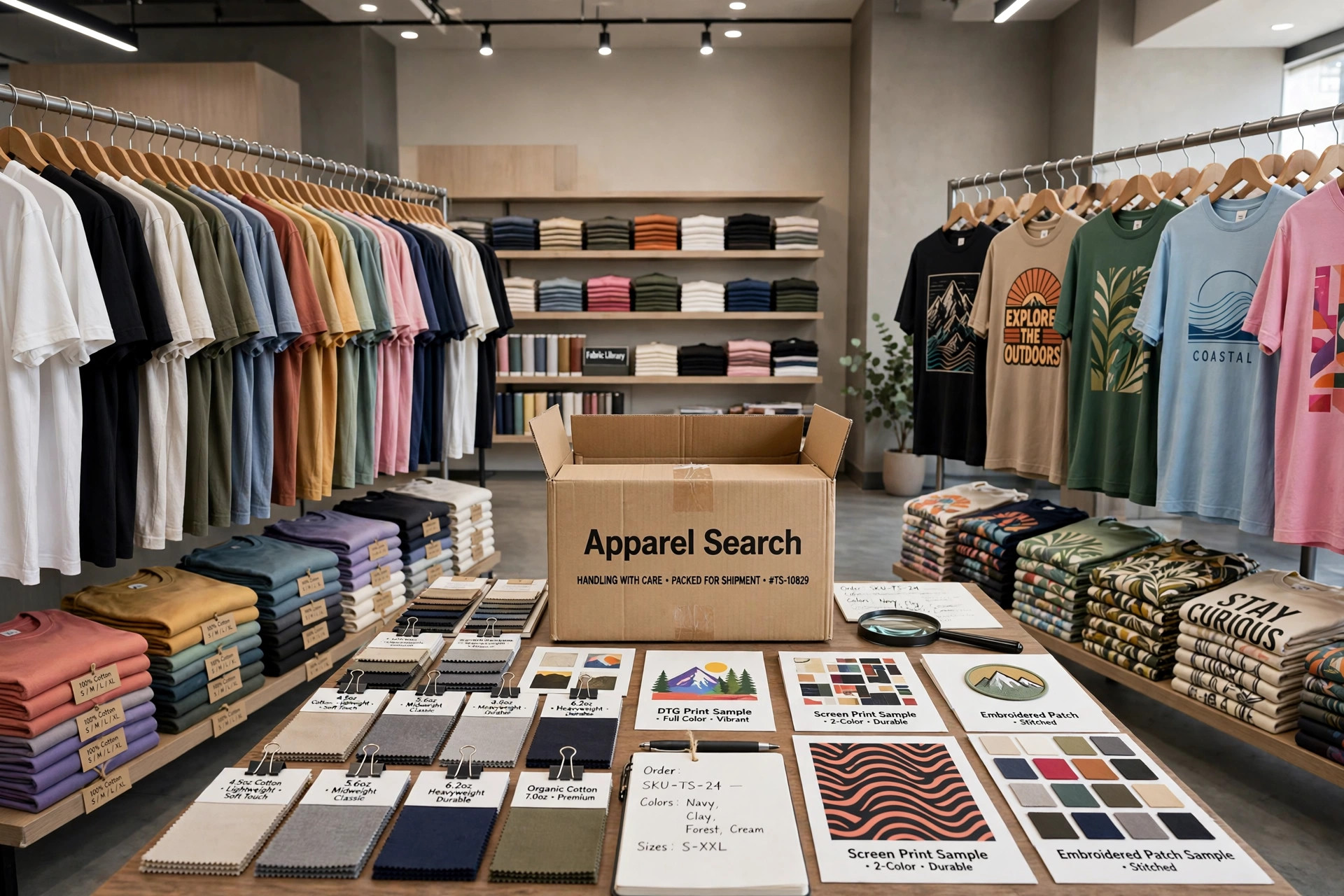
The t-shirt buyer plans the tee range as a system: core blanks in the colours customers replenish, seasonal fashion colours, graphic and printed styles that carry the department's personality, and licensed or slogan product where the store trades in it. Range planning starts from sales history broken down by colour, size, fabric weight and print theme, because tee demand is unusually legible — the data shows exactly which colours earn depth and which graphics exhausted their audience. The buyer then edits vendor ranges and develops own-label packs, fitting samples across the size range, since a tee block that twists, shrinks or loses its neck shape after washing destroys repeat sales.
Orders are placed against tight cost targets: at tee price points, pennies per garment decide margin, so the buyer negotiates fabric, print and packing costs line by line, often sourcing at volume from overseas manufacturers. In season the work is trading at speed — reading daily sales, repeating winning colours and graphics while suppliers can still print and deliver, switching depth between colours as evidence arrives, and clearing slowing themes early while they still have value. Senior t-shirt buyers typically manage a small team of assistant buyers and a buyer's administrator, and work hand in glove with merchandising colleagues on pricing and promotions, because tees are a promotion-driven category where the offer and the product are planned together.
Jersey Weights, Print Methods and Colour Depth
Fabric knowledge on this desk is specific: single jersey weights measured in grams per square metre decide whether a tee feels substantial or flimsy, and the buyer specifies weight, cotton quality and any polyester or elastane content against the intended price. Slub, burnout, garment-dyed and washed finishes each change cost and character, and the buyer judges them on washed samples, not fresh ones, because a tee is bought for how it survives the laundry. Neck construction, side seams versus tubular bodies, and stitching quality are checked the same way — the failure points customers actually return.
Print is the second discipline. Screen print, puff and discharge inks, embroidery, appliqué and heat transfers all sit at different costs, minimums and durability levels, and the buyer matches method to artwork and price rather than letting a supplier default decide. Colour planning is the third: tees are bought in colour stories that must work across men's, women's or children's ranges they sit beside, with depth concentrated in the proven core — black, white, navy, grey marl — and fashion colours bought shallower and refreshed often. Getting that depth pyramid right, season after season, is the clearest commercial signature of a good tee buyer.
Skills and Abilities the Role Requires
Volume changes the skill mix. The t-shirt buyer must be fluent in the numbers — translating daily sales data into fast, practical decisions on repeats, colour switches and markdowns — because the category's speed punishes buyers who wait for weekly reports. Negotiation skill is exercised constantly and at detail level: fabric price, print position counts, packing ratios and delivery splits all move the final margin, and suppliers test a tee buyer's costing knowledge harder than almost any other desk's because the garment is so simple that every cost is visible.
Relationship building runs in both directions, as it does across buying: internally with the buying and merchandising teams who share pre-season orders, in-season repeats and promotional planning, and externally with the factories and print houses whose capacity the buyer depends on in peak weeks. The role suits someone comfortable with autonomy inside a team — senior tee buyers run their range with real independence while remaining accountable for its numbers — and with developing junior staff, whose training and varying skill levels are part of the senior buyer's week. A technical eye for product, built at trade shows and in factories, ties the whole skill set together.
Qualifications, Training and Career Path
There is no tee-specific qualification; employers hire evidence. Recent buying experience on tees, tops or casual knitwear is the strongest credential, with Far East sourcing experience frequently specified because so much volume production sits there. Candidates moving from junior buyer or senior buyer roles on other casual categories are regularly considered where their costing, negotiation and team-management record is strong, and fashion buying or business qualifications support the earlier assistant stages of that path.
From t-shirt buyer, progression runs to senior buyer over tops or casualwear, and on to divisional roles across knitwear and jersey departments. The desk is also a recognised route into own-label product development and high-volume private-label management, where the same costing and print knowledge is used to build ranges for multiple retailers. Few categories teach unit economics as unforgivingly as tees — when a garment sells in millions, the buyer learns exactly what a penny, a colour and a week of delay are worth.
Common Questions
What experience do employers want for a t-shirt buyer?
Recent experience buying tees, tops or similar casual knit and jersey product is the usual requirement — around three years on casual wovens or jerseys is a common benchmark for senior posts — together with costing, negotiation and supplier-management evidence. Overseas, particularly Far East, sourcing experience is often specified.
Why does fabric weight matter so much in tee buying?
Weight, measured in grams per square metre, decides whether a tee feels substantial or flimsy, how it drapes, and how it survives washing. At tee price points the buyer specifies weight and cotton quality precisely against the selling price, because hand-feel is the first thing customers judge.
Is a t-shirt buyer the same as a tops buyer?
Tops is the wider category — tees, shirts, blouses and knit tops — and tee buying is often advertised under tops buyer job searches because the roles overlap. A dedicated t-shirt buyer specialises in the tee range itself: blanks, graphics, print methods and colour depth.