Associate Designer Job Description
The working designer beneath the senior desk — owning styles from sketch and tech pack through fittings to production
An associate designer is a fully working fashion designer operating one step below the senior designer or design director who owns a category. The title confuses outsiders because the associate is not an assistant: assistants support, associates design. An associate designer carries real styles of their own — sketching them, specifying them in tech packs, fitting them on models, correcting samples — inside a range whose overall direction a senior sets. It is the level at which a designer first owns product end to end while still learning the commercial judgement that seniority demands. This page explains the associate designer's work, and how it differs from both the assistant below and the senior above.
More Design Job Descriptions by Letter:
What an Associate Designer Does
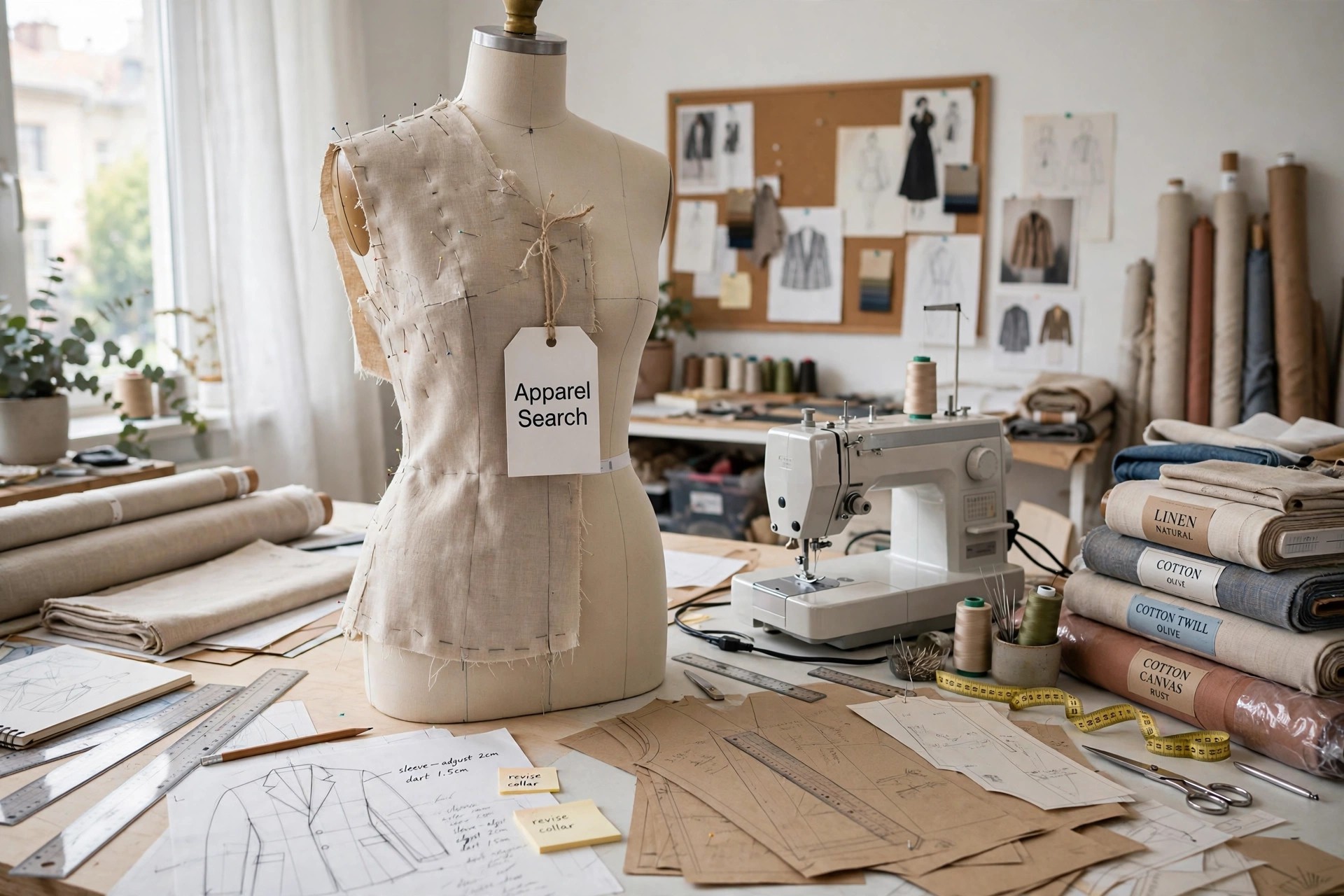
Each season the associate designer takes a defined slice of the range — a product group, a fabric story, a set of styles — and designs it within the direction the senior designer has set: the season's silhouettes, colours and price architecture. The work runs from research and sketching through to production-ready specification. Sketches are presented at range reviews, selected styles are developed into detailed tech packs covering construction, measurements, fabrics, trims and finishes, and the associate follows those styles through every sample round, because a design exists on paper only until a factory has proved it can be made.
Fittings and sample development fill much of the calendar. The associate attends fit sessions on live models or fit forms, pins and marks corrections, updates the tech pack after every round so the factory works from one current truth, and checks pre-production samples against the approved standard. Alongside their own styles, associates support the senior desk — redrawing, researching, preparing boards — and deputise in meetings when the senior designer is travelling or at market, which is deliberate preparation for the next level.
Tech Packs, Fabrics and the Making Knowledge
The tech pack is the associate designer's core professional document, and fluency in it is the skill that most separates designers who progress from those who stall. A good pack leaves a factory nothing to guess: flat technical drawings with every seam and stitch placed, a bill of materials naming each fabric, lining, button and zip with supplier and colour, graded measurements, construction notes and labelled reference images. Errors here are multiplied by the production run, so associates learn to check packs the way pilots check lists — methodically, against the sample, every time.
Fabric and trim knowledge is built at the same desk. The associate handles the season's fabric selections daily — drape, weight, stretch, wash behaviour, price per metre against the style's target cost — visits mills and trim suppliers with the senior designer, and learns which materials a given factory can handle well. Costing awareness runs through everything: a design that cannot be made at its price point is redrawn at associate level, not rescued later, and learning to design inside a cost from the first sketch is the commercial heart of the role.
Skills and Abilities the Role Requires
Design talent is assumed — sketching, colour sense and a feel for the brand's customer — but the associate years test the professional skills around it. Precision in specification, speed across many simultaneous styles at different development stages, and calm organisation of samples, packs and deadlines are what seniors actually promote on. Communication is constant: with pattern cutters and garment technologists about fit, with factories — often overseas, across time zones and language gaps — about construction, and with merchandisers about cost and delivery.
Receptiveness is the quiet requirement. An associate's designs are edited by other people daily: styles dropped at range review, details changed for cost, a whole story redirected when sales evidence shifts. Designers who treat that editing as collaboration develop fast; the associate period is precisely where the industry teaches the difference between a personal collection and a commercial range. Hand and digital drawing are both expected, with CAD flats and pack software at fluent working level.
Qualifications, Training and Career Path
Associate designers almost always hold a fashion design degree or equivalent training, and reach the title from assistant designer posts — typically two to four years of supporting a design team, building packs, attending fittings and learning a category's factories and fabrics. Portfolios for associate roles differ from student portfolios: employers look for developed, specified, production-aware work and evidence of a category specialism, womenswear, knitwear, denim, tailoring or whichever desk is hiring, rather than pure concept pieces.
Promotion runs to designer and then senior designer with ownership of a category, and onward to design management; strong associates are also the pool from which head-of-design roles at smaller brands are filled, sometimes surprisingly early. The associate years are therefore best treated as a deliberate apprenticeship in range ownership — every pack, fitting and factory problem banked against the day the whole category carries your name.
Common Questions
How is an associate designer different from an assistant designer?
An assistant supports a design team — organising samples, updating boards, helping with packs. An associate designer owns styles: sketching them, writing their tech packs, fitting them and correcting samples through to production, within a range direction set by a senior designer.
What is a tech pack and why does it matter at associate level?
A tech pack is the complete specification a factory makes from: technical flats, bill of materials, measurements and construction notes. Associate designers are judged heavily on pack accuracy, because any ambiguity is repeated across the whole production run.
How long do designers usually spend as associates?
Commonly several years, after two to four years as an assistant designer, though pace varies with company size and category. Promotion to designer and senior designer follows evidence of owning styles successfully through production, season after season.