Design Director Job Description
Leading the design function — setting each season's direction and answering for the whole range
A design director leads a fashion company's design function: setting the creative direction each season, managing the designers who execute it, and answering — jointly with merchandising leadership — for whether the range sells. It is the point where design stops being only a craft practised at a desk and becomes a department run at a table: budgets, calendars, teams and boards as well as sketches and fabrics. The design director still designs, but increasingly through other people's hands, which is the role's central discipline and its central difficulty. This page explains what design directors direct, how they work with the commercial side of the business, and the long apprenticeship the role requires.
More Design Job Descriptions by Letter:
What a Design Director Does
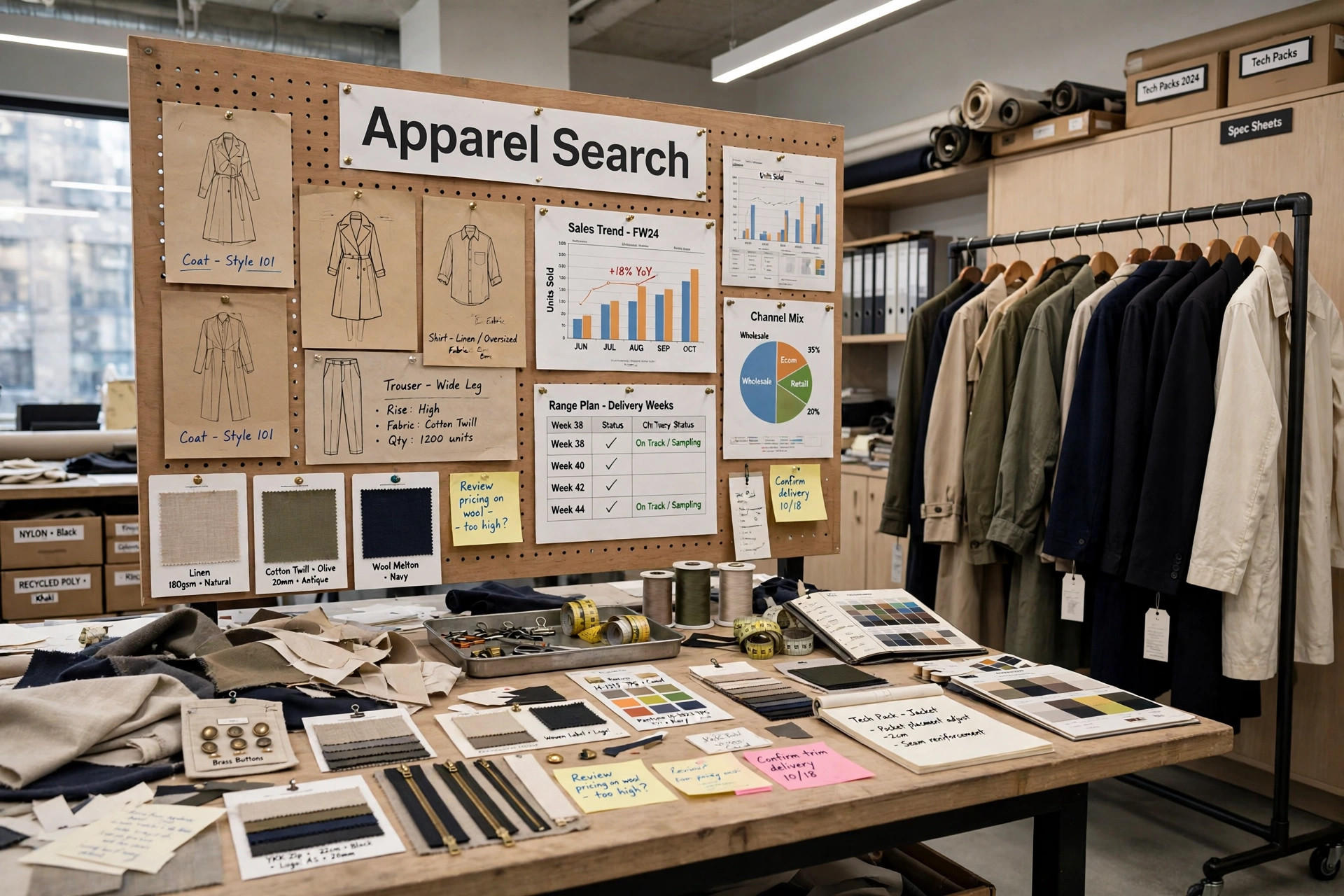
Each season, the design director sets the direction the whole team will design to: the trend interpretation, palette, fabric platform and silhouette story that fit the brand's customer and price architecture, presented and agreed with merchandising and company leadership before a sketch is commissioned. From there the director allocates categories among designers and associates, reviews work at sketch, sample and range stages, edits the emerging collection into a coherent and balanced whole, and makes the final calls on what is dropped, repeated or pushed. The finished range — its identity and its balance — is the director's signature, whoever drew each style.
Management fills the rest of the role. The design director hires, develops and reviews the design team, runs the department's calendar and budget, represents design in trading and strategy meetings, and presents collections to leadership, key retail partners and press where required. In season, the director reads sales results with merchandisers and decides design responses: which winners to repeat or extend, which stories to close, and what the evidence means for next season's direction. The job's output is measured in the department's results as much as in its applauded styles.
Directing Design Through Other Designers
The transition into direction is the hardest in a design career. A strong designer promoted to director must learn to improve other people's work rather than replace it: briefing clearly enough that talented designers can succeed, critiquing sketches and samples in ways that sharpen rather than flatten them, and knowing when a style that is not what the director would have drawn is nevertheless right for the range. Directors who redraw everything themselves end up with a small, exhausted team and a range limited to one person's capacity; directors who direct well multiply the talent they lead.
Judgement at range level replaces judgement at garment level. The director balances statement pieces against commercial core, newness against continuity, and creative ambition against the price points and delivery dates the business can support — editing a collection of hundreds of styles into a story a buyer can grasp in an hour. That editing instinct, exercised calmly under deadline with the whole business watching, is the skill boards and chief executives actually appoint design directors for.
Skills and Abilities the Role Requires
Design excellence remains the foundation: no one directs designers credibly without a respected design record, fabric and construction knowledge, and a point of view the market has already validated. Layered on it are leadership skills of a practical kind — recruiting well, giving usable feedback, developing associates into designers, handling underperformance, and holding a team together through the season's pressure points. Communication widens correspondingly: the director must argue for design in the language of margin and sell-through in commercial meetings, and translate commercial constraints back into briefs designers can act on without feeling their work is being costed to death.
Strategic and commercial literacy completes the profile. The design director reads range plans, sales data and margin reports as working documents, understands sourcing and lead times well enough to set directions factories can deliver, and plans seasons against the company's growth aims — new categories, new markets, new price tiers. Stamina and decisiveness are assumed: the role carries concurrent seasons at different stages, constant review decisions, and public accountability for the most visible output the company makes.
Qualifications, Training and Career Path
Design directors are made by progression, not appointment from training: typically a decade or more across assistant, associate, designer and senior designer roles, usually in more than one company, with a record of ranges that performed commercially as well as creatively. Management responsibility is gathered on the way — leading small teams, owning categories, deputising at reviews — and some directors add business or management study once leadership becomes their main work. A design degree begins the story; the produced, sold collections of the middle career are the real qualification.
From design director, the paths run to creative director — owning the brand's whole image across product, imagery and retail — to vice-president or head of design roles spanning several brands or divisions, and occasionally to founding or leading independent labels with the full craft-plus-commerce toolkit the role teaches. It is among the most senior creative posts in the industry, and the rarest combination it demands — genuine design talent that has learned to lead, count and edit — is exactly why.
Common Questions
What does a design director do differently from a designer?
A designer owns styles and categories; a design director owns the whole range and the team producing it — setting seasonal direction, allocating categories, editing the collection into balance, managing the department's people, calendar and budget, and answering for the range's commercial results.
How much experience does a design director need?
Usually a decade or more across assistant, associate, designer and senior designer roles, with collections that sold as well as reviewed well. Management experience — leading teams and owning categories — is gathered along the way; there is no direct entry route.
What is the difference between a design director and a creative director?
A design director leads product design: the ranges and the team that creates them. A creative director owns the brand's entire image — product plus campaigns, imagery, retail presentation and communications. Design directors commonly progress into creative director roles.