Corduroy Fabric Links
Welcome to the fabric links section of our corduroy fabrics guide. Here we link to textile resources on fibers, fabrics, fashion and the wider industry — helpful to members of the fashion and textile industries, and to consumers researching corduroy.
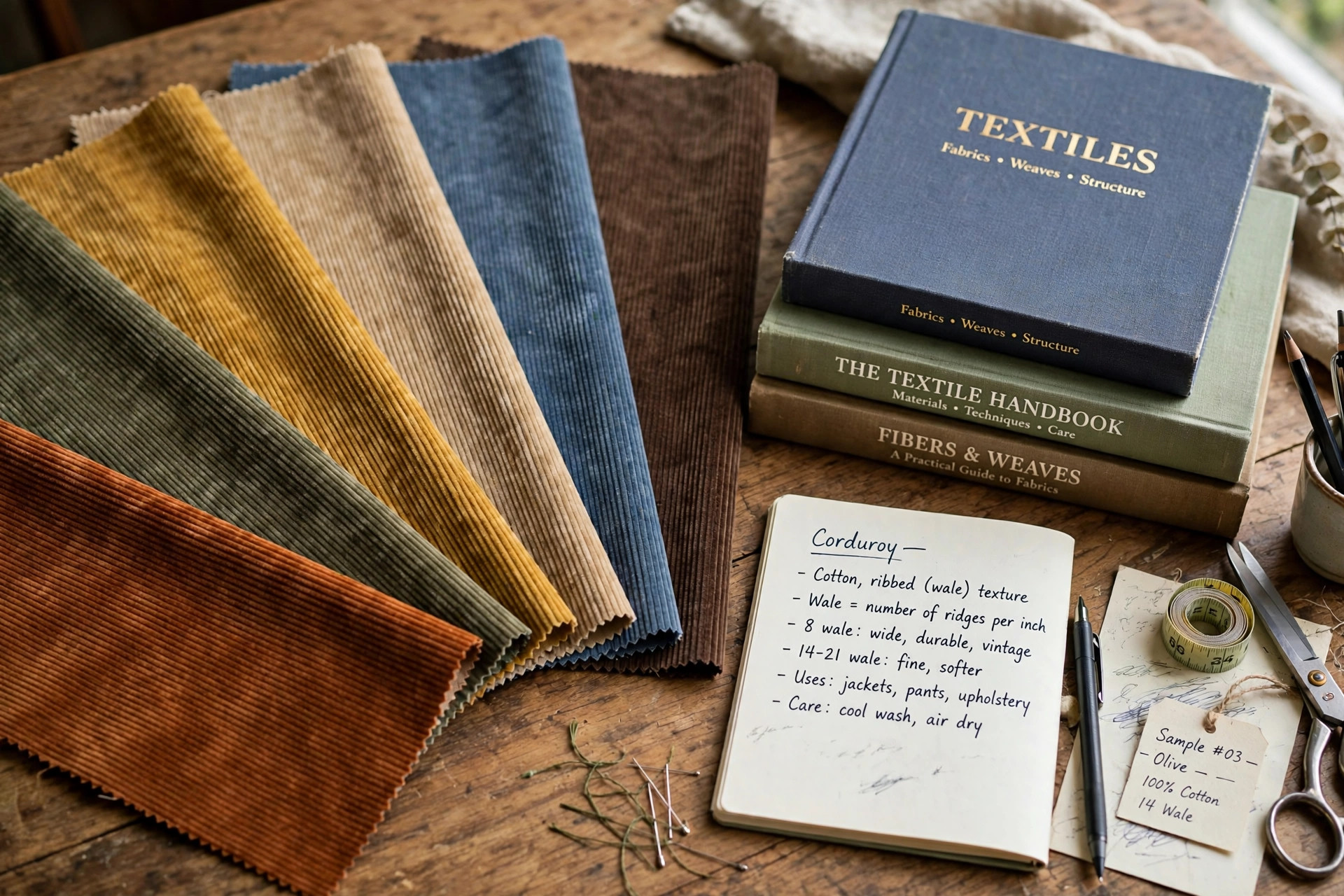
Start With Fibers, Fabrics and Fashion
Start with the general subjects that explain corduroy's ingredients: fibers, fabrics and fashion. Cotton fiber explains corduroy's softness, warmth and wash behaviour; fabric construction explains how an extra set of weft yarns, cut and brushed, becomes the ribbed pile; and the fashion pages show where corduroy sits among other cloths in a wardrobe — as the autumn trouser, the country jacket and the shirt with more texture than flannel and more structure than jersey.
If you are new to the subject, read in that order: fiber, then fabric, then fashion. A buyer who already knows the garment needs the fiber and construction detail to write a specification. A student who starts from the fiber needs the fashion context to understand why a nineteenth-century work cloth later became a wardrobe staple. Corduroy teaches textiles well because one visible feature — the wale — connects fiber, weaving, finishing and styling. Change the fiber and the hand changes; change the wale count and the look changes; change the finish and the same cloth can read as workwear or as evening wear. That clear chain also helps explain other pile fabrics, from velvet and velour to terry.
Deeper Textile Resources
Beyond the basics, these Apparel Search resources structure serious textile research: Textile Articles for fiber and fabric features, the Textile Industry Guide for the structure of the trade, Textile Books for longer-form learning, and Textile News for current industry coverage. Articles and news keep you current; books and the industry guide give the background that stops current coverage being misread.
Use those resources with a question in mind and they repay the time. Researching a corduroy price rise, for instance, becomes a short chain: cotton fiber background for the raw material, textile news for the market story, and the industry guide for who sits between the mill and the garment factory. Researching quality problems — pile crush, shade variation between dye lots, ribs wearing smooth — starts better in books and technical articles, where finishing and testing are covered at the depth a news item cannot reach.
Back to Corduroy Sourcing
Links pages exist to move you onward, and for corduroy the onward routes are the working pages of this guide: Corduroy Fabric Mills for manufacturers, Corduroy Fabric Wholesalers for distributors, Corduroy Fabric Stores for retail yardage, and the main Corduroy Fabric page for the fabric itself — its wale counts, types and care. Read the main page before the supplier pages if you have not yet settled a wale count and weight.
If you have suggestions regarding additional resources to be added to this fabric links section, please let us know via the contact page. It would be our pleasure to add helpful information that makes this section more informative for you and for other visitors. Good suggestions name the resource, give its address, and say in a sentence what it teaches that the current links do not — a technical paper on pile finishing, a mill's clear explanation of wale measurement, or a museum resource on corduroy's history would all strengthen the page.
Common Questions
What resources do corduroy fabric links cover?
Fibers, fabrics and fashion background, plus textile articles, the textile industry guide, textile books and textile news, with routes onward to corduroy mills, wholesalers and stores.
Where should a beginner start?
With the fibers and fabrics pages for cotton and pile construction, then the main Corduroy Fabric page for wale counts, types and care.
Can I suggest a corduroy resource to add?
Yes. Suggestions for additional resources are welcome via the contact page; name the resource, its address and what it adds.
Looking for Fabric Mills and Suppliers?
Return to the Corduroy Fabric hub, or browse the full Apparel Search fabric directory.