Corduroy Fabric
Welcome to our Corduroy Fabric section. Corduroy is the ribbed cotton fabric whose parallel raised cords — called wales — give trousers, jackets, shirts and hats their soft, ridged hand and warm, hard-wearing character.
Shop Corduroy Fabric Now
Shop Corduroy Fabric on Amazon Shop Corduroy Fabric on eBayThese links open the Apparel Search shopping guides for Amazon and eBay, where the product links are kept in one place.
What Corduroy Is and How It Is Made
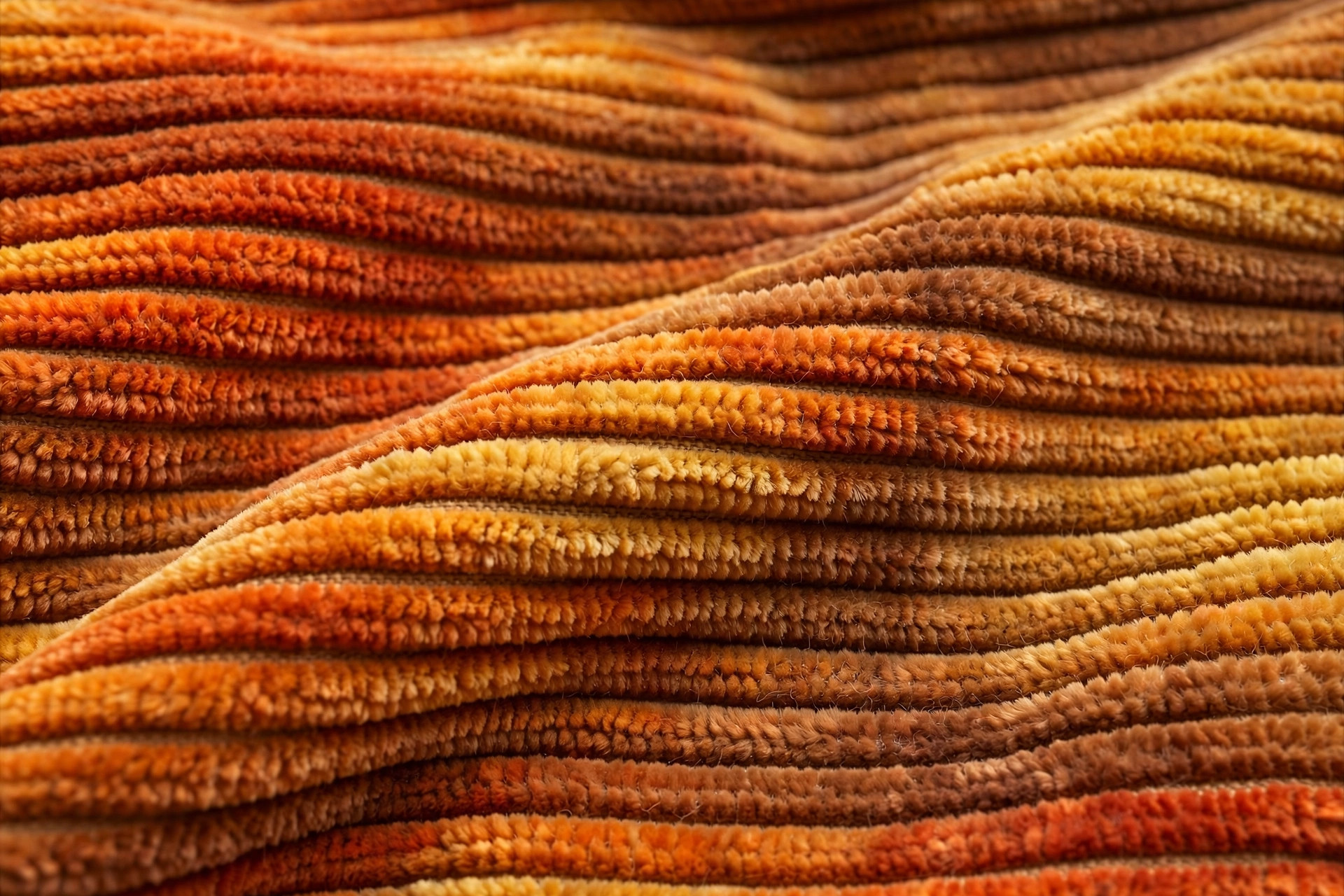
Corduroy is a woven pile fabric, most often cotton, built on a plain or twill ground with extra weft yarns that form floats across the surface. After weaving, those floats are cut down the middle of each channel and brushed so the cut ends stand up as soft ribs running the length of the cloth. Those ribs are the wales, and almost everything about a corduroy — its look, softness, weight and best use — follows from how many wales it packs into an inch. The uncut version of the same idea, where the floats are left looped or uncut, also appears among mill ranges as uncut corduroy.
The pile is what gives corduroy its warmth and its weaknesses. The raised ribs trap air, which is why corduroy trousers and jackets feel warm without being heavy, and the dense cotton ground makes the cloth genuinely hard-wearing. The same pile crushes where it is sat on or creased, picks up lint, and can wear smooth at knees, seats and elbows over years of use. Printed corduroy, yarn-dyed corduroy and spandex corduroy with a little elastane for comfort stretch are all standard mill variants, sitting alongside plain cotton corduroy in most ranges.
Wale Counts: Fine, Standard and Wide
Corduroy is specified by wale count, the number of ribs per inch, and the rule is simple: the higher the number, the finer the rib. Needlecord and pincord sit at the fine end, around fourteen to twenty-one wales per inch, with a soft, almost velvety surface that suits shirts, dresses and children's clothing. Standard corduroy, roughly eight to thirteen wales per inch, is the classic trouser and jacket cloth. Wide wale corduroy, around three to eight wales per inch, has bold ribs and a chunkier, more casual look. It suits jackets, overshirts and heavier pieces such as light upholstery. It also looks very different from needlecord, both in person and in photographs.
Choose a wale for both appearance and wear. Fine wales drape better, look smarter and show pile crush less obviously in dark colours. Wide wales look bolder and feel warmer and more rugged, but the ribs can flatten where a garment folds. Weight follows wale only loosely, so a specification should state both. For trousers, the guides on this site are a useful next step: the Women's Corduroy Pants Guide and the Men's Corduroy Pants Guide cover fits and styling by garment rather than by cloth.
What Corduroy Is Used For
Trousers are corduroy's signature garment — corduroy pants and shirts are the classic examples — but the fabric's range is wider: jackets and overshirts, skirts, dresses, waistcoats, caps and hats, children's wear, and light upholstery and cushions in heavier weights. Headwear is enough of a niche that Apparel Search keeps a Corduroy Hat Store Directory for it. Retailers build seasonal corduroy ranges around the autumn trouser and jacket business, which is why large clothing retailers have long presented corduroy as a cold-weather staple category of its own.
Sewing with corduroy rewards a few habits. Cut all pattern pieces with the pile running the same way — pile direction changes the shade, because light reflects differently along and against the ribs — and decide deliberately whether the pile runs up or down, since down usually feels smoother and looks slightly lighter. Use a nap layout, press on the pile side only with a needle board or over a folded towel, and expect extra lint in cutting and sewing. Those quirks are manageable, and the reward is a garment with texture that plain twills and poplins cannot match.
Care and Sourcing Corduroy
Cotton corduroy is machine washable in most garment forms, turned inside out to protect the pile, and it softens pleasingly with washing; the risks are pile crush from hot pressing, shrinkage in unfinished cotton, and shiny worn patches on very old garments. Brush with the pile to lift dust and lint, and store trousers folded or hung by the waistband rather than crushed in a drawer. Stretch corduroy adds comfort at the knee and seat — the places corduroy trousers work hardest — and has become the default in much modern ready-to-wear.
For sourcing, this guide splits the trade the way buyers use it: Corduroy Fabric Mills for manufacturers, Corduroy Fabric Wholesalers for distributors, and Corduroy Fabric Stores for retail yardage, with further reading on the Corduroy Fabric Links page. State wale count, weight, fiber and any stretch content when you enquire — corduroy is a family of fabrics, not a single cloth, and a precise brief gets a usable answer.
Common Questions
What does wale mean in corduroy?
The wale is one raised rib of cut pile running along the fabric. Wale count is ribs per inch: high counts are fine needlecord, low counts are bold wide wale corduroy.
Is corduroy always cotton?
Usually cotton or a cotton blend. Mills also offer spandex corduroy with elastane for stretch, printed corduroy, yarn-dyed corduroy and uncut corduroy.
What is corduroy best used for?
Trousers above all, plus jackets, overshirts, shirts, skirts, dresses, hats and caps, children's wear and heavier-weight light upholstery.
More to Explore
References & Further Reading
Looking for Fabric Mills and Suppliers?
Browse all fabric topics from the Fabric Search hub, or see the wider Apparel Search fabric directory.