Alexander Wang Runway
The shows — urban collections staged with the attitude they were designed in.
A Wang runway show is the wardrobe photographed in its natural habitat. The label presents its monochrome urban collections with downtown energy — industrial space, decisive casting, styling that treats the runway as a city street with better lighting.
This page follows the runway strand of the guide. The fashion week page covers the calendar around the shows; the collections pages cover the garments in their retail form.
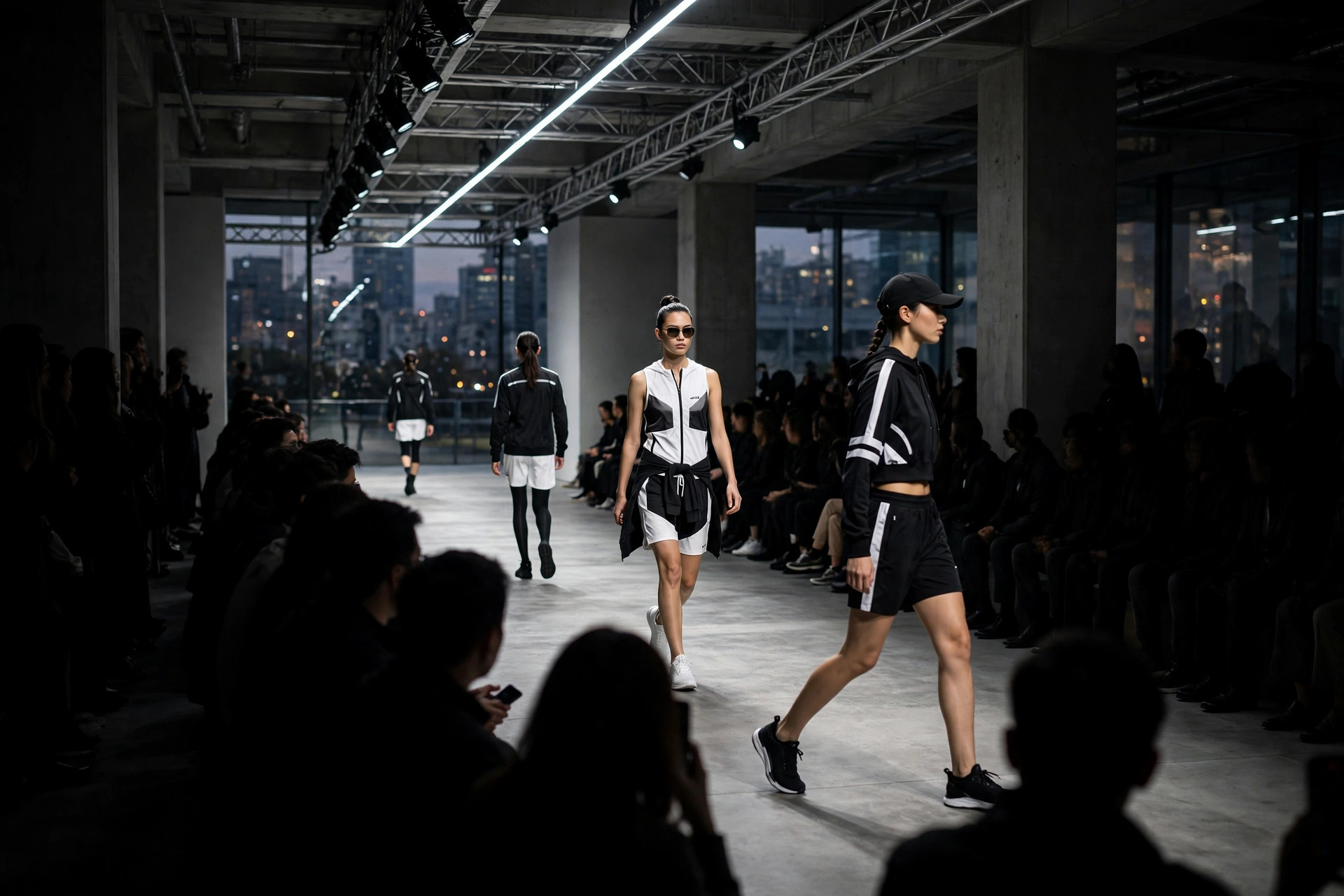
Illustrative image created for this guide — an artistic impression, not this designer's own garments.
Casting and Styling as Design
For a label founded on how models dress off duty, casting is not packaging — it is the original design brief, restated every season. The runway look depends on wearers who make a tee, a trouser and a jacket read as a complete fashion statement, and the shows' styling discipline (restraint in color, confidence in proportion) is the mechanism. When a Wang show works, a simple look lands as hard as another house's gown, because everything except the attitude has been stripped away.
Runway Extremes, Retail Logic
The runway versions of the collections push the label's proportions — longer, slouchier, more athletic, more armored — beyond what stores will stock, and that exaggeration is functional: it photographs, it editorializes, and it makes the retail versions read as the essence customers can actually wear. Tracing one look from the runway page to the collections page is the fastest lesson in how this label translates show into shop.
The spring/summer presentations in the label's record, with their white and mesh and light, show the runway system at its most exposed — nowhere for weak design to hide — which is precisely the point.
Photos


Common Questions
What defines a Wang runway show?
Coherence of attitude: monochrome urban garments, strong casting, industrial presentation — the show feels like the wardrobe's natural habitat rather than a stage set built to impress it.
How does runway styling differ from retail?
The runway pushes the wardrobe's proportions and layering further — more extreme silhouettes, bolder styling — while the fabrics, palette and pieces remain the collection's own. Retail versions moderate the same ideas.
Which seasons do the runway pages cover?
The spring/summer and autumn/winter presentations in the label's record. The fall and spring pages in this series organize the same shows' garments by season.