Calvin Klein Womenswear
The women's Klein wardrobe — dresses, tailoring and denim, all cut to one clean line.
Women's coats were half of the first Calvin Klein collection — the line of men's and women's coats featured at Bonwit Teller from his 1968 York Hotel coat shop — and womenswear has carried the label's design argument ever since. The slip dress became the most famous single garment of American minimalism, but it sits inside a complete wardrobe: tailored coats, sheaths, shirts, knitwear and denim, all cut to one clean line. This page treats the women's side of his record.
The search routes in the references run Calvin Klein women's fashion news, photo and video searches. Pair this page with the menswear page for the wardrobe's other half, with the dresses page for his most characteristic garment treated alone, and with the collections page for the wardrobe filed season by season. The official Calvin Klein website is linked in the references.
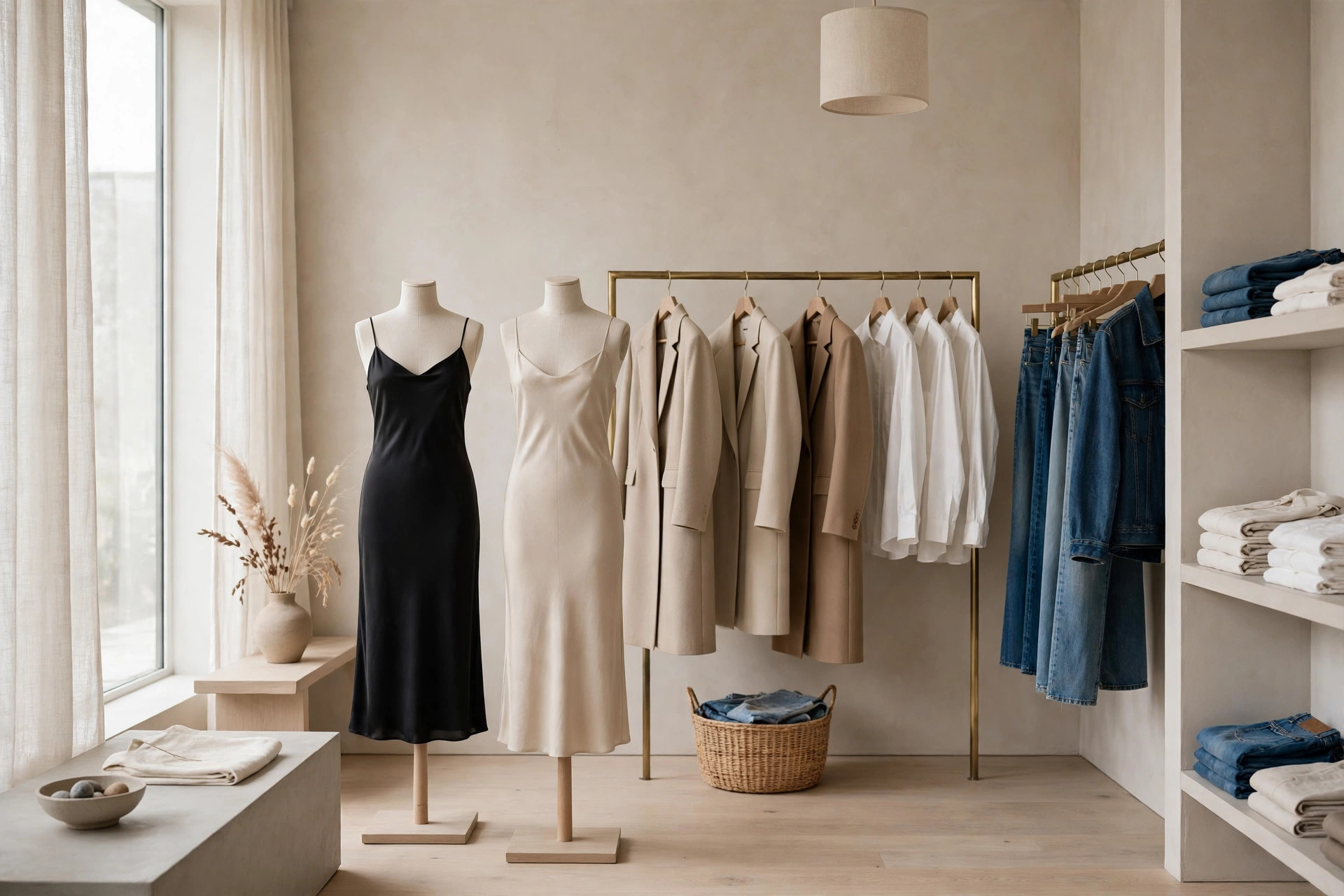
Illustrative image created for this guide — an artistic impression, not this designer's own garments.
News, Photos & VideoCollectionsDressesFall FashionsFashion WeekMenswearNewsProfilesRunwaySpring FashionsWomenswear
The Wardrobe Around the Dress
The dresses page of this series makes the case for the slip and the sheath; the womenswear page is where those dresses take their place in a working wardrobe. Around them, the same discipline organizes everything: coats drawn as single lines, suits in neutral cloth, shirts kept plain, knitwear kept matte. The womenswear photographs in the Photos section show the register across categories — a consistency that lets the label's customers build a whole closet in one accent.
That consistency is also why the womenswear record reads so steadily across creative eras. When the variable elements are this few — length, neckline, fabric weight, proportion — each season's choices stand out in relief, and the wardrobe accumulates rather than replaces itself.
Womenswear and the Wider Label
Within the label, womenswear bridges the collection register and the wider business: the silhouettes established on the runway appear across the brand's stores, and the imagery of the women's lines feeds the fragrance and advertising world the news page tracks. The fall and spring pages of this series follow the wardrobe through its two seasons.
Read with the profiles page — the career from the 1968 coat shop forward — this page shows the women's half of the proposition that built one of America's defining labels: remove everything unnecessary, and let line and fabric carry the design.
Photos

Common Questions
What does Calvin Klein womenswear include?
The full women's wardrobe in his minimal register: the slip dresses and sheaths treated on the dresses page of this series, tailored coats and suits, shirts, knitwear, denim and the women's side of the label's lines.
What characterizes his womenswear design?
Reduction to line: neutral palettes, fluid or matte fabrics and garments cut close to the body — dresses and tailoring that carry their effect through proportion and cloth rather than decoration.
Where is his menswear covered?
On the menswear page in this series, which treats the men's wardrobe whole — tailoring, jeans and underwear. The collections page files both sides season by season.
More to Explore
References & Further Reading
- Calvin Klein Women's Fashion Search
- Calvin Klein Women's Fashion News
- Calvin Klein Women's Fashion Photos
- Calvin Klein Women's Fashion Videos
- Calvin Klein Women's Fashion
- Calvin Klein Women's Fashion News
- Calvin Klein Womenswear Fashion Images
- Calvin Klein Womenswear Fashion Video
- official Calvin Klein website