Dirk Bikkembergs Profiles
The life behind the sports-tailored wardrobe — Cologne, Antwerp, and shoes first.
Born in Cologne, Germany, on January 2, 1959, Dirk Bikkembergs is an integral component of Belgian fashion, and has remained so since 1982, when he graduated from the Royal Academy of Fine Arts in Antwerp. This profiles page tells his story in order: the Antwerp training, the prize that opened the factory doors, the decision to begin with shoes instead of clothes, and the menswear that made his name. Of all the pages in this series, this is the one the others depend on — every claim made for the collections and the runway traces back to the career set out here.
After graduating he worked for various fashion companies in Belgium until 1985, when he won the Golden Spindle Award for Best Young Designer in Fashion. The award had been created in 1982 as a direct result of the Belgian government's mandate to infuse new life into the textile industry, and its winners were given access to manufacturers to produce their collections. The biography searches in the references gather the wider career coverage; his official website is also linked there.
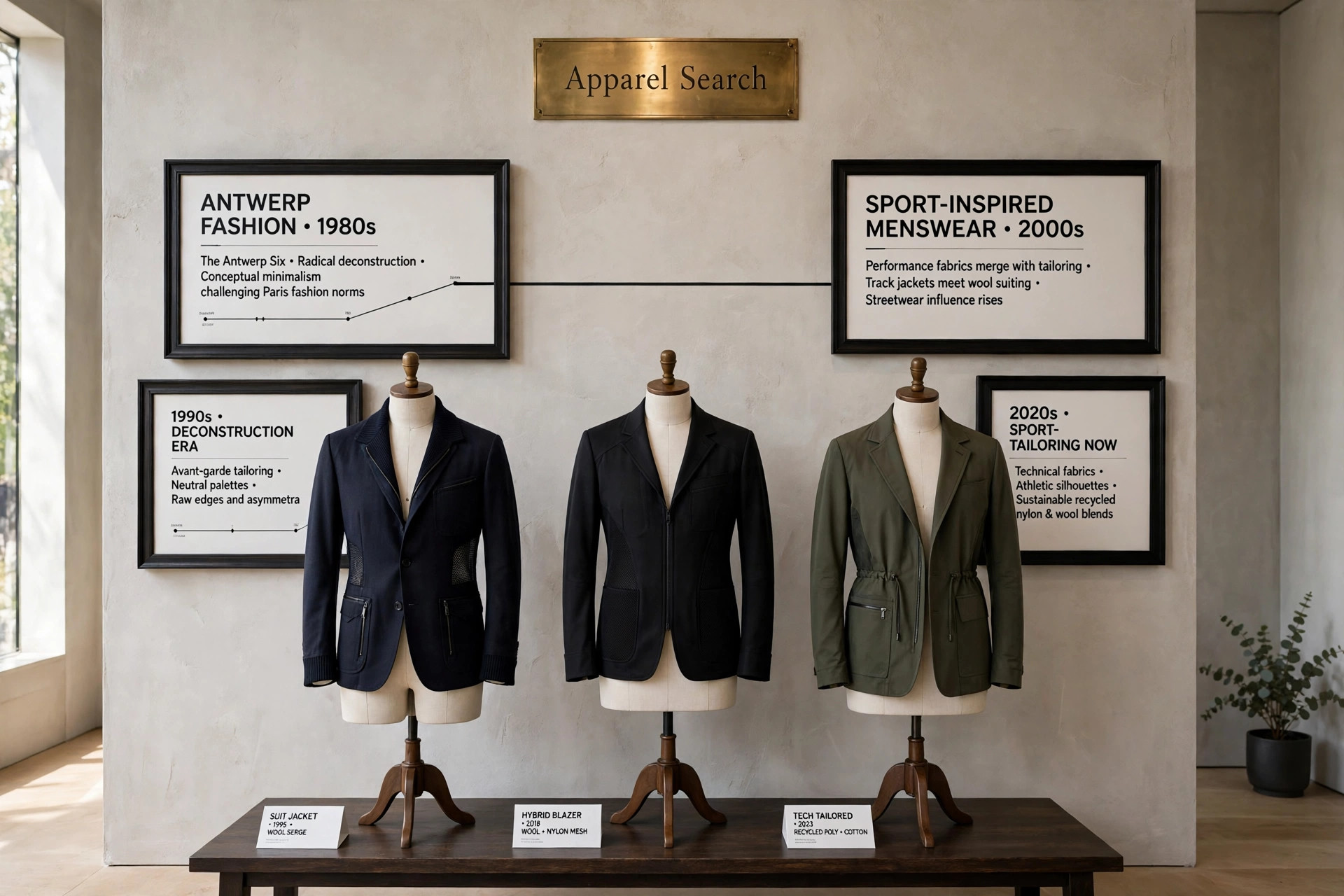
Illustrative image created for this guide — an artistic impression, not this designer's own garments.
News, Photos & VideoCollectionsFall FashionsFashion WeekNewsProfilesRunwaySpring Fashions
Shoes First, Then the Wardrobe
His first collection appeared in 1986 and was focused on shoes, rather than clothing — an unusual order of business that became his foundation in every sense. His vision for footwear became his trademark: today the shoe line spans men's, women's and children's styles such as sandals, sneakers and boots, and the discipline of designing for the foot — fit, reinforcement, movement — carried directly into the clothes that followed.
He did not rest: working with knits, he built a clothing line, and within two short years he had launched a menswear collection in 1988 called Dirk Bikkembergs Men. The collection was manufactured in Italy and shown in Paris to wonderful reviews. The formula that emerged — Antwerp's conceptual training, Italian making, and the wardrobe logic of sport — is the one the collections, fall and spring pages in this series file season by season.
Licensing, Sale and the Continuing Label
In 1996 his designs were so popular that he licensed his footwear business to an Italian company, Zeis Excelsa SpA, and the brand became even bigger with an international distributor behind it. The arrangement proved to be the label's long-term home: in July 2011 it was announced that Dirk Bikkembergs had sold his label to Zeis Excelsa, the same Italian footwear licensee.
Read with the collections page, the profile completes its arc: the Cologne-born, Antwerp-trained designer who began with shoes built one of Belgian fashion's most durable exports — a wardrobe in which tailoring is treated like equipment and sport is a design method rather than a theme. The profiles record is also the place to keep the chronology straight, because the footwear came first and the clothes second, and summaries that reverse that order miss the point of the work entirely. His Antwerp generation reshaped Belgian fashion's standing in the world, and his place in it rests on that double foundation: the shoe as engineered equipment, and the wardrobe built upward from it.
Photos

Common Questions
Who is Dirk Bikkembergs?
Dirk Bikkembergs, born in Cologne, Germany, on January 2, 1959, is an integral component of Belgian fashion, known since the 1980s for clothing and footwear built on the energy of sport.
How did Bikkembergs start?
He graduated from the Royal Academy of Fine Arts in Antwerp in 1982 and won the Golden Spindle Award for Best Young Designer in 1985; his first collection, in 1986, was focused on shoes rather than clothing.
Who owns the Bikkembergs label?
In July 2011 it was announced that Dirk Bikkembergs had sold his label to the Italian footwear licensee Zeis Excelsa SpA, the company that had held his footwear license since 1996.