A Careful Starting Point
Why This Page Exists
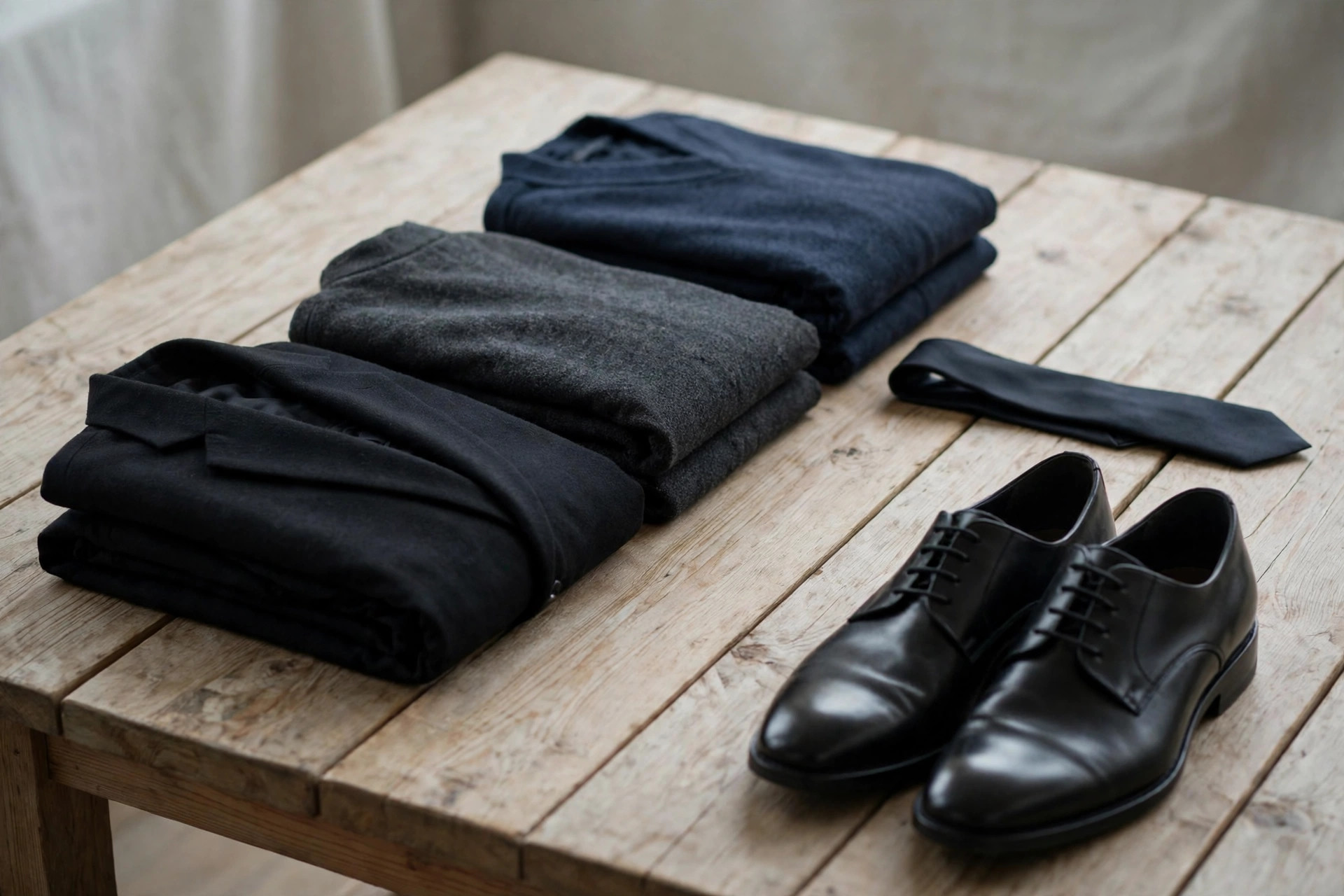
Most people who dress unsuitably for a funeral do so from haste or uncertainty, not disrespect. This page sets out, plainly and without judgement, the choices that commonly read wrong at a service — so that anyone dressing under difficult circumstances, often at short notice, can avoid adding a moment of awkwardness to a sad day.
For the positive guidance — what to wear — see the companion guides: the women’s funeral attire guide and the men’s funeral attire guide. This page is their companion from the other direction. One principle governs everything below: the family’s wishes come first, always. If the family has asked for a colour, a football scarf, bright clothing or anything else specific, follow that request and disregard every convention here — honouring their wish is the respectful act.
Start Here — In Four Steps
A Calm Check Before You Leave
If time is short, these four checks cover most situations:
- Check for the family’s wishes first. An order of service, an announcement or a message from the family may name a colour or a request. That outranks everything else.
- Choose dark and muted. Black, charcoal, navy and other deep, quiet colours. If an item would stand out in a photograph of the mourners, it is the wrong item.
- Remove logos, slogans and shine. Plain clothing only — nothing that advertises, jokes or sparkles.
- When in doubt, dress one step more formally. Slightly formal is never criticised at a funeral; slightly casual sometimes is. A modest dark outfit is always a safe and kind choice.
Common Mistakes
The Choices That Most Often Read Wrong
Bright colours and bold patterns. Vivid reds, oranges, bright florals and striking prints draw the eye in a setting where attention belongs with the family — unless the family has asked for colour. The same applies to sequins, metallic shine and anything designed to catch light. Casual footwear is the most common single mistake: trainers, flip-flops, sports sandals and scuffed work boots sit at odds with the rest of a respectful outfit, and clean, closed, dark shoes are nearly always available as an alternative.
Logos, slogans and team colours — a prominent brand mark, a humorous slogan or a sports shirt introduces an unrelated subject into the room. Jeans need a careful reading: dark, plain jeans are accepted at some informal services, particularly in rural or working communities, but at most services they read as underdressed, and trousers are the safer choice whenever they are available. Very short hemlines, low necklines, bare shoulders and athletic wear — gym clothing, hoodies worn up, shorts — belong to other settings, as do sunglasses worn indoors, hats kept on during the service, and strong fragrance, which can be genuinely difficult for people nearby.
A Safe Approach
- Wear dark, muted, plain clothing
- Wear clean, closed, dark shoes
- Follow any colour or clothing request from the family
- Keep jewellery small and quiet, or leave it off
Best Avoided
- Wear bright colours, bold prints or sequins
- Wear trainers, flip-flops or sports sandals
- Wear logos, slogans or team shirts
- Wear jeans, shorts or athletic clothing where they may read as underdressed
Different Traditions
Cultural and Religious Sensitivity, Stated Generally
Funeral customs differ widely between faiths, cultures and families, and no single dress rule describes them all. Some traditions expect mourners to cover their heads, shoulders or legs; some associate white, rather than black, with mourning; some services are deliberately colourful celebrations of a life. A guest is never expected to know every custom in advance. What is expected — and always appreciated — is modesty, attentiveness and a willingness to follow the lead of the family and the officiant.
If you are attending a service from a tradition other than your own, a quiet question beforehand — to the family, the funeral director or the venue — is entirely appropriate, and a modest dark outfit with covered shoulders is a respectful starting point in most settings. If you realise on arrival that you have misjudged something small, do not let it trouble you: presence matters far more than perfection, and families remember who came, not what they wore.
Questions
Common Questions
What colours should you not wear to a funeral?
As a general guide, avoid bright and vivid colours — strong reds, oranges, bright pinks and bold, high-contrast patterns — unless the family has asked mourners to wear colour. Black, charcoal, navy and other dark, muted tones are the safe and customary choice.
Can you wear jeans to a funeral?
Dark, plain jeans are accepted at some informal services, but at most funerals they read as underdressed, and trousers or a dark skirt are the safer choice whenever available. If you are unsure about the setting, choose the more formal option — it is never criticised.
What if the family asks mourners to wear bright colours?
Follow the family’s request. Some families ask for a favourite colour, bright clothing or a team colour to celebrate the person’s life, and honouring that wish is itself the respectful act. The family’s wishes outrank every general convention on this page.
A Different Kind of Service
When the Service Is a Celebration of Life Instead
This page covers the traditional funeral. Some families hold a celebration of life instead — a warmer, less formal gathering where soft colours, and sometimes a favourite colour of the person being remembered, are welcomed rather than avoided. If the invitation describes a celebration of life, see Celebration of Life Outfits for how the guidance changes: reading the family’s wishes, when black is the wrong choice, and outfits by venue.
More to Explore
Search Apparel Search