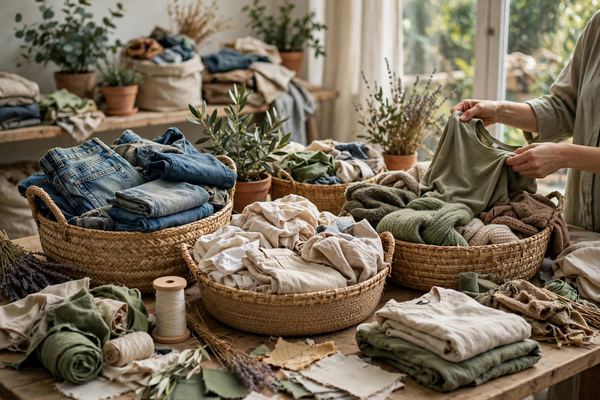
Circular fashion applies circular economy principles to clothing: design garments for longevity, reuse, and recyclability so materials stay in use instead of becoming waste. It's the alternative to fashion's traditional take-make-dispose model.
The Linear Problem
Conventional fashion takes resources, makes clothes, and discards them - often after a few wears. The result: textile waste, microplastic pollution, and enormous resource consumption for garments with short lives.
Circular Strategies
- Design for longevity - durable construction, timeless styling, repairability
- Resale and rental - keeping garments in active use longer
- Repair services - brands offering lifetime repairs
- Textile recycling - fiber-to-fiber recycling turning old clothes into new
- Take-back programs - brands collecting used garments
What's Real vs Hype
Circular fashion is a genuine framework, but watch for greenwashing. A "recyclable" garment that can't actually be recycled at scale isn't circular. The most circular garment is still the one you keep wearing for years.
FAQs
- Is circular fashion the same as sustainable fashion?
- Sustainable fashion is the broad goal; circular fashion is a specific strategy for getting there - focused on keeping materials in use.
- Can clothes really be recycled fiber-to-fiber?
- Emerging technologies can, but at limited scale today. Most textile 'recycling' is actually downcycling into insulation or rags.
- What can I do as a consumer?
- Buy less, buy better, wear longer, repair, resell, and donate. Consumer behavior is half the circular equation.
Glossary: see the full fashion glossary for more apparel industry terms.