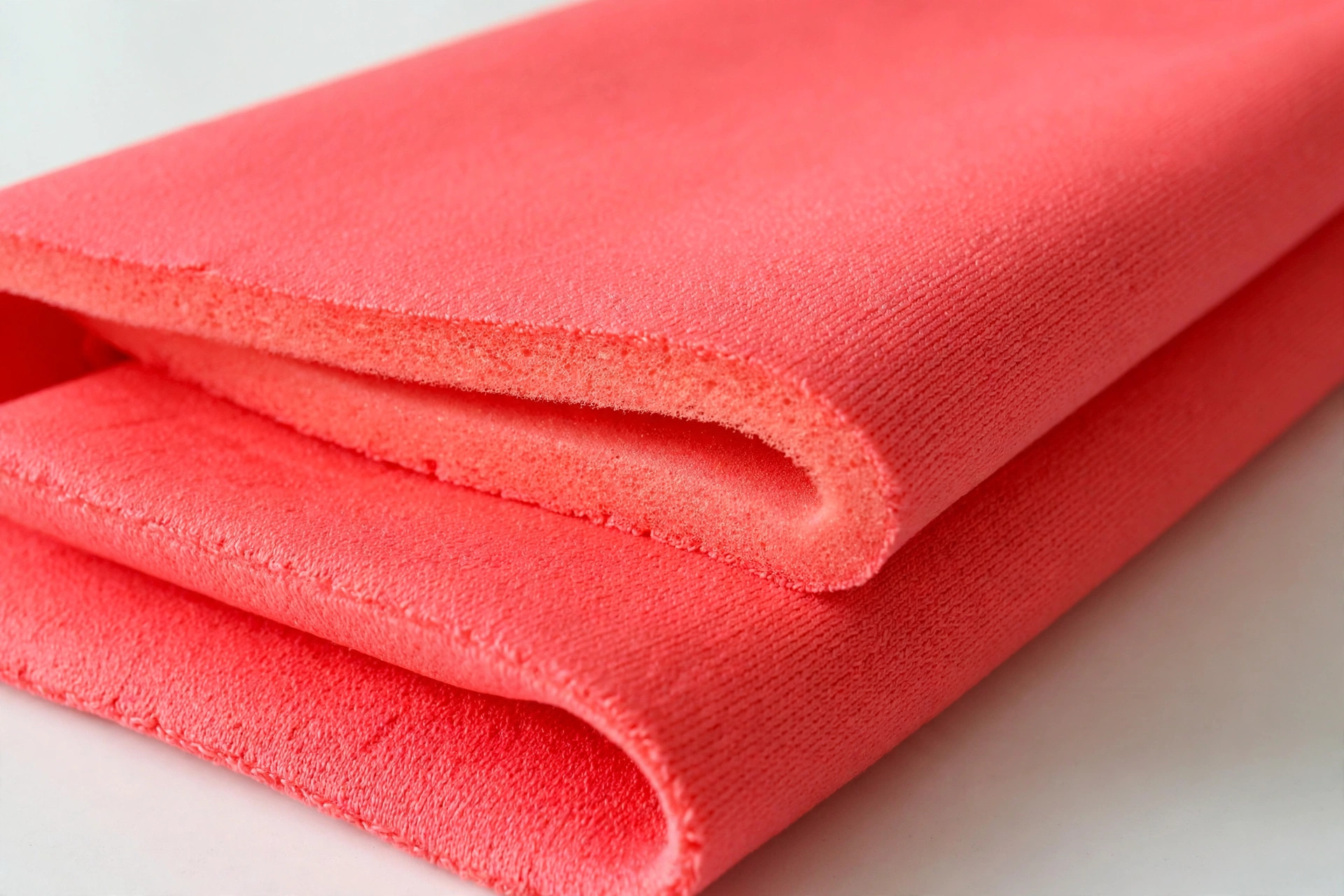
Scuba knit — usually sold simply as scuba — is a smooth, double-faced knit fabric with a springy, slightly spongy body. Despite the name it contains no rubber and is not wetsuit neoprene: it is typically polyester with elastane, knitted as two fine jersey layers locked together, sometimes with a very thin foam-like loft between them. Scuba knit holds sculptural shapes — flared skirts, peplums, structured sleeves — while stretching comfortably.
How Scuba Knit Is Made and How It Differs
Like ponte, scuba is a double knit, but it is knitted finer and denser, giving a smoother, almost sleek face and more pronounced bounce. Held up, scuba stands away from the body where jersey would collapse; cut edges do not fray and often need no hemming, which designers exploit for raw-edge, architectural styles.
- Versus neoprene — true neoprene is a synthetic rubber sheet, waterproof and heavy; scuba knit is a breathable textile that only imitates the look and body.
- Versus ponte — ponte is softer and more matte, made for tailoring; scuba is smoother, springier, and made for shape.
Where Scuba Knit Is Used
- Structured dresses and skirts — skater skirts, peplums, and flared hems that hold their flare.
- Tops and sweatshirts — fashion sweatshirts and bomber jackets with a sleek finish.
- Swim-adjacent and active styles — rash-guard-style tops and leggings, where the smooth face and stretch suit movement (it is not a substitute for a wetsuit).
- Accessories — laptop sleeves and bags borrow its cushioning feel.
Care of Scuba Knit
Machine wash cold, gentle, inside out, and line dry or tumble low. Avoid hot irons — high heat can glaze or melt the polyester face; use a cool iron with a press cloth if needed. Scuba knit sheds wrinkles well and the cut edges will not unravel in the wash.
The jersey fabric guide covers the wider knit family — weights, stretch, and sewing — for comparison.
FAQs
- Is scuba knit the same as neoprene?
- No. Neoprene is solid synthetic rubber. Scuba knit is a polyester-elastane double knit designed to mimic neoprene's smooth, structured look in a lighter, sewable fabric.
- Can you swim in scuba knit?
- It tolerates water and is used for swim-styled tops, but it has none of a wetsuit's insulation and is not dive or surf gear.
- Does scuba knit need hemming?
- Often not — it does not fray, so many garments use clean-cut raw edges. A narrow stitched hem still gives a more finished look.
Detailed Guides: see Scuba Knit in the glossary A–Z listing of the Apparel Search fashion glossary for related terms.