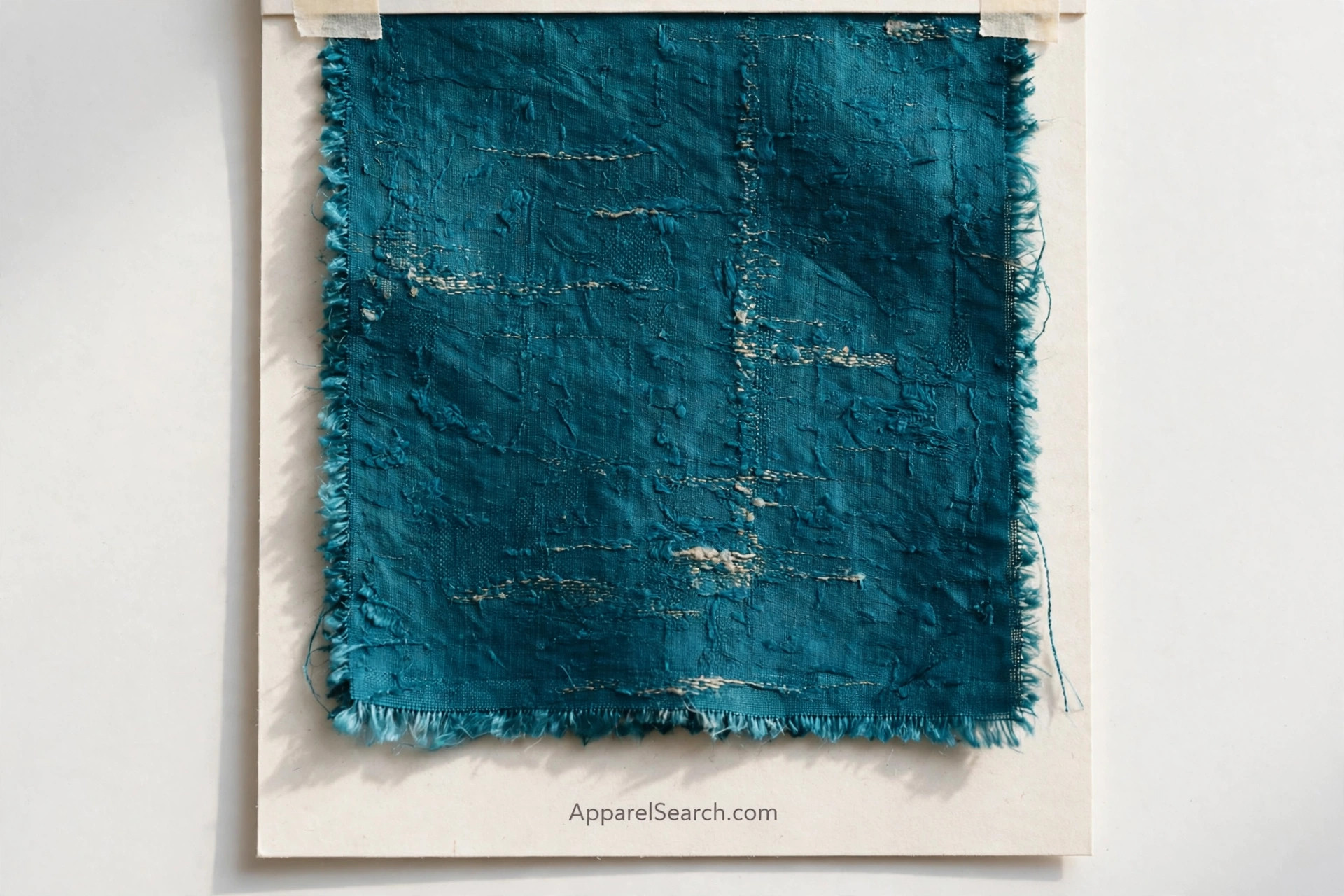
Dupioni (also spelled doupioni or dupion) is a crisp, medium-weight silk fabric woven from yarns spun from double cocoons — two silkworms that nested together and tangled their filaments. The resulting yarn is uneven, so the woven cloth has natural horizontal slubs, a textured hand, and a deep, slightly two-tone lustre. Those slubs are not flaws; they are the signature of genuine dupioni.
How Dupioni Is Made
When two silkworms spin their cocoons in contact, the filaments fuse into a single tangled mass that cannot be reeled smoothly. Thread made from these double cocoons is thicker in places and thinner in others. Woven as the weft against a finer, smoother warp, it produces dupioni's characteristic slubbed surface and its rustling, papery body.
Because the slubs catch light differently from the ground, dupioni often shows an iridescent or shot effect when two colours are combined — a coloured warp with a contrasting weft. India is a major source, and Indian dupion is prized for its luminous colour and lofty fullness.
Where Dupioni Is Used
- Formal dresses and gowns — the crispness holds full skirts, bows, and draped bodices.
- Bridal wear — wedding dresses and bridesmaid dresses in place of heavier satin.
- Tailoring — dupioni tailors well into jackets and structured suits with a dressy finish.
- Interiors — curtains and cushions, where the slubs and sheen read as luxury.
Care of Dupioni
Dry cleaning is the safe default: washing can soften the crisp finish, fade the colour, and make the slubs more pronounced. If a care label allows hand washing, use cool water and a gentle detergent, never wring, and expect some loss of body. Iron on a low silk setting on the reverse side. Keep dupioni out of prolonged direct sunlight, which fades silk.
For practical advice on choosing and sewing silk, see the silk fabric guide, the companion to this definition.
FAQs
- Are the slubs in dupioni defects?
- No. The slubs come from the double-cocoon yarn itself and are the fabric's defining texture. A completely smooth 'dupioni' is usually a synthetic imitation.
- What is the difference between dupioni and shantung?
- They are close relatives — both are slubbed plain weaves. Dupioni is properly silk from double cocoons; shantung originally copied the effect in silk and is now often made in cotton, rayon, or synthetics, usually with a slightly softer hand.
- Is dupioni good for a wedding dress?
- Yes — it is a bridal favourite because it is lighter than satin, holds sculptural shapes, photographs with a soft glow, and comes in rich shot colours.
Detailed Guides: see Dupioni in the glossary A–Z listing of the Apparel Search fashion glossary for related terms.