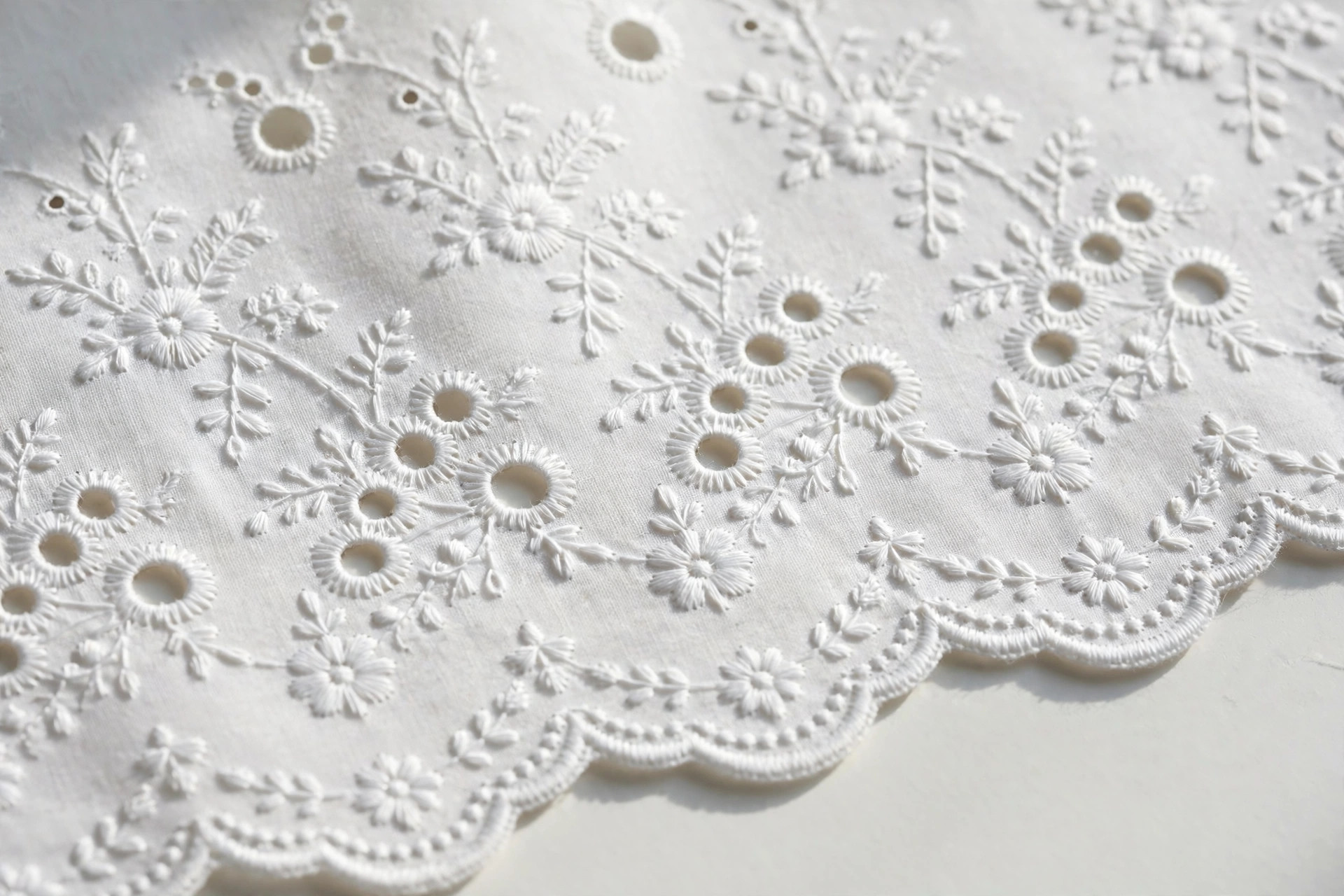
Broderie anglaise — French for 'English embroidery' — is a whitework needlework technique and the fabric it produces: patterns of round or oval holes (eyelets) are cut into a fine woven ground, usually white cotton, and edged with dense overcast stitching, combined with satin-stitch flowers, leaves, and scalloped borders. Despite the French name, the technique's great production centres were in Scotland and Ireland before the work moved to machine embroidery in Switzerland and beyond.
How Broderie Anglaise Is Made
In hand work, the design was drawn on lawn or cambric, the holes were pierced and cut, and each opening was whipped tightly with thread so no raw edge remained; raised satin stitch added the motifs, and edges were finished in buttonholed scallops. A skilled worker's piece could take weeks, and broderie anglaise trimmed everything from baby clothes to household linen.
Today Schiffli machines reproduce the same structure at speed — piercing, embroidering, and scalloping in one pass — which is why the fabric is affordable and sold by the yard as eyelet. The best machine work keeps the holes small, the stitching dense, and the ground a fine, smooth cotton.
Where Broderie Anglaise Is Used
- Summer and resort dresses — the classic white broderie anglaise dress is a warm-weather icon.
- Blouses and shirts — yokes, sleeves, and full blouses, often paired with denim or linen.
- Children's and baby wear — bonnets, christening gowns, and heirloom dresses, continuing its oldest use.
- Home textiles — pillow shams, duvet trims, and table linen with scalloped edges.
Care of Broderie Anglaise
Treat it as the cotton it is: gentle machine wash in cool water, ideally in a mesh bag, then line dry. Iron on the reverse over a padded board, pressing the ground flat while letting the embroidery keep its slight relief. Vintage hand-worked pieces deserve hand washing and flat drying to protect ageing threads.
The lace fabric guide places broderie anglaise and eyelet in the lace family for practical choosing and sewing.
FAQs
- Why is an English technique given a French name?
- The name reflects French fashion's adoption of the work in the 19th century — French speakers named the fashionable English-style whitework, and the French term stuck in the trade.
- What is the difference between broderie anglaise and eyelet?
- None in substance: eyelet is the common American name for the same embroidered cutwork fabric. Broderie anglaise tends to be used for finer, more traditional whitework.
- Can broderie anglaise be coloured?
- Yes, though white-on-white is traditional. The ground and thread are dyed together or embroidered in contrast colours for modern fashion versions.
Detailed Guides: see Broderie Anglaise in the glossary A–Z listing of the Apparel Search fashion glossary for related terms.