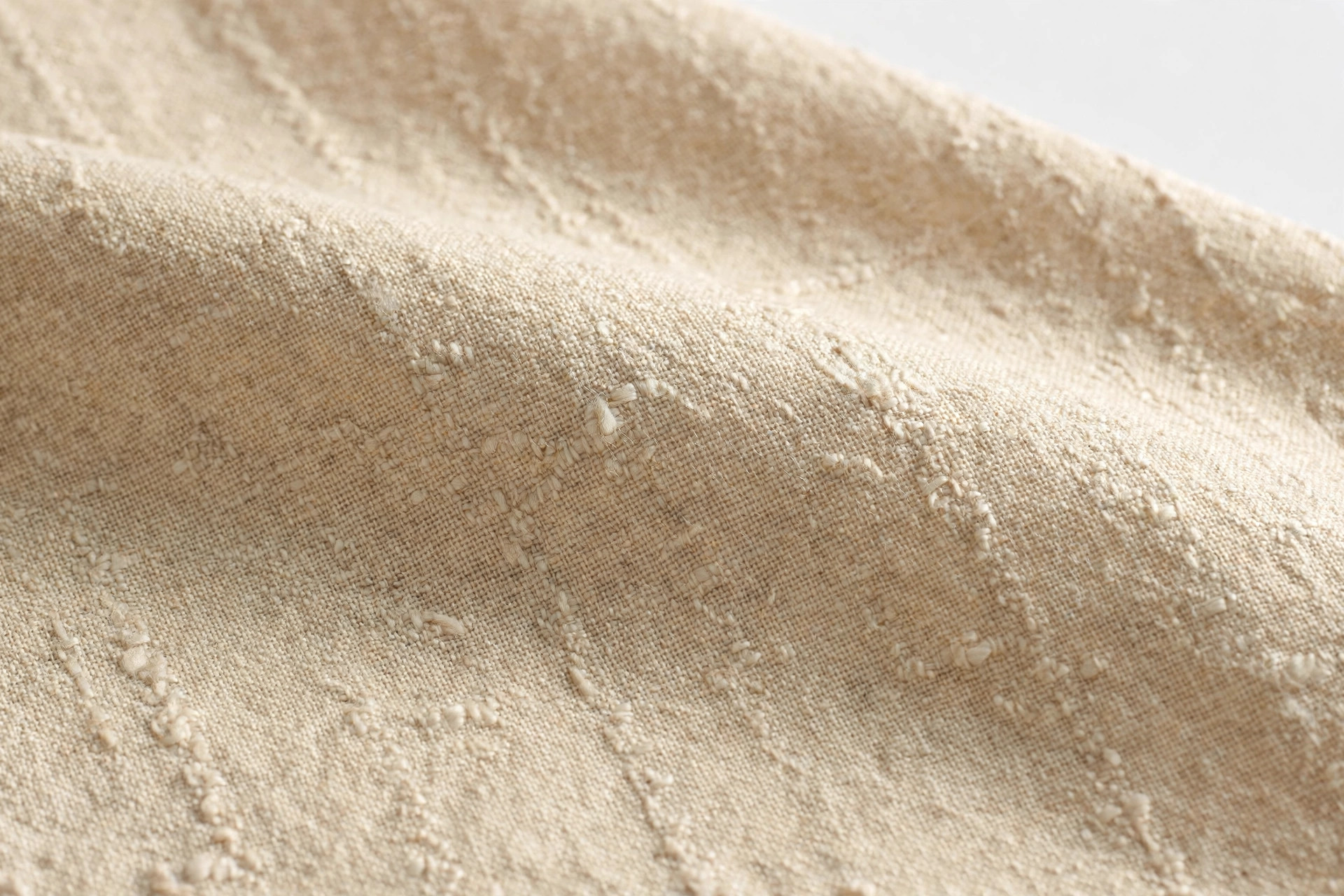
Shantung is a plain-weave fabric with a slightly rough, irregular surface created by slubbed filling yarns — yarns that thicken and thin along their length. Named after Shandong (formerly romanised as Shantung) province in China, the original cloth was silk; today shantung is woven in cotton, rayon, polyester, and blends that copy the nubby texture. It drapes into soft, wide folds and has a dry, natural-looking hand.
How Shantung Is Made
Shantung is woven in a simple plain weave — warp and weft crossing over-one, under-one — but the weft yarn is deliberately uneven. Where the yarn thickens, a small slub sits on the surface; where it thins, the cloth lies flat. The result is a fabric that looks hand-loomed and organic rather than machine-perfect.
Silk shantung uses dupioni-type yarns, which is why the two fabrics are often confused. Cotton and synthetic shantungs reproduce the slubs with specially spun yarns and are easier to wash and cheaper to buy by the yard.
Where Shantung Is Used
- Dresses and summer suits — the texture hides creasing and reads smart without formality.
- Bridal and occasion wear — silk shantung is a classic for mother-of-the-bride outfits and structured gowns.
- Blouses and shirts — lighter weights make softly tailored tops.
- Home furnishings — draperies and cushions, the use that made slubbed silk famous in interiors.
Care of Shantung
Follow the fibre, not the name: silk and rayon shantung should be dry cleaned, while cotton and polyester versions usually machine wash cool and gentle. Press on the reverse with a moderate iron; the slubs are part of the weave and should not be flattened with heavy steam. As with all slub fabrics, avoid snagging the raised yarns on jewellery or rough surfaces.
The silk fabric guide covers choosing and caring for silk shantung and its relatives in more practical detail.
FAQs
- Is shantung the same as dupioni?
- They are near-identical in construction. Strictly, dupioni is silk woven from double-cocoon yarn; shantung is the broader fabric name and is made in many fibres. In shops the words are often used interchangeably for silk.
- Where does the name shantung come from?
- It is the older romanisation of Shandong, the Chinese province historically associated with this slubbed silk cloth.
- Does shantung wrinkle easily?
- Less visibly than smooth fabrics — the slubbed texture disguises light creasing, which is one reason it suits travel and summer tailoring.
Detailed Guides: see Shantung in the glossary A–Z listing of the Apparel Search fashion glossary for related terms.