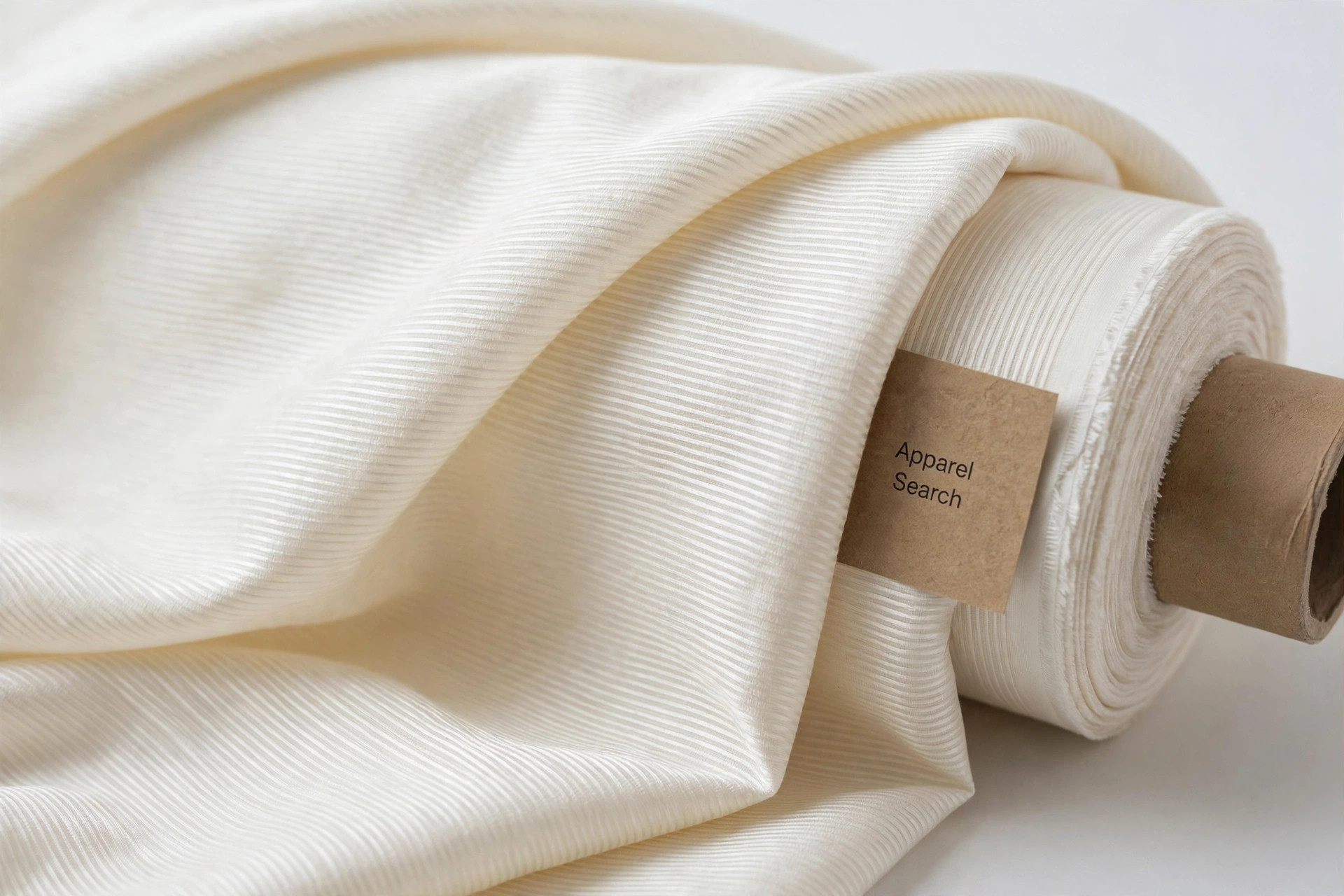
Faille is a closely woven fabric characterised by fine, flat ribs running across the width of the cloth (in the weft direction). Traditionally woven from silk — and today also in rayon, cotton, and synthetics — faille has a soft, understated lustre, a crisp yet supple hand, and enough body to hold a bow, a pleat, or a sculpted evening silhouette. Its ribs are noticeably finer and flatter than those of its bolder cousin grosgrain.
How Faille Is Woven
Faille is a plain-weave fabric in which the filling (weft) yarns are slightly heavier than the warp yarns and are packed closely together, so the weft forms low, even ridges across the surface while the finer warp stays mostly hidden. That rib is what gives faille its subtle striped texture and its characteristic rustle.
Silk faille is the classic quality, woven from filament silk for maximum lustre. Rayon and acetate failles copy the look at lower cost, and cotton faille gives a softer, more matte version for dresses and curtains. A heavier double-faced quality is sometimes called faille taffeta.
Where Faille Is Used
- Evening and bridal wear — gowns, cocktail dresses, and structured bodices that need body without bulk.
- Ribbons and bows — faille ribbon holds a crisp bow, which is why it trims hats, sashes, and gift dressing.
- Coats and suits — mid-century tailored coats and dinner jackets used faille for its quiet sheen.
- Interiors — draperies and upholstery where the fine rib catches light softly.
Care of Faille
Silk and rayon faille are best dry cleaned: water can spot the surface and dull the ribs, and the fabric is somewhat difficult to launder. Cotton faille can usually be washed gently in cool water and pressed on the reverse with a moderate iron, testing first. Store faille garments padded at the folds, because sharp creases can mark the rib permanently.
FAQs
- What is the difference between faille and grosgrain?
- Both are ribbed plain weaves, but faille's ribs are finer, flatter, and closer together, giving a smoother, more lustrous surface. Grosgrain has bolder, rounder ribs and is most familiar as ribbon.
- Is faille always silk?
- No. Faille began as a silk fabric, but it is now woven in rayon, acetate, cotton, polyester, and blends that imitate the ribbed surface at different prices.
- Does faille wrinkle?
- Faille resists soft wrinkling because of its body, but hard creases can set into the rib. Hang garments promptly and avoid folding them sharply for long storage.
Detailed Guides: see Faille in the glossary A–Z listing of the Apparel Search fashion glossary for related terms.