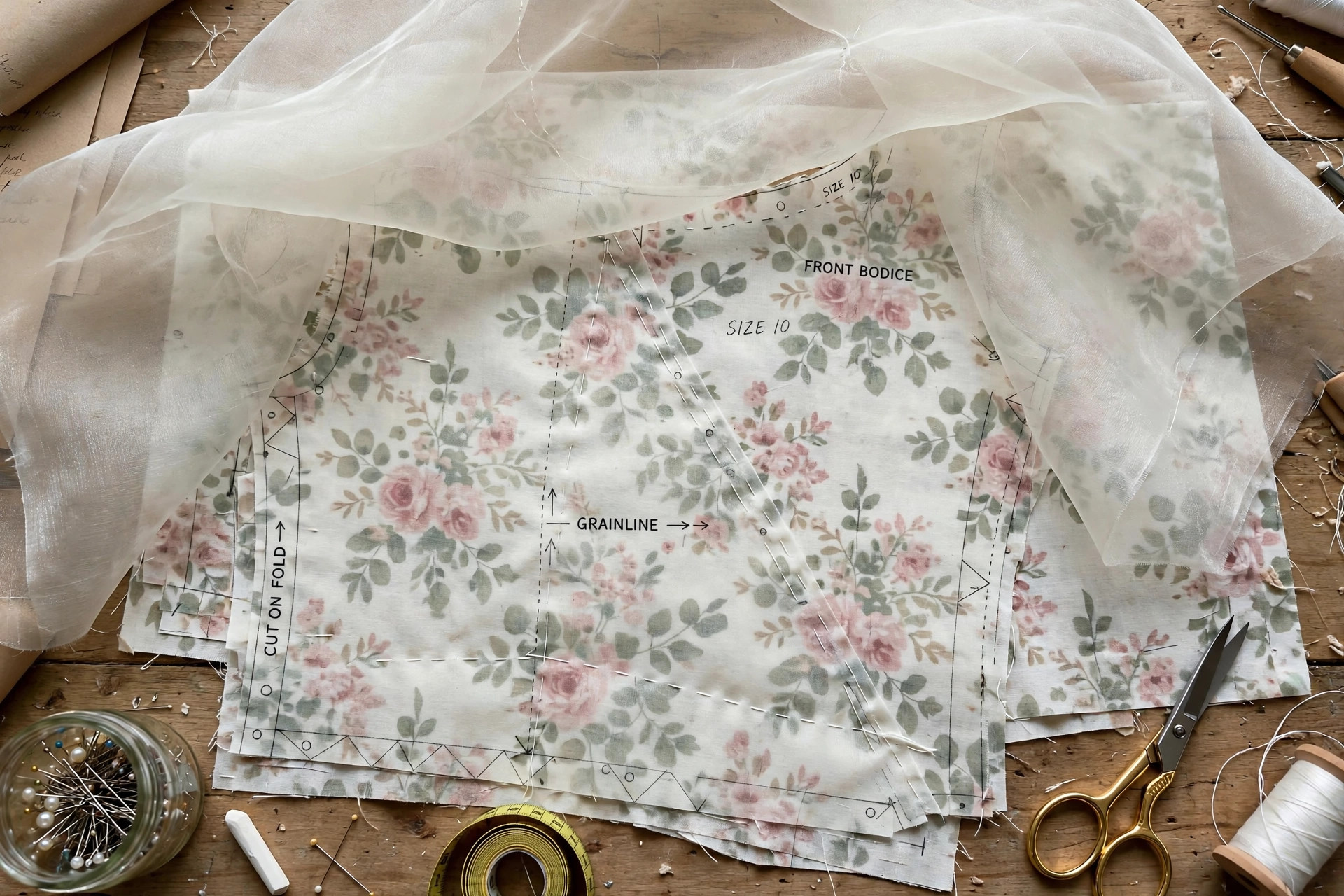
Underlining is a layer of plain fabric — cotton batiste, silk organza, flannelette or lawn, chosen to suit the garment — cut piece for piece with the fashion fabric and basted to it before sewing, so the two layers are then handled as one. It adds body to flimsy cloth, makes sheers opaque, supports weak or loosely woven fabrics, hides seam allowances and bra hardware, and lets hems be caught invisibly to the underlining alone. It is not a lining (which is a separate garment sewn inside at the end) and not interfacing (which is applied only where structure is needed).
When Underlining Earns Its Place
- Sewing — the Apparel Search sewing section
- Sheer fabrics — organza underlining keeps a chiffon or lace dress modest and gives its seams something to hold.
- Weak or ravelly fabrics — a firm underlining carries the stress, so a loose bouclé or slubbed silk survives wear.
- Body without stiffness — a limp crepe gains the substance to hold a silhouette while still draping; unlike fusible interfacing, underlining never glues or bubbles.
- Invisible finishing — hems and facings can be stitched to the underlining so no stitch shows on the face of the garment.
Working With Underlining
Pieces are cut identically, layered wrong side to wrong side, basted around the edges and along dart and seam lines, then sewn as a single ply; darts are often sewn through both layers together. The extra work is the classic couture trade: more hours at the table in exchange for a garment that keeps its shape, hides its construction and outlasts its fashion. Silk organza is the connoisseur's choice — feather-light yet crisp enough to support almost anything.
Underlining changes how a garment is cleaned and kept, so couture workrooms label the underlining fibre on the garment's spec sheet: an organza-underlined silk dress must be cleaned for the more delicate of its layers. It also changes pressing — heat is tested on the combined layers, since organza withstands temperatures a soft crepe cannot. For the home maker, underlining is the single technique that most reliably lifts a dress from adequate to assured, because so many fitting complaints — seams grinning, allowances printing through, hems showing their stitches — are really cries for a layer that was never there.
FAQs
- What is the difference between underlining and lining?
- Underlining is mounted to each piece before sewing and becomes part of the fabric. A lining is built separately and attached at the end to enclose the inside.
- What is the difference between underlining and interfacing?
- Interfacing is applied selectively for structure (collars, fronts, waistbands) and is often fusible. Underlining covers whole pieces to change the fabric's body, opacity or strength.
- Which fabric should I underline with?
- Match weight and care to the garment: silk organza for fine and sheer fabrics, cotton batiste or lawn for summer dresses, flannelette for warmth and softness in winter skirts.
Detailed Guides: see Underlining in the glossary A–Z listing of the Apparel Search fashion glossary for related terms.