Sustainability Certifications
GOTS Certification: The Global Organic Textile Standard
The world's leading standard for organic textiles — what it covers from fiber to finished garment, its two label grades, and how the claim is audited at every step
"Organic" on a clothing label can mean almost anything a marketing department wants it to mean — unless the product is certified. The Global Organic Textile Standard, known everywhere as GOTS, is the certification that gives the word a fixed, audited meaning in textiles. It is the most widely used organic textile standard in the world, and it is deliberately demanding: it does not stop at the fiber, but follows a product through spinning, weaving, dyeing, finishing, sewing and trading, checking environmental and social criteria at every stage.
This is the full Apparel Search guide to how GOTS works. A shorter reference version lives in our glossary — GOTS certification in brief — while this page covers the standard's scope, label grades, criteria and certification process in depth.
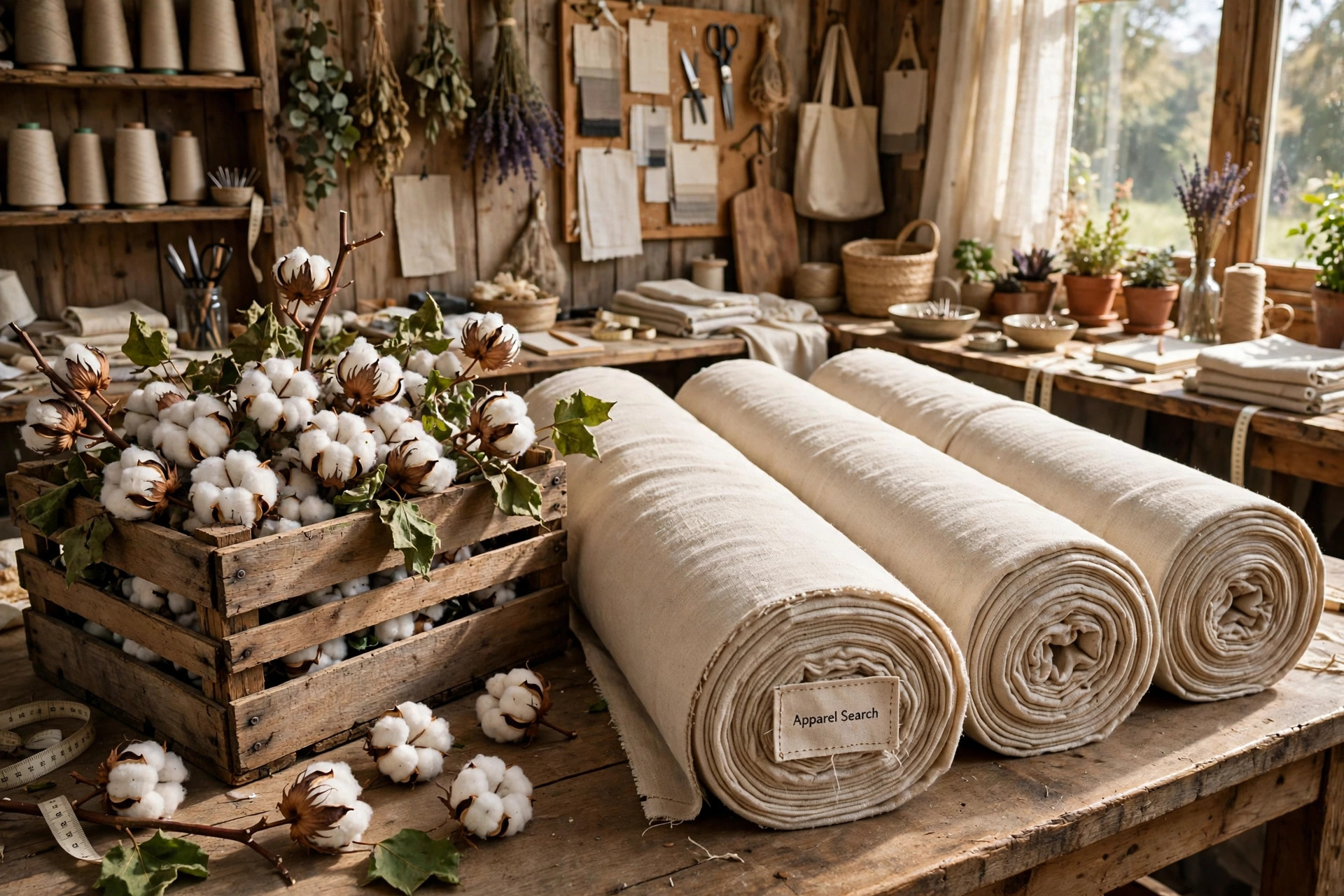
GOTS, defined: the Global Organic Textile Standard is a voluntary, third-party-certified standard for textiles made from certified organic fibers. It sets binding environmental and social criteria for the entire processing and supply chain — chemical inputs, wastewater, working conditions — and allows a finished product to carry the GOTS label only when every stage that handled it was certified.
Scope: From Fiber to Finished Garment
GOTS covers the processing, manufacturing, packaging, labelling, trading and distribution of textiles made with certified organic fibers. The fibers themselves — cotton, wool, silk and others — must first be certified organic under a recognized organic agriculture standard. From the first processing stage onward, GOTS takes over: ginning, spinning, knitting and weaving, wet processing such as dyeing and printing, finishing, garment making, and the traders who move certified goods between them. A certified entity is approved for defined operations and product categories, listed on its scope certificate, and each stage must keep certified material identified and segregated from conventional stock so the claim cannot leak or dilute along the way.
The Two Label Grades
GOTS products are labelled in one of two grades, and the wording matters. The top grade, "organic," requires at least 95 percent certified organic fibers. The second grade, "made with organic," requires at least 70 percent certified organic fibers, with the grade statement naming the percentage. The remaining share of the product is not a free choice: the standard restricts which additional fibers may be used and in what combinations, so conventional cotton, for example, cannot simply be blended into a product carrying the top grade. Accessories and trims, from buttons to interlinings, are also regulated, with rules on materials and prohibited substances. When you see GOTS on a label, the grade, the certification body and the licence number should all be printed with it — that combination is what makes the claim checkable.
Key Criteria
Three families of rules do most of the work. Chemical criteria govern every input used in processing: dyes, auxiliaries and finishes must be assessed and approved, and substances known to be hazardous — among them toxic heavy metals, formaldehyde and aromatic solvents, and inputs produced with GMOs — are prohibited. Environmental criteria require wet-processing units to treat their wastewater in a functioning effluent treatment plant, and set expectations for energy, water and waste management. Social criteria, drawn from the core conventions of the International Labour Organization, apply at every certified facility: employment must be freely chosen, child labor is prohibited, workers must be able to organize, conditions must be safe and hygienic, and wages must meet legal and industry benchmarks, with the standard pushing toward a living wage. Certified products must also meet technical quality parameters — measures such as colorfastness and dimensional stability — so that a GOTS garment performs as clothing, not just as a claim.
How Certification Works
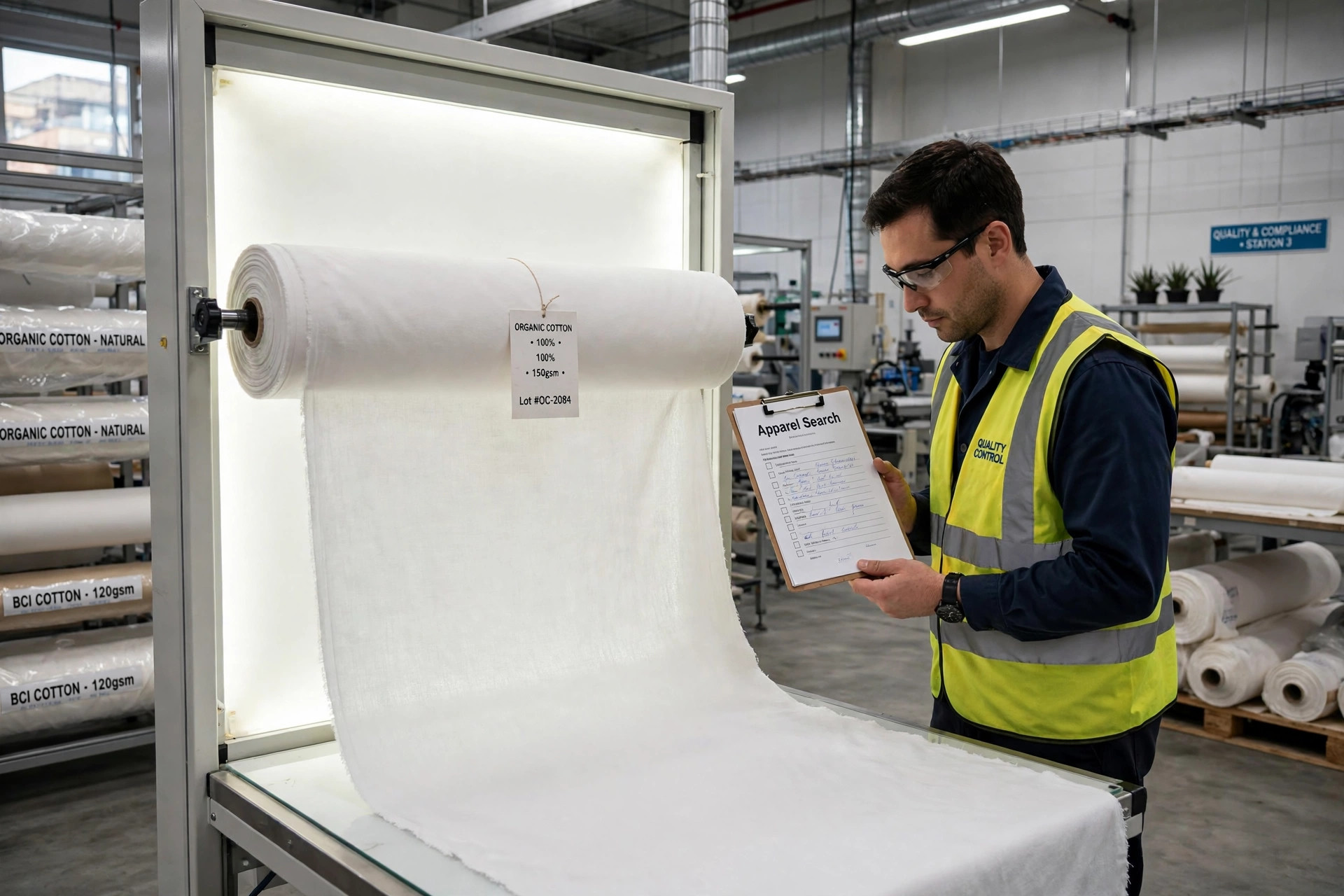
Certification is carried out by independent certification bodies approved by the GOTS organization (Global Standard gGmbH, the non-profit that owns and develops the standard). A facility applies, is inspected on site — records, chemical inventories, wastewater arrangements, worker interviews — and, on approval, receives a scope certificate for its defined operations, renewed through annual inspections. As certified material moves between certified companies, the transfer is documented with transaction certificates, creating an unbroken paper chain from fiber processor to finished product. Buyers can ask for a supplier's scope certificate, and the GOTS public database lets anyone confirm that a company is genuinely certified and for what.
How GOTS Compares
GOTS is the heavyweight among the fiber standards in this series. The Organic Content Standard verifies organic content and custody only, without processing or social rules. The Global Recycled Standard and Recycled Claim Standard do the equivalent job for recycled fibers, GRS adding facility requirements of its own. bluesign approaches from chemistry and production inputs rather than fiber origin. And where the buyer's concern is the people rather than the fiber, Fair Trade certification addresses prices, premiums and wages from the economic side. Many products carry two labels at once, because no single standard answers every question.
Related Certification Guides
Common Questions
Does GOTS certify the farm where the fiber was grown?
GOTS itself begins where processing begins. The fibers entering a GOTS chain must already be certified organic under a recognized organic agriculture standard, and GOTS then certifies every processing and trading stage after that point — spinning, weaving, dyeing, finishing, manufacturing and distribution — so the organic claim survives the journey to the finished garment.
What is the difference between GOTS and OCS?
The Organic Content Standard verifies how much certified organic material a product contains and tracks it through the chain of custody — nothing more. GOTS does that and much more: it also regulates the chemistry allowed in processing, requires wastewater treatment, sets technical quality parameters, and audits social criteria at every certified facility. OCS answers 'is it organic?'; GOTS also answers 'was it made responsibly?'
Can a product carry the GOTS label if only its fabric is certified?
No. Every stage that handles the product — including the garment factory and the brand or trader selling the finished goods — must be GOTS certified for the label to appear on it. If any link in the chain is uncertified, the finished product cannot be sold as GOTS certified, however impeccable the fabric's own paperwork.
How can I check whether a GOTS claim is genuine?
A compliant label names the certification body and the licensee's licence number alongside the GOTS logo and label grade. Those details can be checked against the GOTS organisation's public database of certified suppliers, which lists certified entities and their scope. A logo with no licence number and no certifier named is not a verifiable claim.
Please note: the Global Organic Textile Standard is owned and maintained by Global Standard gGmbH, and its requirements are revised over time. This page is a general overview provided for information only — it is not legal or compliance advice, and it may not reflect the most current version. Always confirm the current requirements directly with the GOTS organization or an approved certification body before making certification or sourcing decisions.
Back to the Fashion Certifications Guide
This page is one of the Apparel Search certification guides. Return to the Fashion Certifications Guide to compare GOTS with Fair Trade, OEKO-TEX, bluesign and the other standards explained on Apparel Search — and to see what each label actually verifies before you trust it on a tag.