The Nonwovens Industry in Western Europe
A Textiles Intelligence research report on Western Europe's expanding nonwovens sector and its leading players
While apparel textile production has been under growing attack from imports, European nonwovens production continues to expand. The industry is dynamic, with cross-border mergers and acquisitions a growing feature as companies seek economies of scale. This Textiles Intelligence report addresses all the key issues, strengths, weaknesses, opportunities and threats in this growth sector, and provides data on market size. It also profiles 11 of the industry's leading players in Western Europe. Textiles Intelligence, formed in 1992 as a spin-off from the Economist Intelligence Unit, provides global business information to the fibre, textile and apparel industry, with customers in more than 60 countries across five continents, and publishes Technical Textile Markets every quarter alongside its in-depth research reports.
Size, Structure and Raw Materials
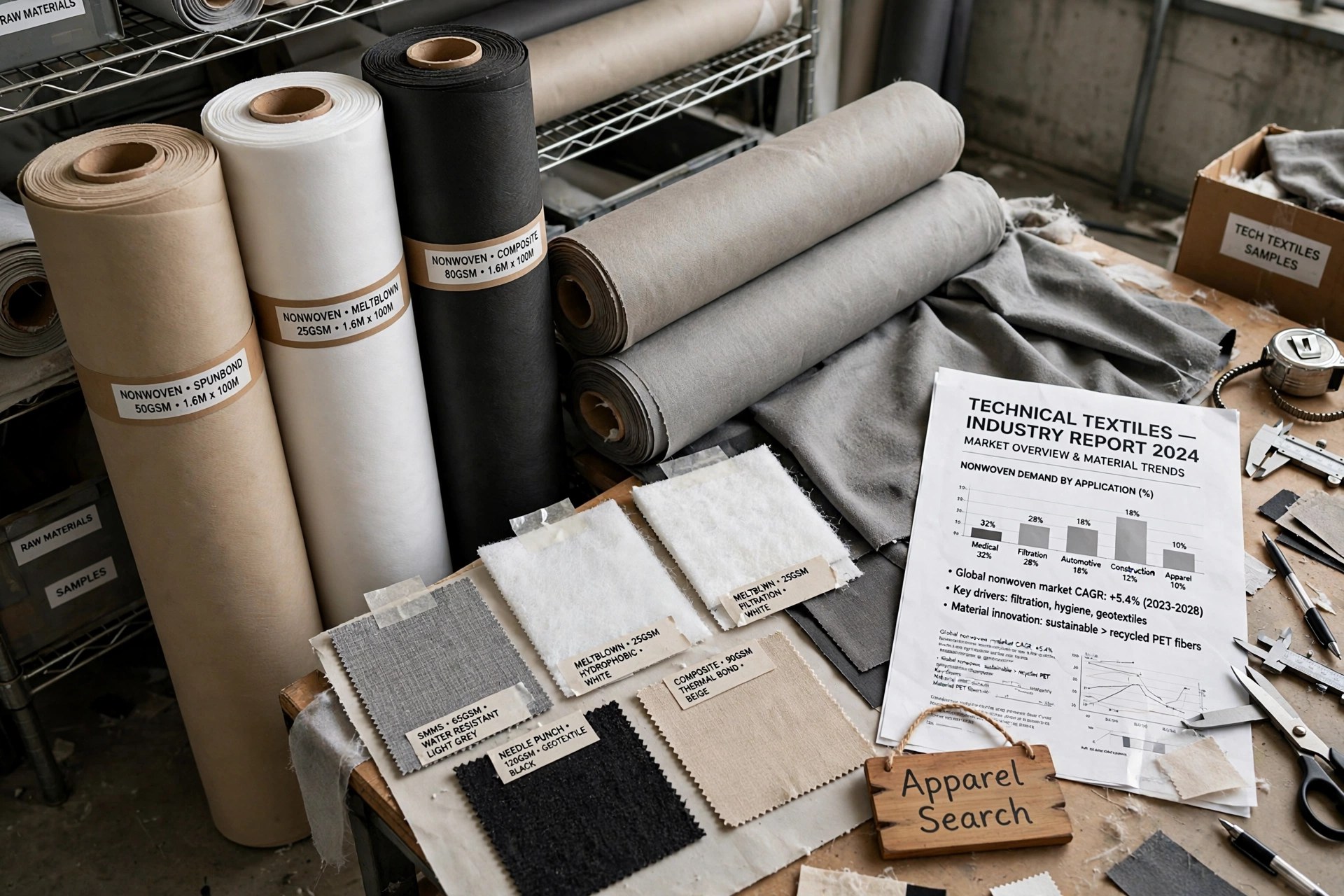
Chapter 1 introduces the development of the nonwovens industry, its structure and its outlook. Chapter 2 measures the industry — size, structure and location — addressing the problems of classification that complicate nonwovens statistics, industry size by country, global links and industry output. That country-by-country sizing matters in a sector consolidating across borders: the mergers and acquisitions described in the report only make sense against a map of where production actually sits. Chapter 3 covers raw materials: viscose rayon, synthetic fibres, other fibres and binding agents. Chapter 4 then classifies the technologies and traces their development — dry-laid, wet-laid, stitchbonding, thermal bonding, spunbonding, hydroentanglement and meltblown — the process families from which all the products of the next chapter are made.
Products and Markets: Disposables and Durables
Chapter 5 divides the market in two. Single use (disposable) nonwovens come first, including coverstock and other disposables, with the issue of disposability addressed directly. Durable and semi-durable nonwovens follow: geotextiles and civil engineering, filter media, automotive uses, nonwovens in agriculture, interlinings, footwear and leather goods, wipes, environmental and personal protection, and other industrial applications. Chapter 6 covers machinery and equipment, the capital base behind the technologies. Read with the North America report in this series, the products chapter shows the same technology families serving the same two market halves on both sides of the Atlantic, with the European industry's centre of gravity in the companies profiled next.
Eleven Leading Players and Future Trends
Chapter 7 profiles 11 of the industry's leading players in Western Europe, among them Akzo Fibers BV Industrial Nonwovens, Bonded Fibre Fabric Ltd, Corovin GmbH, Fiberweb Group, Freudenberg & Co, Hoechst AG, Lantor International, Lystil SA, Mölnlycke Absorbent Products Supply AB, Vliesstoffwerk Christian Heinrich Sandler GmbH & Co KG and J W Suominen Oy. Chapter 8 closes with future trends: major companies and global integration, overseas interest in Western Europe, the international exhibition and congress rota, East European markets, technical development trends, and the effect of the single European market. Appendices provide a glossary of nonwovens terms and lists of European, US and Japanese nonwovens associations. The single market question ties the report back to its opening contrast — a sector still expanding while apparel textile production contracted, positioning itself for a larger, integrated European market and for new demand further east.
Common Questions
How was Western Europe's nonwovens industry performing?
Production continued to expand while apparel textile production was under growing attack from imports, and cross-border mergers and acquisitions were a growing feature as companies sought economies of scale.
Which companies are profiled?
Eleven leading players in Western Europe, including Bonded Fibre Fabric, Corovin, Fiberweb Group, Freudenberg & Co, Hoechst, Lantor International, Christian Heinrich Sandler and J W Suominen.
How does the report organise the products coverage?
Into single use disposable nonwovens, including coverstock, and durable and semi-durable nonwovens such as geotextiles, filter media, automotive uses, agricultural nonwovens, interlinings and footwear and leather goods, with the issue of disposability addressed directly.