Sourcing Apparel from India
A 55-page Textiles Intelligence report summary from Issue 127 of Textile Outlook International, January-February 2007
India ranks among the world's leading apparel exporters. It has an abundant domestic cotton supply, and cotton items account for about three-quarters of its apparel exports; indeed, 13 of the 14 major clothing types exported from India to the EU are cotton products. The industry is characterised by a huge number of small-scale enterprises with the ability to take on small customised orders, and the flexibility to respond to quick changes. At 55 pages, Sourcing Apparel from India is by far the longest report in Issue 127 of Textile Outlook International (January-February 2007) — a sourcing study of the structure, markets and direction of India's apparel export industry, written for buyers deciding where India fits in a sourcing portfolio.
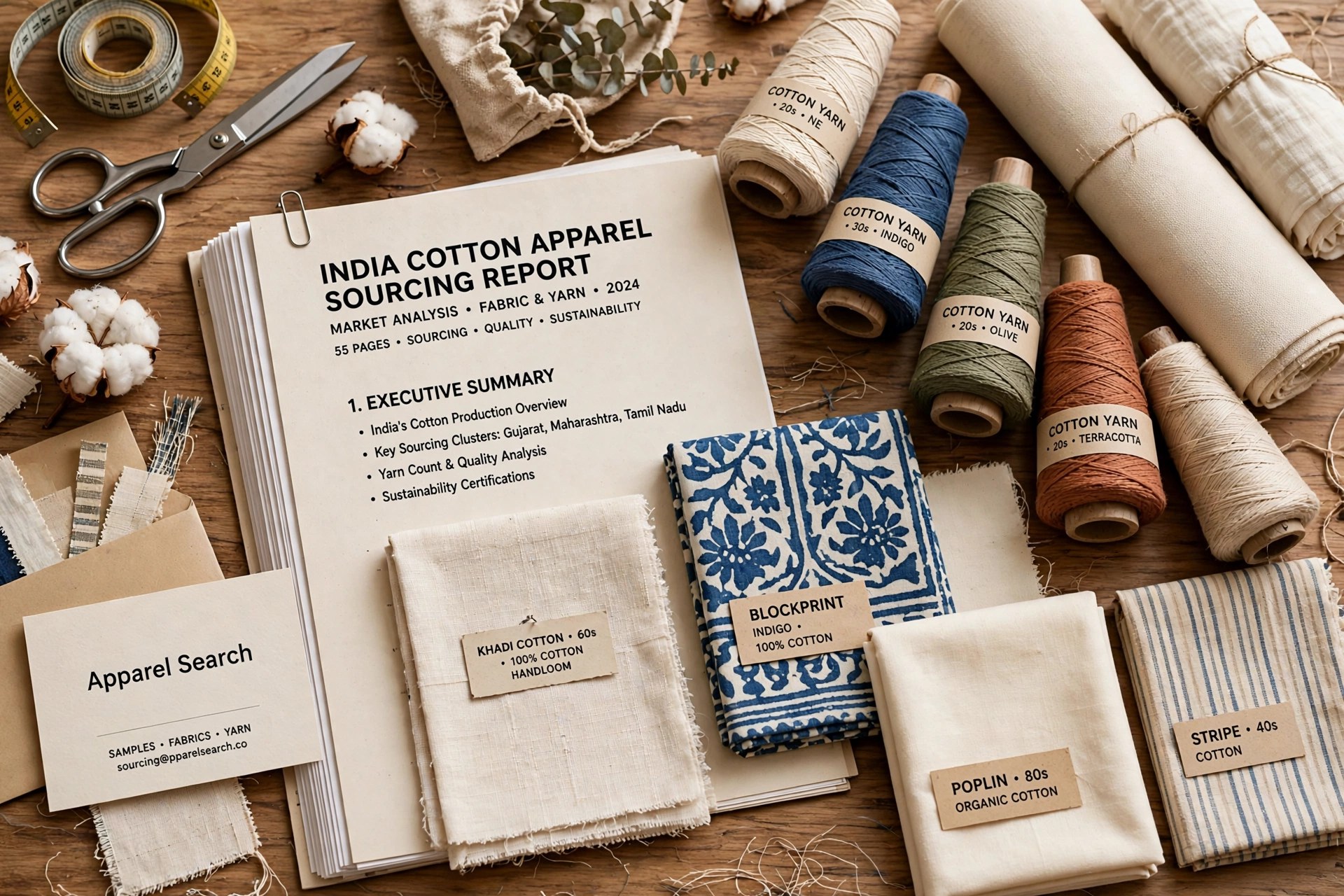
A Cotton Industry, Exporting to Two Markets
India's apparel export profile starts with fibre. An abundant domestic cotton supply runs through the industry, and cotton items account for about three-quarters of apparel exports — to the EU, 13 of the 14 major clothing types exported from India are cotton products. Destinations are concentrated: the EU and the USA are the biggest markets for Indian apparel exports, between them taking 70%. The UAE has an 8% share, although most UAE imports are thought to be re-exported. In 2005 India was the third largest apparel exporter to the USA and the fifth largest supplier to the EU — rankings that made it a standing option in any sourcing review, particularly for cotton clothing.
Small-Scale Enterprises and the Flexibility Advantage
The industry's structure is its distinguishing feature. A huge number of small-scale enterprises gives Indian suppliers the ability to take on small customised orders and the flexibility to respond to quick changes — the opposite profile from a high-volume, long-run sourcing base. That structure stems from past government policies aimed at enhancing economic welfare and increasing employment: with those objectives in mind, the Indian government reserved many products, including woven and knitted apparel products, for exclusive production by small-scale units.
Reservation Phased Out, Big Players Growing
The reservation policy has now been phased out, and the study follows the consequences. Encouraged by the elimination of the global quota system at the end of 2004, the number of big players in the industry is growing. For a sourcing manager, that shift changes what India can be asked to do: the small-order flexibility of the small-scale sector remains available, while larger, consolidated suppliers emerge for bigger programmes that the reserved structure previously made difficult to place.
Read with the rest of Issue 127, the study is the sourcing counterpart to the issue's retailer and brand profiles. KappAhl and Oxford Industries represent two kinds of demand — a Nordic value chain buying for a defined family customer, and a US brand group selling through selected fashionable stores. A 55-page examination of India gives buyers serving either kind of customer the evidence on capacity, structure and export markets to judge what India could supply, in which fibres, and at what order sizes.
Common Questions
How important is cotton to India's apparel exports?
Cotton items account for about three-quarters of India's apparel exports, supported by an abundant domestic cotton supply; 13 of the 14 major clothing types exported from India to the EU are cotton products.
Where do India's apparel exports go?
The EU and the USA between them take 70%; the UAE has an 8% share, although most UAE imports are thought to be re-exported. In 2005 India was the third largest apparel exporter to the USA and the fifth largest supplier to the EU.
Why is the Indian industry made up of small-scale enterprises?
Past government policies aimed at enhancing economic welfare and increasing employment reserved many products, including woven and knitted apparel, for exclusive production by small-scale units — a structure that gives suppliers the ability to take small customised orders and respond quickly to changes; the reservation has since been phased out and the number of big players is growing.
More to Explore
- Textiles Intelligence Reports
- Apparel Research
- Apparel Industry Guides
- Fashion
- fabric
- fibers
- Fashion News
- Apparel Industry Jobs
- India Apparel Industry
- Textile Outlook International Report
- Developments in Textile Colorants
- Editorial: World Fibre Production Another Leap Forward
- Profile of KappAhl: A Nordic Fashion Retailer With a Distinct Product Concept
- Profile of Oxford Industries
- World Markets for Textile Machinery: Part 3 Finishing
- Belinda Carp