The Layer
One Jacket, Most of the Wardrobe
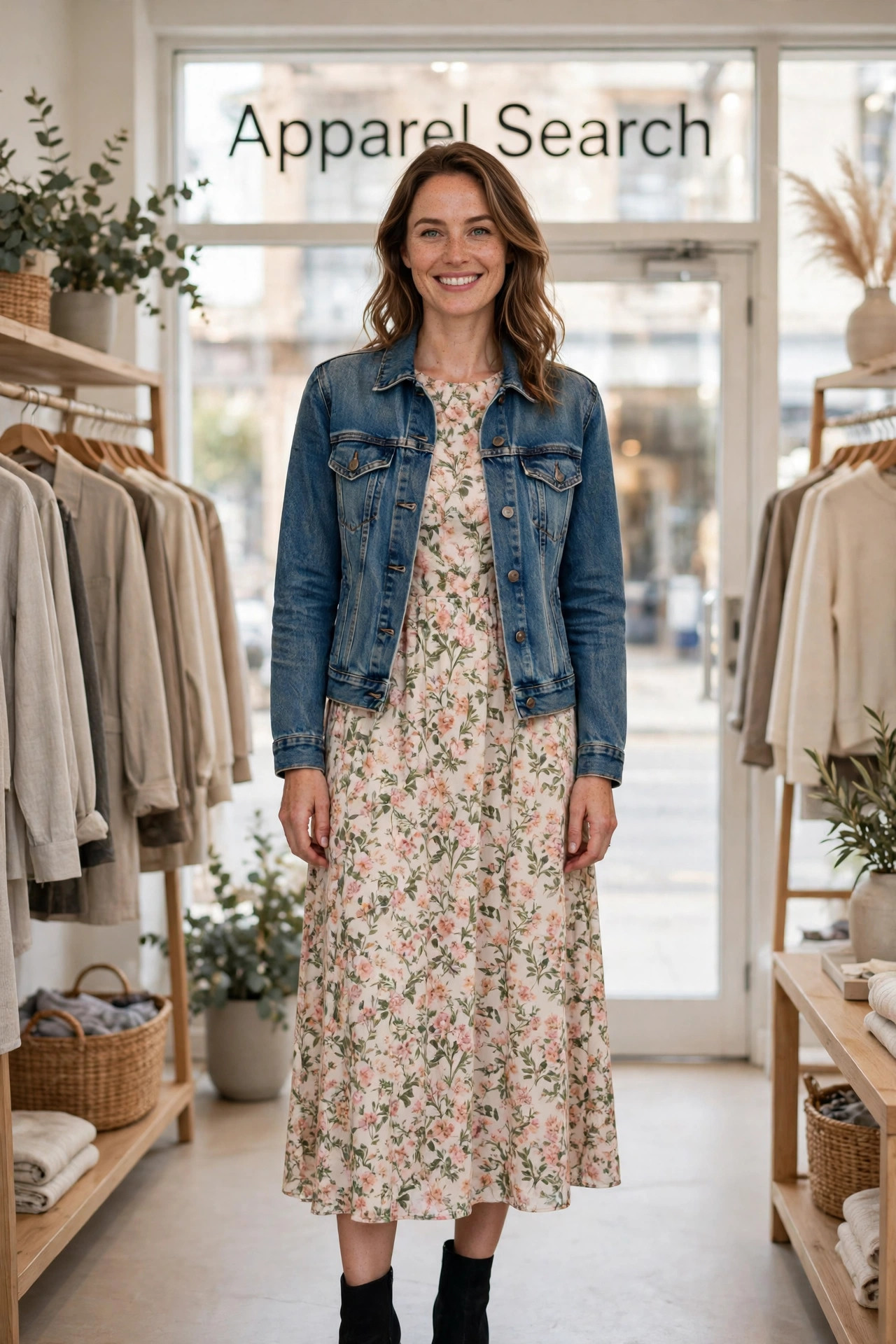
A denim jacket succeeds where other casual layers fail because it has structure: a collar, a button front, a hem that lands at a definite point. That structure is what lets it sharpen a soft dress, finish a t-shirt and jeans, or stand in for a cardigan over tailoring. Styling one is mostly two decisions — which wash, and how much volume — and both decisions change what the jacket can do.
The garment itself, its cuts, weights and construction, is covered in the women’s denim jackets guide. This page is about wearing it: wash by wash, fit by fit, and season by season.
Search Apparel Search
Wash by Wash
What Each Wash Does
Light wash
Pale denim is the most casual wash and the most seasonal. It belongs with white, pastels, summer dresses and light footwear, and it reads relaxed even in a fitted cut. Its limit is contrast: over dark trousers or a black dress it can look like two outfits meeting, so keep the pieces under it light or bright.
Mid wash
The classic blue is the most flexible wash of all. It pairs with nearly every color, works over dresses and tailoring alike, and carries enough contrast against both dark and light bottoms. If you own one denim jacket, this is the wash that will be worn most.
Dark indigo
Dark, clean denim is the dressiest blue. It behaves almost like a soft blazer: over a dark dress, tailored trousers or an evening skirt it reads deliberate rather than casual. Keep the rest of the outfit clean with it — no distressing anywhere else in the look.
Black
A black denim jacket works as the evening and winter option. It pairs with blue jeans without any wash-matching risk, sharpens printed dresses, and goes over all-black outfits where a blue jacket would break the line. Treat it like a black leather jacket’s quieter sibling.
White
White denim is fresh rather than formal: over color, stripes and summer prints it brightens everything, and with blue or black jeans it gives clean contrast. It shows marks easily and reads as a warm-weather piece, so it earns its place as a second jacket rather than a first.
Fit and Length
Four Fits, Four Different Jackets
| Fit | Where it lands | Wear it with |
|---|---|---|
| Cropped | At or above the waist | High-waisted skirts and trousers, fit-and-flare and midi dresses — it marks the waist the outfit needs |
| Classic trucker | At the hip bone, fitted through the body | Almost everything: jeans, dresses, tailoring; the layer that also fits under a winter coat |
| Oversized | Below the hip, volume through the body | Slim and straight shapes underneath — a fitted dress, a column skirt, straight trousers — never loose over loose |
| Longline | Mid-thigh or longer | Worn like a light coat over leggings, slim trousers and shorter dresses; keep footwear clean so the length reads as a coat, not a cover-up |
The test for any fit is the layer underneath: the jacket should button over it without pulling, and the hem should land at a point that makes sense with the outfit’s proportions — waist, hip or thigh, never hovering between two.
Outfits
By Season, and With Dresses, Skirts and Tailoring
Spring: a mid-wash trucker over a midi dress with ankle boots or loafers is the season’s default outfit. Summer: the jacket becomes the evening layer over sundresses, shorts and linen, sleeves pushed up, often in light or white denim. Autumn: it layers over fine knits and under nothing else until the cold arrives, then goes under a wool coat with the collar showing. Winter: dark or black denim over a turtleneck and tailored trousers keeps working as an indoor layer when coats come off.
Dresses are the jacket’s best pairing because the contrast is built in: soft against structured. Cropped jackets suit fit-and-flare shapes, classic truckers suit midi and shirt dresses, and an oversized jacket over a slip dress with boots is a reliable evening formula. With skirts, match the jacket’s hem to the skirt’s waistband. With tailoring, keep the denim dark and clean and the trousers pressed — the jacket replaces a cardigan, not a blazer, and works best on the casual side of an office dress code.
Denim on Denim, and Mistakes
Double Denim Done Carefully
A denim jacket with jeans follows the wash rule: clearly different washes, about two shades apart, or an exact match worn as a set. A mid or light jacket over dark indigo jeans, broken by a plain top and a non-denim shoe, is the standard working version. How to style double denim covers the full method, including the wash-pairing matrix, and the women’s jeans guide and women’s denim jeans guide cover the bottom half’s cuts and washes.
The recurring mistakes are few and fixable. A blue jacket over black jeans in the wrong wash — faded, greyish blue against true black — looks washed out; choose a saturated mid-blue or a black jacket instead. A boxy, oversized jacket over slim jeans with a long top underneath loses every line the outfit has; shorten the top or define the waist. A jacket that ends mid-hip over a low rise cuts the body at its widest point. And distressing on both the jacket and the layer under it doubles the casualness — one worn-in piece per outfit is enough.
Questions
Common Questions
What wash of denim jacket is most versatile?
A mid-wash or dark indigo jacket is the most versatile. Mid-wash pairs with almost every color and reads casual without looking faded, while dark indigo dresses up furthest — over tailoring, dark dresses and evening skirts. Light wash is a spring and summer piece, black works year-round as the evening option, and white is seasonal but very fresh over color and prints.
Can you wear a denim jacket with jeans?
Yes, if the washes are clearly different — roughly two shades apart — or exactly matched and worn as a set. A mid-wash jacket over dark indigo or black jeans is the reliable version. The pairing to avoid is a jacket and jeans in nearly the same blue, which looks like a failed attempt at a matching set.
Should a denim jacket be fitted or oversized?
Match the jacket's volume to the rest of the outfit. A fitted or classic trucker works over slim and straight shapes and under coats; an oversized jacket needs balance below it — a slim skirt, straight trousers or a fitted dress — so the outfit keeps a defined shape somewhere. Boxy over loose on both halves is the combination that swamps most people.