Apparel Search Sewing Guides
How to Choose a Sewing Machine
A sewing machine is the one substantial purchase in learning to sew, and the market is engineered to confuse: hundreds of models, stitch counts in the hundreds, and prices from under a hundred to many thousands. The good news is that garment sewing asks very little of a machine — and asks it very well. This guide separates the features that matter from the ones that pad a spec sheet. It belongs to our Learn to Sew guide, the beginner on-ramp for this section.
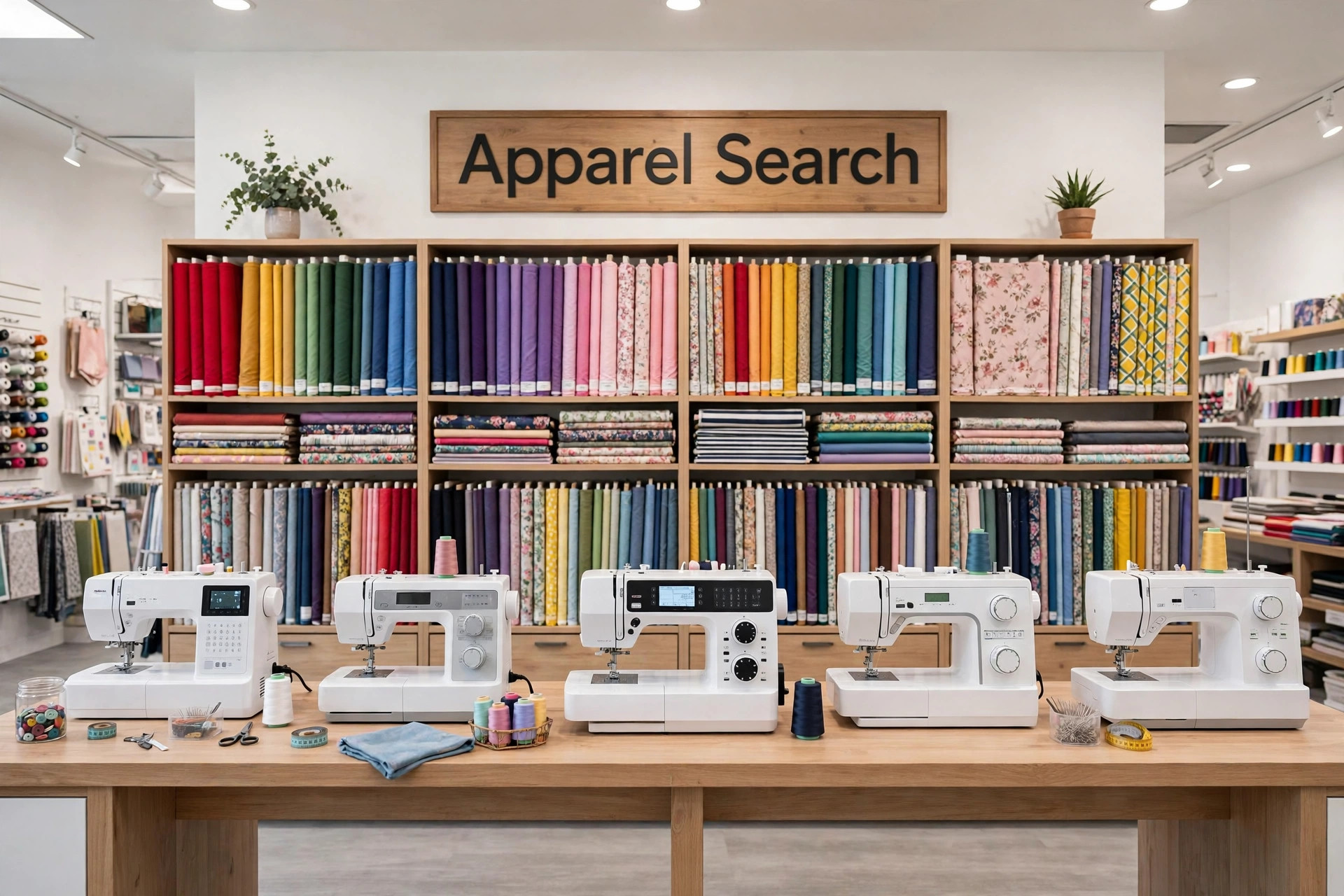
Mechanical vs Computerized
Mechanical machines are controlled by dials and levers: you select the stitch, set its length and width, and manage needle position and speed with the foot pedal alone. They are typically less expensive, mechanically transparent (a repairer can fix almost anything on them), and perfectly capable for clothes. Their buttonholes are usually four-step — you switch settings between each side — which is slower but entirely learnable.
Computerized machines add a small computer: stitch selection by button, often a one-step buttonhole (the machine measures the button and sews the whole thing), needle up/down positioning, speed limiting, and sometimes an automatic thread cutter. These are conveniences, not capabilities — but conveniences compound over a garment's forty buttonhole-free seams and one buttonhole. If the budget allows a reputable mid-range computerized model, beginners tend to enjoy them; if not, mechanical loses nothing essential.
The Features That Matter for Garment Sewing
- Adjustable stitch length and width — non-negotiable. Basting, topstitching and zigzag finishing all depend on it.
- A good buttonhole — clothes have buttons. One-step is nicer; four-step works. Test it in the shop on two layers of shirting.
- Free arm — the narrow arm that lets sleeves, cuffs and trouser legs circle the machine. Nearly standard, but confirm it.
- Adjustable presser-foot pressure — light fabrics and knits feed far better with reduced pressure; thick layers with more. Machines without it handle medium fabrics fine and struggle at the extremes.
- Needle positions — the ability to move the needle left/right makes edge-stitching and zippers much easier.
- Good lighting at the needle — a small thing you will feel on every seam, especially with dark fabric.
- A drop-in or front-loading bobbin in good condition, and smooth feeding — sew a long test seam on cotton and on something slippery; the machine should feed both evenly without you pulling.
What to Skip Paying For
Hundreds of decorative stitches, built-in embroidery alphabets, enormous stitch libraries and novelty feet bundles add cost that garment sewing never recovers. Built-in "alphabets" embroider poorly compared to doing without a monogram. Likewise, treat the mini machines and the cheapest big-box models with suspicion: weak motors stall on denim seams, tension is erratic, and a frustrating first machine ends more sewing journeys than any difficult pattern.
New vs Used
New buys you a warranty, a manual in the box and a dealer's help. Used buys you quality per dollar: the mid-range and premium machines of past decades are heavily built and, once serviced, sew beautifully. Rules for used: buy serviced from a dealer if you can; privately, sew before you pay, bring fabric and thread, and check that standard feet (zigzag, zipper, buttonhole), correct bobbins and a manual are available for the model. Budget a service visit into any private purchase price.
Sewing bigger someday? Hobby machines and factory machines are different species. If you ever move toward production, our sewing machinery directory covers the industrial side — lockstitch, overlock and specialized machines — that factories use.
Questions to Ask in the Shop
"Can I sew on it?"
Any good shop says yes. Bring your own fabrics — shirting, denim, something stretchy — and test straight seams and a buttonhole on each.
"Who services it, and where?"
Machines need periodic cleaning and timing checks. Local service and available parts matter more than small feature differences.
"What feet and bobbins does it use?"
Confirm a zipper foot and buttonhole foot are included or cheaply available, and that bobbins are a standard type.
"Are lessons or a get-started session included?"
Many dealers include an orientation. An hour of guided threading and tension basics compresses weeks of trial and error.
"What is the return or trade-up policy?"
Some dealers credit a beginner machine toward an upgrade within a year — a genuinely useful arrangement as skills grow.
Our Amazon shopping guide gathers sewing machines, starter tools and supplies in one place, so the product links stay organized on a single page.
Browse the Amazon Shopping GuideThis link opens the Apparel Search shopping guide for Amazon, where the product links are kept in one place.
Common Questions
Is a mechanical or computerized sewing machine better for beginners?
Either can be the right answer. Mechanical machines are simpler, cheaper and easy to maintain, with dials you can see and understand. Computerized machines add conveniences — automatic needle positioning, speed control, one-step buttonholes — that genuinely help new sewers. For garment sewing, a good mechanical machine or a mid-range computerized one both serve well; avoid the very cheapest of either kind, which tend to frustrate rather than teach.
How many stitches does a sewing machine for clothes need?
Far fewer than marketing suggests. Garment sewing lives on a straight stitch, a zigzag, a stretch stitch or two, and a buttonhole — roughly half a dozen stitch patterns cover nearly everything. Machines advertising hundreds of stitches are counting decorative variations that clothes rarely use. Spend on stitch quality and feeding, not stitch count.
Should I buy a used sewing machine?
A quality used machine is often the smartest first purchase: older mid-range and premium machines were built heavily and sew beautifully. Buy from a dealer who has serviced it, or budget for a professional service (cleaning, oiling, timing check) if buying privately. Sew a test seam on your own fabric before paying, and confirm that feet, bobbins and a manual are available for the model.
Do I need a serger as well?
Not at the start. A serger (overlock machine) trims and finishes edges and sews knits quickly, and many sewers add one later — but everything it does can be approximated with a sewing machine's zigzag and seam finishes while you learn. Master one machine first.
More to Explore
- Sewing Basics: Stitches & Seams — what to do with the machine once it is home and threaded.
- Sewing Guide — the Apparel Search sewing section: machines, needles, thread and troubleshooting.
- Sewing Tips for Home Sewers — practical advice from the home sewing side of the section.
Search Apparel Search